The Watchtower, March 15, 2000
Download: PDF — The Watchtower, March 15, 2000
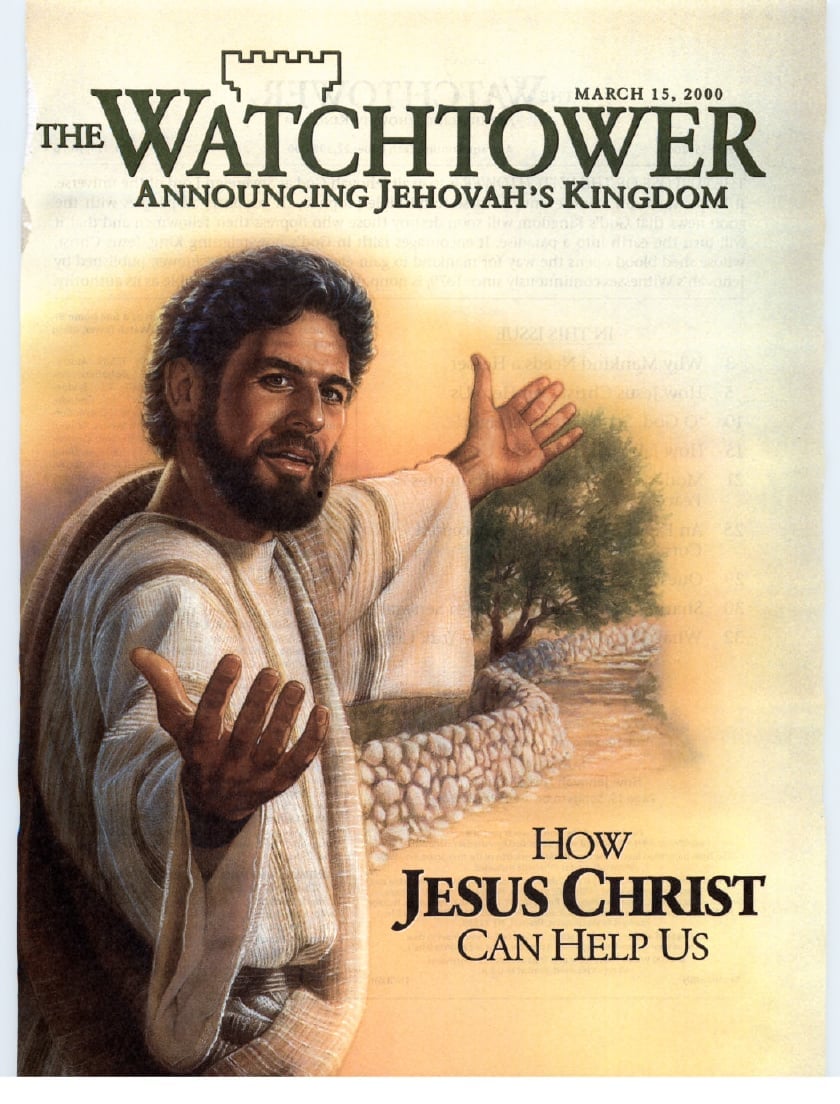
The Watchtower — March 15, 2000
Source: jw.org
Contents
Why Mankind Needs a Helper
How Jesus Christ Can Help Us
‘O God, Send Out Your Light’
How Jehovah Is Leading Us
Modesty—A Quality That Promotes Peace
An Exemplary Man Who Accepted Correction
Questions From Readers
Sharing the Christian Hope in Senegal
What She Misses About New York City
Would You Welcome a Visit?
Why Mankind Needs a Helper
Why Mankind Needs a Helper
‘I WAS an insolent persecutor,’ admitted a formerly proud and violent man. He had been an abusive blasphemer who had heartlessly harassed and assaulted God-fearing followers of Jesus Christ. “Nevertheless,” he stated gratefully, “I was shown mercy.” Incredible as it may seem, this rabid persecutor became the faithful Christian apostle Paul.—1 Timothy 1:12-16; Acts 9:1-19.
Not everyone has done the sort of things that Paul did. Yet, all of us fail to meet God’s standards. Why? Because “all have sinned and fall short of the glory of God.” (Romans 3:23) Moreover, it is very easy to sink into a quagmire of despair, perhaps feeling that we are too bad to receive God’s mercy. While contemplating his sinful inclinations, Paul himself exclaimed: “Miserable man that I am! Who will rescue me from the body undergoing this death?” Answering his own question, he wrote: “Thanks to God through Jesus Christ our Lord!”—Romans 7:24, 25.
How could a righteous Creator have dealings with sinners? (Psalm 5:4) Note that Paul said: “Thanks to God through Jesus Christ our Lord.” Another recipient of God’s mercy explained: “If anyone does commit a sin, we have a helper with the Father, Jesus Christ, a righteous one. And he is a propitiatory sacrifice for our sins, yet not for ours only but also for the whole world’s.”—1 John 2:1, 2.
Why is Jesus Christ called “a helper with the Father”? And how is Jesus “a propitiatory sacrifice” for sins?
Why a Helper Is Needed
Jesus came to the earth “to give his soul a ransom in exchange for many.” (Matthew 20:28) A ransom is the price paid to buy back, or to bring about the release of, someone or something. The verb form of the Hebrew word rendered “ransom” conveys the idea of covering, or atoning, for sins. (Psalm 78:38) The Greek word, such as that found at Matthew 20:28, was used particularly to refer to the price paid to ransom prisoners of war or to release slaves. To satisfy the demands of justice, one thing is given in exchange for another of corresponding value.
Mankind came into slavery because of the first man’s rebellion against God. As shown in Genesis chapter 3, that perfect man—Adam—chose to pursue a course of disobedience to Jehovah God. By doing so, he sold himself and his yet unborn descendants into slavery to sin and death. For himself and all his offspring, Adam thus forfeited the gift of perfect human life.—Romans 5:12, 18, 19; 7:14.
In ancient Israel, God arranged for animal sacrifices to atone for, or cover, the sins of the people. (Leviticus 1:4; 4:20, 35) In effect, the life of the sacrificial animal was given in place of that of the sinner. (Leviticus 17:11) Consequently, “the day of atonement” could also be spoken of as the “day of the ransoms.”—Leviticus 23:26-28.
Since animals are inferior to man, however, it was “not possible for the blood of bulls and of goats to take sins away [completely].” (Hebrews 10:1-4) For a sacrifice to have sufficient value to atone for, or remove, sins permanently, it would have to be equal in value to what Adam forfeited. The scales of justice required a perfect man (Jesus Christ) to counterbalance what another perfect man (Adam) had lost. Only a perfect human life could pay the ransom price to redeem Adam’s offspring from the enslavement into which their first father had sold them. A ‘soul for a soul’ would meet the demands of true justice.—Exodus 21:23-25.
When Adam sinned and was sentenced to death, his as yet unborn offspring were still in his loins and therefore died with him. The perfect man Jesus, “the last Adam,” willingly did not produce a family. (1 Corinthians 15:45) He had unborn offspring in his loins when he died as a perfect human sacrifice. Therefore, it might be said that the potential human race within his loins died with him. Jesus took Adam’s sinful, dying family as his own. He gave up the right to have a family of his own. By sacrificing his perfect human life, Jesus repurchased all mankind descended from Adam so that they could become His family, making Him their “Eternal Father.”—Isaiah 9:6, 7.
Jesus’ ransom sacrifice opened the way for obedient mankind to receive God’s mercy and obtain everlasting life. Consequently, the apostle Paul wrote: “The wages sin pays is death, but the gift God gives is everlasting life by Christ Jesus our Lord.” (Romans 6:23) We cannot help but praise Jehovah for the love and compassion associated with the ransom, provided at tremendous cost to himself and his dearly beloved Son. (John 3:16) And Jesus surely proved to be “a helper with the Father” when he was resurrected to heavenly life and presented the value of his ransom sacrifice to God in the heavens.a (Hebrews 9:11, 12, 24; 1 Peter 3:18) But how is Jesus Christ now proving to be our helper in heaven?
[Footnote]
See chapters 4 and 7 of the book Knowledge That Leads to Everlasting Life, published by the Watchtower Bible and Tract Society of New York, Inc.
[Picture on page 4]
Jesus’ perfect human life became the price to ransom Adam’s offspring
How Jesus Christ Can Help Us
How Jesus Christ Can Help Us
WHAT Jesus Christ did to help people when he was on earth was marvelous. This was so true that after recounting numerous events of Jesus’ life, one eyewitness said: “There are, in fact, many other things also which Jesus did, which, if ever they were written in full detail, I suppose, the world itself could not contain the scrolls written.” (John 21:25) Since Jesus did so much on the earth, we might ask: ‘How can he be our helper in heaven? Can we benefit from Jesus’ tender compassion now?’
The answer is most heartwarming and reassuring. The Bible tells us that Christ entered “into heaven itself, now to appear before the person of God for us.” (Hebrews 9:24) What did he do for us? The apostle Paul explains: “[Christ] entered, no, not with the blood of goats and of young bulls, but with his own blood, once for all time into the holy place [“heaven itself”] and obtained an everlasting deliverance for us.”—Hebrews 9:12; 1 John 2:2.
What good news that is! Rather than ending Jesus’ wonderful work in behalf of people, his ascension to heaven enabled him to do even more for mankind. That is because God, in his great undeserved kindness, appointed Jesus to serve as “a public servant”—a high priest—“at the right hand of the throne of the Majesty in the heavens.”—Hebrews 8:1, 2.
“A Public Servant”
In heaven, then, Jesus would be a public servant for mankind. He would do a work like that done by Israel’s high priest in behalf of God’s worshipers in ancient times. And what was that work? Paul explains: “Every high priest is appointed to offer both gifts and sacrifices; wherefore it was necessary for this one [the ascended Jesus Christ] also to have something to offer.”—Hebrews 8:3.
Jesus had something to offer that was far superior to what the ancient high priest offered. “If the blood of goats and of bulls” could bring a measure of spiritual cleanness to ancient Israel, “how much more [would] the blood of the Christ . . . cleanse our consciences from dead works that we may render sacred service to the living God?”—Hebrews 9:13, 14.
Jesus is an outstanding public servant, too, because he has been granted immortality. In ancient Israel “many had to become priests in succession because of being prevented by death from continuing as such.” But what about Jesus? Paul writes: “He . . . has his priesthood without any successors. Consequently he is able also to save completely those who are approaching God through him, because he is always alive to plead for them.” (Hebrews 7:23-25; Romans 6:9) Yes, we have at God’s right hand in heaven a public servant who ‘is always alive to plead for us.’ Just think what that means for us now!
When Jesus was on earth, people flocked to him for help, and they sometimes traveled great distances to avail themselves of his assistance. (Matthew 4:24, 25) In heaven, Jesus is readily accessible to people of all nations. From his heavenly vantage point, he is always available as a public servant.
What Sort of High Priest Is Jesus?
The picture of Jesus Christ painted in the Gospel accounts leaves us with no doubt about his helpfulness and tender compassion. How self-sacrificing he was! On more than one occasion, his privacy was interrupted when he and his disciples were trying to get much-needed rest. Rather than feeling cheated out of precious moments of peace and quiet, “he was moved with pity” for the people who sought his assistance. Even when Jesus was tired, hungry, and thirsty, “he received them kindly” and was willing to forgo food if he could help sincere sinners.—Mark 6:31-34; Luke 9:11-17; John 4:4-6, 31-34.
Moved with pity, Jesus took practical steps to fill people’s physical, emotional, and spiritual needs. (Matthew 9:35-38; Mark 6:35-44) Furthermore, he taught them to find lasting relief and comfort. (John 4:7-30, 39-42) How inviting, for example, is his personal invitation: “Come to me, all you who are toiling and loaded down, and I will refresh you. Take my yoke upon you and learn from me, for I am mild-tempered and lowly in heart, and you will find refreshment for your souls.”—Matthew 11:28, 29.
Jesus’ love for people was so great that he ultimately gave his life for sinful mankind. (Romans 5:6-8) In this regard the apostle Paul reasoned: “He [Jehovah God] who did not even spare his own Son but delivered him up for us all, why will he not also with him kindly give us all other things? . . . Christ Jesus is the one who died, yes, rather the one who was raised up from the dead, who is on the right hand of God, who also pleads for us.”—Romans 8:32-34.
A High Priest Who Can Sympathize
As a human, Jesus experienced hunger, thirst, tiredness, anguish, pain, and death. The stress and pressures that he endured equipped him in a very unique way to serve as High Priest for suffering mankind. Paul wrote: “[Jesus] was obliged to become like his ‘brothers’ in all respects, that he might become a merciful and faithful high priest in things pertaining to God, in order to offer propitiatory sacrifice for the sins of the people. For in that he himself has suffered when being put to the test, he is able to come to the aid of those who are being put to the test.”—Hebrews 2:17, 18; 13:8.
Jesus demonstrated that he is qualified and willing to help people draw closer to God. Does this mean, however, that he has to persuade a harsh and unmerciful God who is reluctant to forgive? No indeed, for the Bible assures us that “Jehovah [is] good and ready to forgive.” It also says: “If we confess our sins, he is faithful and righteous so as to forgive us our sins and to cleanse us from all unrighteousness.” (Psalm 86:5; 1 John 1:9) Actually, Jesus’ tender words and deeds reflect his Father’s own compassion, mercy, and love.—John 5:19; 8:28; 14:9, 10.
How does Jesus bring relief to repentant sinners? By helping them to find joy and satisfaction in their sincere efforts to please God. In writing to fellow anointed Christians, Paul summed up the situation by saying: “Seeing, therefore, that we have a great high priest who has passed through the heavens, Jesus the Son of God, let us hold onto our confessing of him. For we have as high priest, not one who cannot sympathize with our weaknesses, but one who has been tested in all respects like ourselves, but without sin. Let us, therefore, approach with freeness of speech to the throne of undeserved kindness, that we may obtain mercy and find undeserved kindness for help at the right time.”—Hebrews 4:14-16.
“Help at the Right Time”
What can we do, though, when confronted with problems that we feel are greater than we can handle—serious illness, the crushing burden of guilt, overwhelming discouragement, and depression? We can make use of the very provision that Jesus himself regularly relied on—the precious privilege of prayer. For example, on the night before he gave his life for us, “he continued praying more earnestly; and his sweat became as drops of blood falling to the ground.” (Luke 22:44) Yes, Jesus knows how it feels to pray to God with great intensity. He “offered up supplications and also petitions to the One who was able to save him out of death, with strong outcries and tears, and he was favorably heard for his godly fear.”—Hebrews 5:7.
Jesus knows how much it means to humans to be “favorably heard” and strengthened. (Luke 22:43) Furthermore, he promised: “If you ask the Father for anything he will give it to you in my name. . . . Ask and you will receive, that your joy may be made full.” (John 16:23, 24) Hence, we can petition God with confidence that he will allow his Son to apply his authority and the value of his ransom sacrifice in our behalf.—Matthew 28:18.
We can be sure that in his heavenly capacity, Jesus will provide the right kind of help at the proper time. For example, if we have committed a sin that we sincerely regret, we can draw comfort from the assurance that “we have a helper with the Father, Jesus Christ, a righteous one.” (1 John 2:1, 2) Our Helper and Comforter in heaven will plead for us so that our prayers in his name and in harmony with the Scriptures will be answered.—John 14:13, 14; 1 John 5:14, 15.
Showing Appreciation for Christ’s Help
More is involved than petitioning God through his Son. With the value of his ransom sacrifice, “Christ by purchase” became, as it were, “the owner that bought” the human race. (Galatians 3:13; 4:5; 2 Peter 2:1) We can show our gratitude for all that Christ does for us by acknowledging his ownership of us and gladly responding to his invitation: “If anyone wants to come after me, let him disown himself and pick up his torture stake day after day and follow me continually.” (Luke 9:23) ‘Disowning oneself’ is not simply a verbal claim of change of ownership. After all, Christ “died for all that those who live might live no longer for themselves, but for him who died for them.” (2 Corinthians 5:14, 15) Therefore, appreciation for the ransom will have a profound effect on our outlook, goals, and life-style. Our eternal indebtedness to “Christ Jesus, who gave himself for us,” should motivate us to learn more about him and his loving Father, Jehovah God. We should also want to grow in faith, to live by God’s beneficial standards, and to be “zealous for fine works.”—Titus 2:13, 14; John 17:3.
The Christian congregation is the means whereby we receive timely spiritual food, encouragement, and guidance. (Matthew 24:45-47; Hebrews 10:21-25) For instance, if any are spiritually sick, they can “call the older men [appointed elders] of the congregation.” James adds the assurance: “And the prayer of faith will make the indisposed one well, and Jehovah will raise him up. Also, if he has committed sins, it will be forgiven him.”—James 5:13-15.
To illustrate: A man serving a prison sentence in South Africa wrote to a congregation elder expressing appreciation for “all of Jehovah’s Witnesses who are carrying out the good work started by Jesus Christ in helping people strive toward God’s Kingdom.” Then he wrote: “I was overjoyed at having received your letter. Your concern for my spiritual redemption has touched me deeply. All the more reason for me to start heeding Jehovah God’s call for repentance. For 27 years I’ve been stumbling and losing my way in the darkness of sin, deceit, illicit affairs, immoral practices, and dubious religions. After my introduction to Jehovah’s Witnesses, I feel that I have at last found the way—the right way! All I have to do is follow it.”
More Help in the Near Future
Deteriorating world conditions are clear evidence that we are living in the crucial time period that was to precede the outbreak of “the great tribulation.” Right now, a great crowd out of all nations, tribes, peoples, and tongues are ‘washing their robes and making them white in the blood of the Lamb.’ (Revelation 7:9, 13, 14; 2 Timothy 3:1-5) By exercising faith in Jesus’ ransom sacrifice, they are receiving forgiveness of their sins and are being helped to come into a close relationship with God—in fact, becoming his friends.—James 2:23.
The Lamb, Jesus Christ, “will shepherd [survivors of the great tribulation] and will guide them to fountains of waters of life. And God will wipe out every tear from their eyes.” (Revelation 7:17) Christ will then carry his duties as High Priest to completion. He will help all of God’s friends to benefit fully from the “fountains of waters of life”—spiritually, physically, mentally, and emotionally. What Jesus started in 33 C.E. and what he has continued from heaven ever since will then be carried out to perfection.
Never give up, therefore, in showing deep appreciation for all that God and Christ have done—and are doing—for us. The apostle Paul urged: “Always rejoice in the Lord. . . . Do not be anxious over anything, but in everything by prayer and supplication along with thanksgiving let your petitions be made known to God; and the peace of God that excels all thought will guard your hearts and your mental powers by means of Christ Jesus.”—Philippians 4:4, 6, 7.
There is a significant way to show your appreciation for Jesus Christ, our Helper in heaven. After sundown on Wednesday, April 19, 2000, Jehovah’s Witnesses around the world will gather to observe the Memorial of Christ’s death. (Luke 22:19) This will be an opportunity to deepen your appreciation for Christ’s ransom sacrifice. You are most warmly invited to attend and hear how God’s marvelous arrangement for salvation through Christ can benefit you eternally. Please check with Jehovah’s Witnesses locally for the exact time and place of this special meeting.
[Picture on page 7]
Jesus knows how it feels to pray intensely to God
[Pictures on page 8]
Christ will help us cope with problems greater than we alone can handle
[Picture on page 9]
Christ helps us by means of loving elders
‘O God, Send Out Your Light’
‘O God, Send Out Your Light’
“Send out your light and your truth. May these themselves lead me.”—PSALM 43:3.
1. How does Jehovah reveal his purposes?
JEHOVAH is very considerate in the way he makes his purposes known to his servants. Instead of revealing the truth all at once in one blinding flash of light, he enlightens us progressively. Our trek along life’s pathway might be compared to a walk that a hiker takes down a long trail. He starts out early in the morning and sees little. As the sun begins to rise slowly over the horizon, the hiker is able to distinguish a few features of his surroundings. The rest he sees in hazy outline. But as the sun continues its ascent, he can see farther and farther into the distance. So it is with the spiritual light that God provides. He allows us to discern a few things at a time. God’s Son, Jesus Christ, provided spiritual enlightenment in a similar manner. Let us consider how Jehovah enlightened his people in ancient times and how he does so today.
2. How did Jehovah provide enlightenment in pre-Christian times?
2 The composers of the 43rd Psalm 43 likely were the sons of Korah. As Levites, they were privileged to teach God’s Law to the people. (Malachi 2:7) Of course, Jehovah was their Grand Instructor, and they looked to him as the Source of all wisdom. (Isaiah 30:20) “O God, . . . send out your light and your truth,” the psalmist prayed. “May these themselves lead me.” (Psalm 43:1, 3) As long as the Israelites were faithful to him, Jehovah taught them his ways. Centuries later, Jehovah favored them with light and truth of a most remarkable kind. God did so when he sent his Son to the earth.
3. In what way were the Jews put to the test by Jesus’ teaching?
3 As the man Jesus Christ, God’s Son was “the light of the world.” (John 8:12) He taught the people “many things with illustrations”—new things. (Mark 4:2) He told Pontius Pilate: “My kingdom is no part of this world.” (John 18:36) That was a new idea for a Roman and surely for nationalistic Jews, for they thought that the Messiah would bring the Roman Empire to its knees and restore Israel to its former glory. Jesus was reflecting light from Jehovah, but his words did not please Jewish rulers, who “loved the glory of men more than even the glory of God.” (John 12:42, 43) Many of the people chose to cling to their human tradition rather than to accept spiritual light and truth from God.—Psalm 43:3; Matthew 13:15.
4. How do we know that Jesus’ disciples would continue to grow in understanding?
4 However, a few honesthearted men and women joyfully embraced the truth that Jesus taught. They made steady progress in their understanding of God’s purposes. As the end of their Teacher’s earthly life drew near, though, they still had much to learn. Jesus told them: “I have many things yet to say to you, but you are not able to bear them at present.” (John 16:12) Yes, the disciples would continue to grow in understanding of God’s truth.
The Light Continues to Shine
5. What question arose in the first century, and who had the responsibility of settling it?
5 After Jesus’ death and resurrection, light from God shone more brightly than before. In a vision given to Peter, Jehovah revealed that uncircumcised Gentiles could henceforth become followers of Christ. (Acts 10:9-17) That was a revelation! Nevertheless, a question later arose: Did Jehovah require such Gentiles to get circumcised after they became Christians? That question had not been answered in the vision, and the matter became a subject of heated debate among Christians. It had to be settled, lest their precious unity be undermined. In Jerusalem, therefore, “the apostles and the older men gathered together to see about this affair.”—Acts 15:1, 2, 6.
6. What procedure did the apostles and older men follow when they considered the question of circumcision?
6 How could those present at that meeting determine God’s will for believing Gentiles? Jehovah did not dispatch an angel to preside over the discussions, nor did he favor those present with a vision. Still, the apostles and older men were not left entirely without direction. They considered testimony from certain Jewish Christians who had seen how God had begun dealing with people of the nations, pouring out his holy spirit upon uncircumcised Gentiles. They also searched the Scriptures for guidance. As a result, the disciple James made a recommendation based on an enlightening scripture. As they pondered the evidence, God’s will became clear. Those of the nations did not have to get circumcised in order to enjoy Jehovah’s approval. The apostles and the older men wasted no time in putting the decision in writing so that fellow Christians could be guided by it.—Acts 15:12-29; 16:4.
7. In what way were first-century Christians progressive?
7 Unlike the Jewish religious leaders, who clung to the traditions of their forefathers, most Jewish Christians rejoiced when they received this remarkable new understanding of God’s purpose respecting the people of the nations, even though accepting it required a change of viewpoint regarding Gentiles in general. Jehovah blessed their humble spirit, and “the congregations continued to be made firm in the faith and to increase in number from day to day.”—Acts 15:31; 16:5.
8. (a) How do we know that more light could be expected after the first century came to a close? (b) What pertinent questions will we consider?
8 Spiritual light continued to shine throughout the first century. But Jehovah did not reveal every aspect of his purposes to the early Christians. The apostle Paul told first-century fellow believers: “At present we see in hazy outline by means of a metal mirror.” (1 Corinthians 13:12) Such a mirror did not have the best reflective surface. At first, then, comprehension of spiritual light would be limited. After the death of the apostles, the light grew dim for a while, but in recent times Scriptural knowledge has become abundant. (Daniel 12:4) How does Jehovah enlighten his people today? And how should we respond when he broadens our understanding of the Scriptures?
The Light Gets Progressively Brighter
9. What unique and effective method of Bible study was used by the early Bible Students?
9 In modern times the first real glimmer of light began to appear in the last quarter of the 19th century as a group of Christian men and women began an earnest study of the Scriptures. They developed a practical method for Bible study. Someone would raise a question; then the group would analyze all related Scripture texts. When one Bible verse seemed to contradict another, these sincere Christians endeavored to harmonize the two. Unlike the religious leaders of the day, the Bible Students (as Jehovah’s Witnesses were then known) were determined to let the Holy Scriptures, not tradition or man-made dogma, be their guide. After they considered all available Scriptural evidence, they made a record of their conclusions. In that way their understanding of many basic Bible doctrines was cleared up.
10. Charles Taze Russell wrote what helpful Bible study aids?
10 Outstanding among the Bible Students was Charles Taze Russell. He wrote a series of six helpful Bible study aids entitled Studies in the Scriptures. Brother Russell intended to write a seventh volume, which would explain the Bible books of Ezekiel and Revelation. “Whenever I find the key,” he said, “I will write the Seventh Volume.” However, he added: “If the Lord gives the key to someone else, he can write it.”
11. What connection is there between timing and our understanding of God’s purposes?
11 The foregoing statement by C. T. Russell illustrates an important factor in our ability to understand certain Bible passages—timing. Brother Russell knew that he could not force the light to shine upon the book of Revelation any more than an anxious hiker can coax the sun to rise before its appointed time.
Revealed—But in God’s Due Time
12. (a) When is Bible prophecy best understood? (b) What example shows that our ability to understand Bible prophecy depends upon God’s timetable? (See footnote.)
12 Just as the apostles understood many prophecies concerning the Messiah only after Jesus’ death and resurrection, Christians today understand Bible prophecy in its finest detail only after it has been fulfilled. (Luke 24:15, 27; Acts 1:15-21; 4:26, 27) Revelation is a prophetic book, so we should expect to understand it most clearly as the events it describes unfold. For example, C. T. Russell could not have correctly understood the meaning of the symbolic scarlet-colored wild beast mentioned at Revelation 17:9-11, since the organizations that the beast represents, namely, the League of Nations and the United Nations, did not even exist until after his death.a
13. What sometimes occurs when light is shed on a certain Bible subject?
13 When the early Christians learned that uncircumcised Gentiles could become fellow believers, that change led to a new question regarding the need for people of the nations to be circumcised. This moved the apostles and older men to reexamine the entire issue of circumcision. The same pattern holds true today. A brilliant flash of light on one Bible subject sometimes leads God’s anointed servants, “the faithful and discreet slave,” to reexamine related topics, as the following recent example illustrates.—Matthew 24:45.
14-16. How did an adjustment in our viewpoint regarding the spiritual temple affect our understanding of Ezekiel chapters 40 to 48?
14 In 1971 an explanation of Ezekiel’s prophecy was published in the book “The Nations Shall Know That I Am Jehovah”—How? A chapter of that book briefly discussed Ezekiel’s vision of a temple. (Ezekiel, chapters 40-48) At the time, the focus was on how Ezekiel’s temple vision would be fulfilled in the new world.—2 Peter 3:13.
15 However, two articles published in The Watchtower of December 1, 1972, affected our understanding of Ezekiel’s vision. They discussed the great spiritual temple described by the apostle Paul in Hebrews chapter 10. The Watchtower explained that the Holy compartment and the inner courtyard of the spiritual temple relate to the condition of the anointed while they are on the earth. When Ezekiel chapters 40 to 48 were reviewed years later, it was discerned that just as the spiritual temple is operating today, so the temple that Ezekiel saw in vision must also be functioning today. How so?
16 In Ezekiel’s vision, priests are seen moving about in the courtyards of the temple as they serve the nonpriestly tribes. These priests clearly represent the “royal priesthood,” Jehovah’s anointed servants. (1 Peter 2:9) However, they will not be serving in the temple’s earthly courtyard throughout the Thousand Year Reign of Christ. (Revelation 20:4) During most of that period, if not all of it, the anointed will be serving God in the spiritual temple’s Most Holy, “heaven itself.” (Hebrews 9:24) Since priests are seen going to and fro in the courtyards of Ezekiel’s temple, that vision must be undergoing fulfillment today, while some of the anointed are still on the earth. Accordingly, the March 1, 1999, issue of this magazine reflected an adjusted view on this subject. Thus, clear down to the end of the 20th century, spiritual light was shed upon Ezekiel’s prophecy.
Be Willing to Adjust Your Viewpoint
17. What adjustments have you made in personal viewpoint since coming to a knowledge of the truth, and how have they benefited you?
17 Anyone who wishes to come to a knowledge of the truth must be willing to bring “every thought into captivity to make it obedient to the Christ.” (2 Corinthians 10:5) That is not always easy, especially when viewpoints are strongly entrenched. For example, before learning God’s truth, you may have enjoyed celebrating certain religious holidays with your family. After you began to study the Bible, you realized that these celebrations are actually of pagan origin. At first, you may have been reluctant to apply what you were learning. Finally, however, love for God proved to be stronger than religious sentiment, and you stopped engaging in celebrations that displease God. Has not Jehovah blessed your decision?—Compare Hebrews 11:25.
18. How should we react when our understanding of Bible truth is clarified?
18 We always benefit by doing things God’s way. (Isaiah 48:17, 18) So when our view of a Bible passage is clarified, let us rejoice in advancing truth! Really, our continuing to be enlightened confirms that we are on the right path. It is “the path of the righteous ones,” which “is like the bright light that is getting lighter and lighter until the day is firmly established.” (Proverbs 4:18) True, at present we see some aspects of God’s purpose “in hazy outline.” But when God’s due time arrives, we will see the truth in all its beauty, provided that our feet have remained firmly planted on “the path.” In the meantime, may we exult in the truths that Jehovah has made plain, awaiting enlightenment on those that are not yet clearly understood.
19. What is one way to show that we love the truth?
19 How can we demonstrate our love for the light in a practical way? One way is by reading God’s Word regularly—daily if possible. Are you following a regular program of Bible reading? The Watchtower and Awake! magazines also furnish us with an abundance of wholesome spiritual food to enjoy. Consider, too, the books, brochures, and other publications that have been prepared for our benefit. And what about the encouraging reports of the Kingdom-preaching activities that are published in the Yearbook of Jehovah’s Witnesses?
20. What connection is there between light and truth from Jehovah and our attendance at Christian meetings?
20 Yes, Jehovah has in a wonderful way answered the prayer expressed at Psalm 43:3. At the end of that verse, we read: “May [your light and truth] bring me to your holy mountain and to your grand tabernacle.” Do you look forward to worshiping Jehovah, along with a multitude of others? The spiritual instruction presented at our meetings is an important way that Jehovah provides enlightenment today. What can we do to deepen our appreciation for Christian meetings? We invite you to consider this subject prayerfully in the following article.
[Footnote]
After C. T. Russell’s death, a publication designated as the seventh volume of Studies in the Scriptures was prepared in an attempt to provide an explanation of the books of Ezekiel and Revelation. The volume was based, in part, on comments that Russell had made on those Bible books. However, the time to reveal the meaning of those prophecies had not yet come, and in general, the explanation offered in that volume of Studies in the Scriptures was hazy. In the ensuing years, Jehovah’s undeserved kindness and developments on the world scene have allowed Christians to discern the meaning of those prophetic books more accurately.
Can You Answer?
• Why does Jehovah reveal his purposes progressively?
• How did the apostles and older men in Jerusalem settle the issue of circumcision?
• What method of Bible study did the early Bible Students adopt, and why was it unique?
• Illustrate how spiritual light is revealed in God’s due time.
[Picture on page 12]
Charles Taze Russell knew that light would shine on the book of Revelation in God’s due time
How Jehovah Is Leading Us
How Jehovah Is Leading Us
“Lead me in the path of uprightness.”—PSALM 27:11.
1, 2. (a) How is Jehovah leading his people today? (b) What is involved in taking full advantage of the meetings?
JEHOVAH is the Source of light and truth, as we learned in the preceding article. His Word lights our way as we travel along the path of uprightness. Jehovah leads us by instructing us in his ways. (Psalm 119:105) Like the psalmist of old, we gratefully respond to God’s leadings and pray: “Instruct me, O Jehovah, in your way, and lead me in the path of uprightness.”—Psalm 27:11.
2 One way in which Jehovah provides instruction today is through Christian meetings. Do we take full advantage of this loving provision by (1) attending regularly, (2) listening carefully to the program, and (3) participating readily in parts involving the audience? Furthermore, do we respond gratefully when we receive suggestions that will help us to remain “in the path of uprightness”?
How Is Your Meeting Attendance?
3. How did one full-time servant develop the fine habit of regular meeting attendance?
3 Some Kingdom publishers have been attending meetings regularly since childhood. “When my sisters and I were growing up in the 1930’s,” recalls one full-time minister of Jehovah’s Witnesses, “we did not have to ask our parents if we were going to the meeting. We knew that we were going unless we were ill. Our family just did not miss meetings.” Like the prophetess Anna, this sister is “never missing” from Jehovah’s place of worship.—Luke 2:36, 37.
4-6. (a) Why do some Kingdom publishers miss meetings? (b) Why is it critical to attend meetings?
4 Are you among those who attend Christian meetings regularly, or have you become sporadic in this respect? Some Christians who thought that they were doing quite well decided to make sure. For a few weeks, they made a note of every meeting they attended. When they reviewed the record at the end of the designated period, they were surprised at the number of meetings they had missed.
5 ‘It is no wonder,’ someone might say. ‘People are under so much pressure today that it is not easy for them to be regular at meetings.’ It is certainly true that we are living in stressful times. What is more, the pressure will undoubtedly increase. (2 Timothy 3:13) But does that not make it all the more critical to attend meetings regularly? Without a steady diet of wholesome spiritual food to sustain us, we cannot hope to withstand the pressure that this system brings to bear. Why, without regular association we might be tempted to forsake “the path of the righteous” altogether! (Proverbs 4:18) True, when we arrive home at the end of a hard day, we may not always feel inclined to attend a meeting. When we do attend despite our fatigue, however, we benefit ourselves and we encourage our fellow Christians at the Kingdom Hall.
6 Hebrews 10:25 suggests another important reason why we should be regular in meeting attendance. There the apostle Paul exhorts fellow Christians to gather themselves together ‘all the more so as they behold the day drawing near.’ Yes, we must not lose sight of the fact that “the day of Jehovah” is drawing near. (2 Peter 3:12) If we were to conclude that the end of this system is a long way off, we might begin allowing personal pursuits to crowd out necessary spiritual activities, such as meeting attendance. Then, as Jesus warned, ‘suddenly that day could be instantly upon us.’—Luke 21:34.
Be a Good Listener
7. Why is it important for children to pay attention at meetings?
7 It is not enough merely to attend the meetings. We must listen carefully, paying attention to what is said there. (Proverbs 7:24) This includes our children. When a child goes to school, he is expected to pay attention to the teacher, even when a particular subject does not appeal to him or seems beyond his grasp. The teacher knows that if the child tries to pay attention, he will derive at least some benefit from the lesson. Is it not reasonable, then, for school-age children to pay attention to the instruction provided at congregation meetings rather than be allowed to fall asleep as soon as the meeting begins? True, among the precious truths found in the Scriptures are “some things hard to understand.” (2 Peter 3:16) But we should not underestimate a child’s ability to learn. God does not. In Bible times, he commanded his young servants to ‘listen and learn and fear Jehovah and take care to carry out all the words of this law,’ some of which doubtless were hard for children to understand. (Deuteronomy 31:12; compare Leviticus 18:1-30.) Does Jehovah expect any less of children today?
8. What steps do some parents take to help their children to be attentive at meetings?
8 Christian parents realize that their children’s spiritual needs are partly filled by what they learn at the meetings. Hence, some parents arrange for their children to take a nap before the meetings so that they will arrive at the Kingdom Hall refreshed and ready to learn. Certain parents may strictly limit or even wisely rule out television viewing for their children on meeting nights. (Ephesians 5:15, 16) And such parents keep distractions to a minimum, encouraging their children to listen and to learn, in accordance with their age and ability.—Proverbs 8:32.
9. What may help us develop our ability to listen?
9 Jesus was speaking to adults when he said: “Pay attention to how you listen.” (Luke 8:18) These days, that is often easier said than done. Admittedly, active listening is hard work, but the ability to listen can be developed. As you listen to a Bible talk or a meeting part, try to isolate the main ideas. Anticipate what the speaker is going to say next. Look for points that you can use in your ministry or apply in your life. Mentally review the points as they are being considered. Take brief notes.
10, 11. How have some parents helped their children to become better listeners, and what methods have you found helpful?
10 Good listening habits are best learned at an early age. Even before they learn to read and write, some preschoolers are encouraged by their parents to take “notes” during meetings. They put a mark on a piece of paper when such familiar words as “Jehovah,” “Jesus,” or “Kingdom” are used. In this way, children can learn to concentrate on what is being said from the platform.
11 Even older children sometimes need encouragement to pay attention. Noticing that his 11-year-old son was daydreaming during a Christian convention, one family head handed the lad a Bible and asked him to look up the scriptures as they were cited by the speakers. The father, who was taking notes, looked on as his son held the Bible. Thereafter, the boy followed the convention program with more enthusiasm.
Let Your Voice Be Heard
12, 13. Why is it important to participate in congregational singing?
12 King David sang: “I will march around your altar, O Jehovah, to cause thanksgiving to be heard aloud.” (Psalm 26:6, 7) Meetings of Jehovah’s Witnesses provide splendid opportunities for us to express our faith aloud. One way we can do this is by sharing in congregational singing. This is an important aspect of our worship, but it can easily be neglected.
13 Some children who cannot yet read memorize the lyrics of the Kingdom songs that will be used at the meetings each week. They are thrilled to be able to sing along with the grown-ups. As children grow a little older, however, they may be less inclined to join in singing Kingdom songs. Some adults are also shy about singing at the meetings. Yet, singing is part of our worship, just as the field ministry is part of our worship. (Ephesians 5:19) We do our best to praise Jehovah in the field ministry. Can we not also glorify him by lifting our voices—whether melodious or not—in heartfelt songs of praise?—Hebrews 13:15.
14. Why does the material we study at congregation meetings deserve careful advance preparation?
14 We also bring praise to God when we make upbuilding comments during the parts of our meetings that call for audience participation. This requires preparation. It takes time to ponder the deeper aspects of God’s Word. The apostle Paul, an avid student of the Scriptures, realized this. He wrote: “O the depth of God’s riches and wisdom and knowledge!” (Romans 11:33) Family heads, it is vital that you help each member of your family to search into God’s wisdom, as revealed in the Scriptures. Set aside some time during the family Bible study to explain difficult points and to help your family prepare for the meetings.
15. What suggestions may help one to comment at meetings?
15 If you would like to comment more frequently at meetings, why not work out in advance something you wish to say? Nothing elaborate is necessary. An appropriate Bible text read with conviction or a few well-chosen words spoken from the heart will be appreciated. Some publishers ask the study conductor to reserve the first comment on a specific paragraph for them, so that they will not miss the opportunity to express their faith.
The Inexperienced Become Wise
16, 17. What counsel did one elder give to a ministerial servant, and why was it effective?
16 At meetings of Jehovah’s Witnesses, we are often reminded to read God’s Word daily. Doing so is refreshing. It also helps us make wise decisions, correct personality flaws, resist temptations, and recover our spiritual balance if we have taken a step in the wrong direction.—Psalm 19:7.
17 Experienced congregation elders stand ready to provide Scriptural counsel that is tailored to our needs. All we have to do is “draw it up” by seeking their Bible-based counsel. (Proverbs 20:5) One day an enthusiastic young ministerial servant asked an elder for suggestions on how to become more useful in the congregation. The elder, who knew the young man well, opened his Bible to 1 Timothy 3:3, which states that appointed men must be “reasonable.” He kindly pointed out ways that the young man could display reasonableness in his relations with others. Was the young brother offended by the frank counsel he received? Not at all! “The elder used the Bible,” he explained, “so I realized that the counsel was coming from Jehovah.” The ministerial servant gratefully applied the counsel and is making fine progress.
18. (a) What helped one young Christian to resist temptation in school? (b) What Bible texts do you call to mind when faced with temptation?
18 God’s Word can also help young people to “flee from the desires incidental to youth.” (2 Timothy 2:22) A young Witness of Jehovah who recently graduated from high school was able to resist temptation throughout her school years by meditating on and applying certain Bible texts. She often thought of the counsel recorded at Proverbs 13:20: “He that is walking with wise persons will become wise.” Accordingly, she was careful to cultivate friendships only with those who deeply respect Scriptural principles. She reasoned: “I am no better than anyone else. If I become involved with the wrong crowd, I will want to please my friends, and that could lead to trouble.” Paul’s counsel recorded at 2 Timothy 1:8 also helped her. He wrote: “Do not become ashamed of the witness about our Lord, . . . but take your part in suffering evil for the good news.” In harmony with that counsel, she boldly shared her Bible-based beliefs with her classmates on every appropriate occasion. Whenever she was assigned to present an oral report to the class, she chose a subject that allowed her to give a tactful witness regarding God’s Kingdom.
19. Why was one young man unable to resist the pressures of this world, but what gave him spiritual strength?
19 If ever we should stray from “the path of the righteous,” God’s Word can help us to correct our steps. (Proverbs 4:18) A young man living in Africa learned this firsthand. When one of Jehovah’s Witnesses visited him, he accepted a Bible study. He enjoyed what he was learning but soon became involved in bad association at school. In time, he drifted into an immoral life-style. “My conscience kept tormenting me, and I had to stop attending meetings,” he admits. Later, he began to attend meetings again. The young man made this revealing comment: “I discovered that the main reason for all of this was that I was starved spiritually. I did no personal study. That is why I could not stand up to temptation. Then I started to read The Watchtower and Awake! Gradually, I regained my spiritual strength and cleaned up my life. This was a good witness to those who noticed the changes I made. I got baptized, and now I am happy.” What gave this young man the strength to overcome his fleshly weaknesses? He regained his spiritual strength by regular, personal Bible study.
20. How can a young person resist Satan’s assaults?
20 Christian youths, you are under attack today! If you are to resist Satan’s assaults, you must take in spiritual food regularly. The psalmist, evidently a young man himself, understood this. He thanked Jehovah for providing his Word, so that ‘a young man could cleanse his path.’—Psalm 119:9.
Wherever God Leads, We Will Follow
21, 22. Why should we not conclude that the way of the truth is too difficult?
21 Jehovah led the nation of Israel out of Egypt into the Promised Land. The route he chose may have seemed needlessly arduous from a human perspective. Instead of taking the apparently easier, more direct route along the Mediterranean Sea, Jehovah led his people on a difficult desert route. This, however, was actually a kindness on God’s part. Although shorter, the sea route would have taken the Israelites through the land of the hostile Philistines. By choosing another route, Jehovah spared his people an early confrontation with the Philistines.
22 Similarly, the path along which Jehovah is leading us today may seem difficult at times. Each week, we have a full schedule of Christian activities, including congregation meetings, personal study, and field service. Other paths may seem easier. But only if we follow God’s lead will we arrive at the destination that we are working so hard to reach. Therefore, let us continue to take in vital instruction from Jehovah and remain on “the path of uprightness” forever!—Psalm 27:11.
Can You Explain?
• Why do we especially need to attend Christian meetings regularly?
• What can parents do to help their children pay attention at the meetings?
• What is involved in being a good listener?
• What can help us to comment at meetings?
[Picture on page 16, 17]
Attending Christian meetings helps us to keep Jehovah’s day in mind
[Pictures on page 18]
There are various ways to praise Jehovah at Christian meetings
Modesty—A Quality That Promotes Peace
Modesty—A Quality That Promotes Peace
How pleasant the world would be if everyone displayed modesty. Individuals would be less demanding, family members less quarrelsome, corporations less competitive, and nations less belligerent. Would you like to live in such a world?
TRUE servants of Jehovah God are preparing for his promised new world, in which modesty will be universally regarded, not as a weakness, but as a strength and a virtue. (2 Peter 3:13) In fact, they are developing the quality of modesty even now. Why? Especially because this is what Jehovah requires of them. His prophet Micah wrote: “He has told you, O earthling man, what is good. And what is Jehovah asking back from you but to exercise justice and to love kindness and to be modest in walking with your God?”—Micah 6:8.
Modesty can mean a number of things, such as a lack of conceit, or vanity, and a reluctance to boast about one’s abilities, achievements, and possessions. According to one reference work, modesty also means “keeping within bounds.” A modest person stays within the bounds of good behavior. He also acknowledges that there are limits to what he ought to do and is able to do. He knows that there are things to which he is not entitled. We surely feel drawn to modest people. “Nothing is more amiable than true modesty,” wrote English poet Joseph Addison.
Modesty is not a natural trait of imperfect humans. We must put forth effort to develop this quality. For our encouragement, God’s Word describes a number of incidents that illustrate modesty in its various forms.
Two Modest Kings
One of Jehovah’s most loyal servants was David, who was a young man when he was anointed as the future king of Israel. Thereafter, reigning King Saul put David under great pressure by trying to kill him and by forcing him to live as a fugitive.—1 Samuel 16:1, 11-13; 19:9, 10; 26:2, 3.
Even under those circumstances, David recognized that there were limits to what he should do when protecting his life. On one occasion in the wilderness, David refused to allow Abishai to harm sleeping King Saul, saying: “It is unthinkable, on my part, from Jehovah’s standpoint, to thrust my hand out against the anointed of Jehovah!” (1 Samuel 26:8-11) David knew that it was not his place to remove Saul from the position of king. Thus David showed modesty on this occasion by staying within the bounds of proper behavior. Likewise, God’s present-day servants know that “from Jehovah’s standpoint,” there are things they simply cannot do, even when human life is at stake.—Acts 15:28, 29; 21:25.
King David’s son Solomon also manifested modesty as a young man, though in a slightly different manner. When Solomon was enthroned, he felt inadequate to carry the weighty responsibility of king. He prayed: “Jehovah my God, you yourself have made your servant king in the place of David my father, and I am but a little boy. I do not know how to go out and how to come in.” Clearly, Solomon was aware of his own lack of ability and experience. He was then modest, showing no conceit, or vanity. Solomon asked Jehovah for discernment, and his request was granted.—1 Kings 3:4-12.
The Messiah and His Forerunner
Over 1,000 years after Solomon’s day, John the Baptizer performed a work of preparing the way for the Messiah. As forerunner of the Anointed One, John was fulfilling Bible prophecy. He could have boasted about his privilege. John could also have tried to bring honor to himself because he was a fleshly relative of the Messiah. But John told others that he was unworthy even to untie Jesus’ sandal. And when Jesus presented himself for baptism in the Jordan River, John said: “I am the one needing to be baptized by you, and are you coming to me?” This indicates that John was not a boastful person. He was modest.—Matthew 3:14; Malachi 4:5, 6; Luke 1:13-17; John 1:26, 27.
After Jesus was baptized, he embarked on a full-time ministry, preaching the good news of God’s Kingdom. Even though Jesus was a perfect man, he said: “I cannot do a single thing of my own initiative . . . I seek, not my own will, but the will of him that sent me.” Furthermore, Jesus did not seek honor from men, but he gave Jehovah the glory for everything he did. (John 5:30, 41-44) What modesty!
Clearly, then, loyal servants of Jehovah—such as David, Solomon, John the Baptizer, and even the perfect man Jesus Christ—displayed modesty. They did not boast, were not vain, or conceited, and kept within proper bounds. Their examples are reasons enough for modern-day servants of Jehovah to develop and display modesty. Yet, there are still other reasons for doing so.
In this turbulent period of mankind’s history, modesty is a quality that is of great value to true Christians. It enables one to be at peace with Jehovah God, with fellow humans, and with oneself.
Peace With Jehovah God
Peace with Jehovah is possible only if we keep within the bounds he sets for true worship. Our first parents, Adam and Eve, exceeded the limits laid down by God, and they became the first humans to fall victim to immodesty. They forfeited their good standing with Jehovah, as well as their home, their future, and their lives. (Genesis 3:1-5, 16-19) What a heavy price they paid!
Let us learn from the failure of Adam and Eve, for true worship places limitations on how we must act. For instance, the Bible states that “neither fornicators, nor idolaters, nor adulterers, nor men kept for unnatural purposes, nor men who lie with men, nor thieves, nor greedy persons, nor drunkards, nor revilers, nor extortioners will inherit God’s kingdom.” (1 Corinthians 6:9, 10) Jehovah wisely sets these limits for our good, and we show wisdom by keeping within these bounds. (Isaiah 48:17, 18) Proverbs 11:2 tells us: “Wisdom is with the modest ones.”
What if a religious organization tells us that we can override these limits and still enjoy peace with God? That organization is trying to mislead us. On the other hand, modesty helps us to cultivate a close relationship with Jehovah God.
Peace With Fellow Humans
Modesty also promotes peaceful relations with others. For instance, when parents set an example in being contented with their necessities and in giving priority to spiritual matters, their children are more likely to adopt the same attitude. The younger ones will then find it easier to be contented, even if they may not always get what they want. This will help them to live modestly, and family life will be more peaceful.
Those who have oversight need to exercise particular care to be modest and not abuse their authority. For example, Christians are instructed: “Do not go beyond the things that are written.” (1 Corinthians 4:6) Congregation elders realize that they must not try to impose on others their own personal preferences. Instead, they use God’s Word as a basis for encouraging the right course in matters of behavior, dress, grooming, or recreation. (2 Timothy 3:14-17) When members of the congregation observe that the elders keep within Scriptural bounds, this promotes respect for these men and contributes toward a warm, loving, and peaceful spirit in the congregation.
Peace With Oneself
Those who practice modesty are rewarded with inner peace. A modest individual does not burn with ambition. This is not to say that he has no personal goals. For example, he may desire additional privileges of service, but he waits on God, and any Christian privileges that he receives are credited to Jehovah. They are not viewed as personal achievements. This draws the modest one closer to Jehovah, “the God of peace.”—Philippians 4:9.
Suppose that we at times feel passed over by other people. Would it not be better to be overlooked because we are modest than to draw attention to ourselves immodestly? Modest individuals are not consumed with ambition. Thus, they are at peace with themselves, which is beneficial for emotional and physical well-being.
Developing and Maintaining Modesty
Adam and Eve succumbed to immodesty—a trait they passed on to their offspring. What can help us to avoid making the same mistake as our first parents? How can we develop the fine quality of modesty?
To begin with, an accurate understanding of our position in relation to Jehovah, the Creator of the universe, will help us. What personal achievements could we claim that could ever compare with God’s accomplishments? Jehovah asked his faithful servant Job: “Where did you happen to be when I founded the earth? Tell me, if you do know understanding.” (Job 38:4) Job could give no answer. Are we not similarly limited in knowledge, ability, and experience? Is it not beneficial for us to acknowledge our limitations?
Furthermore, the Bible tells us: “To Jehovah belong the earth and that which fills it, the productive land and those dwelling in it.” This includes “every wild animal of the forest, the beasts upon a thousand mountains.” Jehovah can say: “The silver is mine, and the gold is mine.” (Psalm 24:1; 50:10; Haggai 2:8) What possessions could we display that compare with those of Jehovah? Why, even the wealthiest human has no reason to boast in what he owns! Therefore, it is wise to follow the apostle Paul’s inspired counsel to Christians in Rome: “Through the undeserved kindness given to me I tell everyone there among you not to think more of himself than it is necessary to think.”—Romans 12:3.
As servants of God desiring to cultivate modesty, we should pray for the fruitage of the spirit—love, joy, peace, long-suffering, kindness, goodness, faith, mildness, and self-control. (Luke 11:13; Galatians 5:22, 23) Why? Because each of these qualities will make it easier for us to be modest. For instance, love for fellow humans will help us to fight a tendency toward boastfulness or conceit. And self-control will make us stop and think before acting immodestly.
Let us beware! We constantly need to be on guard against the pitfalls of immodesty. Two of the kings mentioned earlier were not modest on every occasion. King David threw caution to the wind by carrying out a census in Israel, something that was against the will of Jehovah. King Solomon became immodest even to the point of engaging in false worship.—2 Samuel 24:1-10; 1 Kings 11:1-13.
As long as this godless system of things lasts, being modest calls for constant vigilance. However, the effort is worthwhile. In God’s new world, human society will consist only of those who are modest. They will regard modesty as a strength, not a weakness. How wonderful it will be when all individuals and families are blessed with the peace that comes with modesty!
[Picture on page 23]
Jesus modestly gave Jehovah the credit for everything he did
An Exemplary Man Who Accepted Correction
An Exemplary Man Who Accepted Correction
“ZAMBIA Crocs Eat 30 People a Month.” So reported an African newspaper some years ago. According to a zoologist who caught these reptiles for study, “it took 12 men to hold down one croc.” With a powerful tail and mighty jaws, the crocodile can be a terrifying animal!
Apparently referring to the crocodile as “Leviathan,” the Creator used this “king over all majestic wild beasts” to teach his servant Job an important lesson. (Job 41:1, 34) This took place about 3,500 years ago in the land of Uz, likely somewhere in northern Arabia. While describing this creature, God told Job: “None is so audacious that he should stir it up. And who is it that can hold his ground before me?” (Job 41:10) How true! If we are afraid of the crocodile, how much more should we fear to speak against the One who created it! Job showed appreciation for this lesson by confessing his error.—Job 42:1-6.
When Job is mentioned, we may recall his faithful example in enduring trial. (James 5:11) Actually, Jehovah took pleasure in Job even before his faith was severely tested. In God’s estimation, at that time there was “no one like him in the earth, a man blameless and upright, fearing God and turning aside from bad.” (Job 1:8) This should move us to learn more about Job, as doing so will help us to see how we too can please God.
…