Awake!, May 8, 1980
Download: PDF — Awake!, May 8, 1980
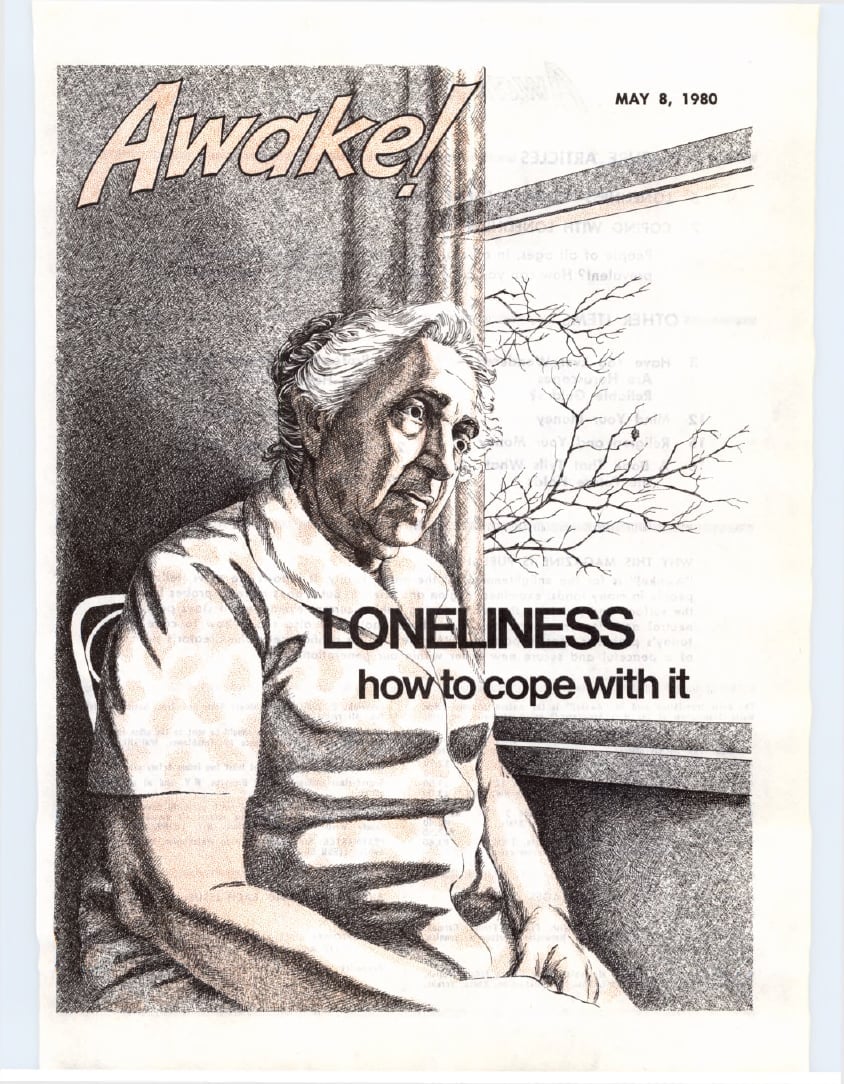
Awake! — May 8, 1980
Source: jw.org
Contents
Page Two
Are Horoscopes Reliable Guides?
Loneliness—Today’s Silent Scourge
Coping With Loneliness
Mind Your Money
A Book That Tells What the Future Holds
Professional Beggar Becomes a Happy Giver
Good Advice on Living
Our Unpredictable Weather
Watching the World
How to Avoid 5 Major Pitfalls in Daily Life
Bible Stories to Fascinate Children
Page Two
Page Two
5 LONELINESS—TODAY’S SILENT SCOURGE
7 COPING WITH LONELINESS
People of all ages, in all stations of life, experience loneliness. Why is it so prevalent? How can you cope with it successfully? The above articles answer
Are Horoscopes Reliable Guides?
Have You Ever Wondered—
Are Horoscopes Reliable Guides?
MOST people are interested in the future, particularly their own. They hope that somehow tomorrow will be better than today. Many wish to know of difficulties that the future may hold and how to avoid them. For this reason millions use horoscopes, which are claimed to help a person foresee his future and guide him correctly in making important decisions. Of course, this raises an obvious question:
HOW RELIABLE ARE HOROSCOPES?
Horoscopes are based on astrology. Astrologers say that, to be completely accurate, a horoscope must be based upon the position of the heavenly bodies at the exact time and location of an individual’s birth.
Newspaper and magazine horoscopes, which many consult, are not patterned to individuals. So they do not meet this requirement. Therefore they could not be expected to be very accurate.
ARE HOROSCOPES CAST FOR INDIVIDUALS MORE RELIABLE?
Believers in astrology will cite examples to prove the reliability of individually cast horoscopes. But they must admit that at times astrologers have made serious errors in “reading the stars.” And they can’t agree whether the time and location of a person’s BIRTH or of CONCEPTION should be used in casting a horoscope. The time difference could be nine months!
If they are satisfied as to the time and location used, what about the interpretation? “You will notice that each house [division of a horoscope] has several meanings,” reveals the book “Astrology for the Aquarian Age.” Which is the correct one? The book continues: “You can see then that you will be the best judge as to which meanings are most applicable to you.” Yet, could your own selection be wrong?
In view of these uncertainties, do you feel that a person could be confident that his horoscope had been cast on a reliable basis and correctly interpreted?
It is true that at times astrologers have made accurate predictions. For instance, some astrologers foretold Harry Truman’s unexpected election to the American presidency in 1948 and Napoleon’s surprising defeat at Waterloo in 1815.
Yet, on the other hand, a group of leading English astrologers in 1939, when the nations were on the brink of world war, assured their followers that, according to astrological signs, no war was imminent. A survey taken in 1941 of the three most popular English astrologers revealed that, out of 30 predictions, the best was only 40 percent correct, whereas one of his colleagues was only 13 percent accurate. Would either degree of accuracy warrant your confidence? Could such a source really guide you in making wise decisions that would help you to avoid calamity?
Did you realize that 2,500 years ago the people who had originated astrology and relied heavily on it found it a poor guide? It was not able to alert them to impending disaster. The Bible mentions it. Addressing the nation of Babylon, it says: “You are powerless in spite of the advice you get. Let your astrologers come forward and save you—those people who study the stars, who map out the zones of the heavens and tell you from month to month what is going to happen to you. . . . They will not even be able to save themselves.”—Isa. 47:13, 14, Good News Bible.
Those that ‘studied the stars’ utterly failed to provide reliable guidance—and that when the nation faced a disastrous end. Could the use of a horoscope likewise fail you?
Though acknowledged as unreliable, many still consider its use “harmless fun.” So . . .
IS THERE ANY DANGER INVOLVED?
Astrology’s background moves the subject of horoscopes out of the realm of entertainment into the realm of religion. “The American People’s Encyclopedia” explains: “Astrology . . . was highly respected as a means of ascertaining the will of the gods and of discovering the future destiny of individuals and nations. The early Jews, in contrast to the Babylonians and Chaldeans, did not practice astrology, since the very nature of their God precluded the use of such an art.”
Note that the “early Jews” did not practice astrology. This was because their religion was based on the Bible, which strictly condemned astrology. (See Deuteronomy 18:10-12.) Man’s Creator, the author of the Bible, did not want his people to be misled. Even authorities today warn of the dangers from using horoscopes. One scientist said: “The danger is that if people really believe in it, it takes away their power to make their own decisions.”
Naturally, we all want to make good decisions regarding our future. Since God condemns astrology, we may wonder . . .
WHAT RELIABLE GUIDE IS THERE?
In sharp contrast to unreliable horoscopes stands the Bible. The fact that hundreds of its prophecies in ancient times and in our day have been fulfilled—not with just 13- or 40-percent accuracy, but with 100-percent accuracy—proves its reliability. That is why millions of persons consider it to be a trustworthy guide. They have learned to use its principles, rather than a horoscope, as a “light” to aid them in making wise decisions and avoiding dangers. By investigating its contents and applying its fine counsel, they have experienced increased happiness.—Ps. 119:105.
No, the Bible will not promise you, as a horoscope might, that “you will meet the mate of your dreams,” but it will instruct you on how to enjoy a happy marriage. It will not help you to “come into an inheritance” of money, but it will direct you to a far greater inheritance—everlasting life on a paradise earth. Its author guarantees that he will soon remove wickedness from this earth so that righteous-hearted persons can enjoy an “abundance of peace” under a perfect heavenly government, God’s kingdom. By patterning your life, not after the stars, but after the most reliable guide in existence, the Bible, you can live to enjoy such blessings eternally.—Ps. 37:10, 11, 29, 38.
Loneliness—Today’s Silent Scourge
Loneliness—Today’s Silent Scourge
“I’M CUT OFF, sad, just putting in time. I’m alone. I eat alone, walk alone, sleep alone and talk to myself. There isn’t anyone around to hear me. Nobody except myself.”
“Love is not being lonely anymore. Boredom hurts.”
These suicide notes were the final pleas of two persons overwhelmed by “an invisible, silent disease,” now reaching epidemic proportions—LONELINESS.
More and more people are feeling the gnawing pain from the sharp realization of not belonging, and of not being wanted—no, not even by their own relatives.
“There is no one I know that really understands me!” bemoan many. These may be surrounded by people, but they dwell in a silent world, without a soul with whom they can share intimate concerns and who is interested, sympathetic and accepting.
It Is at the Top of the List
A poll conducted in 1978, involving over 52,000 participants, asked what emotions brought them the greatest discomfort. What was at the top of the list? Over 40 percent said they “often feel lonely.” This is quite alarming when we consider that very few like to admit to loneliness.
Really, though, almost everyone has experienced feelings of loneliness. For many, such feelings soon pass. But for millions of others loneliness becomes chronic and life grows miserable.
Loneliness is no respecter of persons. Teen-agers, young singles, the middle-aged and senior citizens have all known its sting. Wealth and position are no protection against it.
Marriage is not automatically a shelter from loneliness. Several researchers say: “Among the loneliest people in the world” are couples trapped in a marriage in which there is no real communication.
Of loneliness, one expert said: “There is no human condition so acute—or so universal.”
The Tragic Effects on a Person’s Life
At its worst, loneliness can cause suicide. Several studies have linked the dramatic increase of suicides, especially among teen-agers, to the spread of loneliness. One study reported: “If one theme runs through the accounts of suicides, it is isolation from family, friends, from anyone who could serve as an anchor to reality or simply listen well.” (Italics ours.)
To block out loneliness, its victims have turned to alcoholism, compulsive overeating, drug abuse and promiscuous sex. Often loneliness is the impetus behind singles bars, dance clubs, encounter groups, computer dating and columns in newspapers advertising for mates.
A host of medical ills have been attributed to loneliness—gastric disturbances, asthmatic attacks, skin eruptions and others. In the book The Broken Heart—The Medical Consequences of Loneliness, author James J. Lynch provides documentation showing that single or divorced individuals, persons who often live alone, have shorter lives and suffer a greater number of heart ailments. His blunt conclusion is, “Human companionship is quite literally an important form of life insurance.”
Research has even indicated that loneliness may trigger violence.
Of course, this is not to say that all persons who suffer from certain illnesses are lonely, nor are all single and divorced persons prone to alcoholism, promiscuity, violence or the like. Yet, what has been presented shows the traumatic effect loneliness may have on one’s life.
Why So Much Loneliness Now?
In the past few decades family life has markedly deteriorated. Divorce rates in virtually all countries have skyrocketed. There has been a dramatic increase in single-parent families. More and more people find themselves living alone. Add the number of widowed persons and singles, and the total is staggering.
Attitudes and developments in today’s society have also created an atmosphere that fosters loneliness. Emphasis has been placed on impersonal technology, getting the maximum production with a minimum of effort. The individual is often viewed as a mere production tool. Many persons apply similar principles to their personal lives. They do not want to make the emotional investment needed to develop satisfying relationships with others, so they make merely superficial acquaintances. Couple this with the mobility of today’s space age and you can see why it is not difficult for persons to get lonely.
Television also has discouraged genuine communication with family and friends. The flocking of multitudes from the farms to the “big city” is another recent development. What has happened in Japan is typical of many lands. Reportedly, before World War II families were in close association. Relatives and neighbors were always on hand when one had a problem. But, according to Japanese sociology professor Susumu Iivuka, “now, when 60 percent of Japan’s 112 million people live in only 2 percent of the land area, more and more families are finding themselves isolated in concrete jungles and not have adapted to the new pattern.”
Living in large cities, a person can become “people weary” and at the end of the day may want to escape from people, perhaps even his own family. He may ignore the stranger who needs his help. He withdraws into a protective shell. He begins a process that can cause him to become more and more isolated. Gradually his haven of isolation can become a prison of loneliness.
The reasons for loneliness are many and complex. But the vital questions are, How can I cope with it? What can I do to break its spell?
[Picture on page 5]
SUICIDE NOTES OF PERSONS OVERWHELMED BY LONELINESS
Love is not being lonely anymore.
Boredom hurts.
I’m cut off, sad, just putting in time. I’m alone. I eat alone, walk alone, sleep alone and talk to myself. There isn’t anyone around to hear me. Nobody except myself.
Coping With Loneliness
Coping With Loneliness
JOANNA was an attractive 15-year-old and very popular with both boys and girls. She appeared to be happy, enjoying an abundance of companionship. Her life was cut short by the blast of a double-barreled shotgun—by her own hand. She left the note: “Love is not being lonely anymore. Boredom hurts.”
Why would a person like Joanna, so surrounded with friends, feel lonely?
Simply Being Alone Is Not Necessarily Being Lonely
Many persons cherish some solitude so they can reflect and meditate. However, all persons have a basic need to communicate their feelings to another who will indicate an interest. When this desire to share the intimate concerns of one’s heart is frustrated, loneliness is the result.
We can easily see, then, how one could be lonely in a crowd, or even with a multitude of superficial acquaintances. Loneliness exists when there is no response from others, when we feel that we are not wanted or must carry our emotional loads alone.
There are legitimate reasons for loneliness. A mate or an intimate friend may die. No question about it—you are going to feel lonely. Divorce will also spawn loneliness. One woman describes such agony:
“I am in the middle of a divorce that I did not want and never expected to happen. My husband has left me. My agony at this time is so great that sometimes I wish I were dead. I don’t feel I will ever get over this, especially at 4 a.m. when I wake up and realize once again that I’ve been abandoned and I am ALONE.”
If you move into new surroundings, perhaps far from close friends, loneliness may well follow. There is no need to feel embarrassed or ashamed. It is normal and to be expected. One authority said:
“Once you accept loneliness as a perfectly human feeling, the lonely feelings will almost certainly pass. They will be replaced by another kind of mood or feeling. It is a fact of life that these feelings will come and go. Not accepting this fact, expecting to live in a constant state of euphoria, will only result in disappointment or bitterness.”—Theodore I. Rubin.
It is not a matter of never feeling lonely, but of not being overwhelmed by it. However, knowing what causes loneliness is one thing, finding an answer is another.
Telling a Lonely Person to “Get Busy” Is Not the Full Answer
Often the typical response to a lonely person is: “What’s wrong with you? You don’t have to be lonely. Go out. Join a club. Get busy and do something!” The entire blame for the loneliness is laid on the victim’s shoulders.
However, staying busy simply for the sake of staying busy can be like a narcotic. It does not confront the real cause of the loneliness, but covers it over or dodges it. One researcher admitted:
“I have been told by countless widows that they have tried this formula [making themselves busy] only to find that they return home to an empty house exhausted and all the more vulnerable to the painful void of their lives.”
Nevertheless, some have found that keeping themselves busy doing things for others with an unselfish motive does ward off loneliness. It can help create the kind of relationships that lonely people lack. The Bible example of the Christian woman Dorcas illustrates this. “She abounded in good deeds and gifts of mercy,” according to the Scriptural record.—Acts 9:36.
At her death, she was apparently unmarried. Had she developed close relationships with others? The Bible says that “all the widows” wept over her death and ‘exhibited many garments’ that Dorcas had made for them. (Acts 9:39) She had reached out with acts of kindness to those who were also alone. This endeared her to them. It also helped her to repel loneliness. Similar generosity can assist you today to cope with feelings of aloneness.
But why is it that some single persons find happiness with their circumstances while others fail?
It Is Often How You Look at It
Naturally you may crave a warm family of your own and bemoan being single. Yet, a recent poll asked various persons whether they would change their life with another person, if they could, and, if so, with whom. Amazingly, both married persons and singles looked enviously at each other. One wife who wanted to change life with her single girl friend wrote:
“Her time is her own. She can travel and go places whenever she wants to. When you’re married and have children your life is never your own. You always have a husband and children to answer to . . . Don’t get me wrong. I love my family very much and they are the center of my life. But if I had it to do over again, I wouldn’t get married.”—Psychology Today, August 1976.
Though your singleness may be forced rather than by choice, still look at the advantages. This viewpoint will help to prevent crippling self-pity. “There are worse things in life than never finding a man,” warned one single woman, who added: “There’s never finding yourself.” But that is not accomplished by spending one’s time thinking only about oneself.
Reach Out to Other Persons
The Bible suggests “keeping an eye, not in personal interest upon just your own matters, but also in personal interest upon those of the others.” (Phil. 2:4) Show an interest in others. Be willing to pay the emotional price to reach out to other persons. Work to form relationships that are not simply razor thin.
“It is not as easy as it sounds!” answer millions of lonely people. True. It takes cultivating what the Bible calls “fellow feeling.” (1 Pet. 3:8) The original Greek word literally means “to suffer with.” It involves sharing the experiences of others. So when engaged in conversation, rather than thinking of what to say next, genuinely listen. Concentrate on what the person is saying. Endeavor to feel his emotions. See things from his point of view.
Nothing will stimulate good conversation more than a few meaningful, yet considerate, questions such as, “Where are you from?” “How do you like the area?” “What do you do for relaxation?” “Do you have any hobbies?” If the person is a fellow Christian, a question that usually gets things going is, “How did you become interested in becoming a Christian?” Naturally, avoid prying or pressing a matter farther than your companion finds comfortable.
Soon you will be asked similar questions and have opportunity to talk. Besides merely talking, you will be taking the first step in establishing rapport with another. When you next meet, you will have something in common. He no longer is a meaningless face in the crowd. Neither are you to him. You have begun to share thoughts and experiences together.
Expect some awkward moments. Even the Bible says: “We all make mistakes in all kinds of ways, but the man who can claim that he never says the wrong thing can consider himself perfect.” (Jas. 3:2, Phillips) So do not expect perfection from either yourself or others. Often there is a natural shyness. It takes time and mutual sharing to build a genuine friendship. So do not imagine that such is formed after a few light conversations. The point is: Show an interest in others and you will find that, gradually, chronic loneliness will leave. However, will all your acquaintances make good friends?
Be Careful How You Choose Your Friends
The stories are endless about how lonely people, especially women, are befriended by persons who selfishly take advantage of them. “In her loneliness, she lost all reason. She still thinks she did the right thing,” lamented one Canadian law official about a lonely widow from whom $100,000 had been extorted by a man she confided in.
Money is not the only thing nor the most valuable thing that lonely people stand to lose by not being careful about whom they choose as companions. Personal moral standards, self-respect, dignity, a good conscience are but a few “valuables” taken from lonely people by so-called consoling friends. Hence, a true Christian should seek friendship among those governed by Bible principles. Practical wisdom is contained in the following Bible proverbs:
“He that is walking with wise persons will become wise, but he that is having dealings with the stupid ones will fare badly.”—Prov. 13:20.
“Do not have companionship with anyone given to anger . . . that you may not get familiar with his paths and certainly take a snare for your soul.”—Prov. 22:24, 25.
“He that is having companionship with prostitutes [or immoral women and men] destroys valuable things.”—Prov. 29:3.
It is especially dangerous for married persons who cannot communicate well with their mates to look for an emotional response elsewhere. How much better to work at drawing closer to one’s mate. Learn to share, not merely a home, but your feelings.
Common sense and respect for marriage should tell us that we should not expect to have certain needs for companionship fulfilled by one of the opposite sex with whom we have no right to become emotionally involved. Of course, when a lonely Christian is going through a very difficult situation, it is only natural that others in the congregation, especially the elders, would be concerned. (1 Thess. 5:14) One Christian woman who was emotionally shattered by her divorce said: “A big help during this time was an elder who, along with his wife, took a real interest in me. They would stop by at various times just to say a few words of encouragement.” What kept improper emotions from developing? She said: “He always had his wife with him, so wrong feelings never entered my mind.”
However, merely having pleasant association with good friends is not the complete answer to loneliness. A person cannot spend all his time in friendly conversation. For a person to have self-esteem, which is so needed in overcoming loneliness, his life must have purpose and a genuine sense of achievement. What is needed to provide this?
A Relationship That Calls for Commitment
“Commitment was always a dirty word with me,” said one 24-year-old single woman. Yet her life was meaningless, as she said: “It was just day after day of depression and loneliness. . . . I spent a lot of years waiting—waiting for the world to hand me an envelope with my life inside it. Then I figured everything would be okay. I wouldn’t feel lonely or insecure.” It never happened.
Her experience is typical of many, for one researcher reported of many lonely teen-agers: “They didn’t develop depth, never learned the tools of survival, didn’t discover the importance of setting life projects.” The importance of “life projects” and commitment cannot be overemphasized if one is to conquer loneliness. But commitment to what? There are many pursuits available today. Which of these should be selected as one’s ‘life project’?
A wise king several millenniums ago had the means to pursue one goal after another—wealth, gardening, landscaping, building, musical interests, a lady, and many other things. After reflecting on all the various courses he had pursued, King Solomon said: “The conclusion of the matter, everything having been heard, is: Fear the true God and keep his commandments. For this is the whole obligation of man.” He had considered everything then available. His experience in life helped him to conclude that centering his life around God and His worship was the only pursuit that brought lasting satisfaction. Many have found that Solomon’s “conclusion” is just as true in today’s world.—Eccl. 2:3-11; 12:13.
Does this mean merely going to religious meetings and becoming deeply involved in social affairs? Perhaps you have tried this. The Bible indicates that there must be a deeper commitment than merely to social functions or even to some noble work.
Jesus Christ showed that there must be a personal, intimate relationship with God. Anticipating his desertion by his disciples, he said: “I am not alone, because the Father is with me.” (John 16:32) He sensed his Father’s keen interest in him. God was not remote or distant. He knew his Father. This closeness is what strengthened Jesus during moments when no human was around to help.
Even though you may be involved in religious activities, have you really developed a personal relationship with God? Do you sense his keen interest in your life? Do you feel as did Jesus, that ‘the Father is with me’? Or does God seem remote and detached?
Really to get to know God requires first that one learn about him, about his personality. Such information can be found in the Bible. Jehovah’s Witnesses will be glad to assist you personally, and free of charge, to gain accurate knowledge about God.—John 17:3.
As you grow in this knowledge, you will be drawn closer to our heavenly Father. You will see how he provides the strength for you to face each day’s cares and apprehensions. All of this will help you to build a strong personal relationship with God, which is the finest answer to loneliness.
[Blurb on page 10]
As you grow older, are human relationships enough?
Mind Your Money
Mind Your Money
You work hard for your money, though it seems to buy less every day. Prices keep going up, and your money must go farther. How can you make it do that? The more you know about how sellers persuade you to spend it, the better decisions you can make about keeping it
WE LIVE in a consuming society. From all sides come messages urging us to spend. Newspapers and magazines, radio and TV, street posters and billboards flood our minds with messages that we may not consciously remember but that lead us to buy certain products. Manipulation goes on in more ways than you would imagine, to separate people from their hard-earned money.
Children are manipulated by toy ads, teen-agers by disc jockeys, and parents are lured into installment buying at startling charges. In his book The Innocent Consumer vs. The Exploiters Sidney Margolius says such manipulation prompts one to a “massive waste of family money and a diversion of family resources” needed for other more important things.
We are persuaded to buy in many ways. Let’s consider a few:
From all sides we are told to buy to be happy. But when we buy the item and take it home, we find that little has changed.
A mother sees pots and pans marked “gourmet” cookware. This suggests she could make better dinners with these. But we all know that the quality of cooking usually depends on the ingredients and the skill of the cook, not on what the manufacturer calls the pot.
The father sees a beautiful illustration of fine furniture, with the promise that he could make it if only he had a certain expensive power tool. No doubt such tools speed the job, but will this tool really turn him into a skilled craftsman? Craftsmen have made exceptional furniture for centuries with far simpler tools.
You would like to take beautiful pictures, but buying the most expensive camera will not necessarily make you a master photographer.
If you look at what a device actually does, at how much you really will use it, and at how great your need for it actually is, your money will go farther, and you will get more benefit from the things you buy.
Merchants of Discontent
Manufacturers do a good job of selling stoves, refrigerators, television sets, and even automobiles and clothing to people who already have these items. How? By making people feel that what they already have is out-of-date. Marketing people make the public style-conscious, then switch styles. There are various ways to change styles, but, as Vance Packard said in his book The Hidden Persuaders, the “use of color is one of the cheapest ways it can be done.”
The merchandisers thus become “merchants of discontent.” You have the “old style,” “last year’s color,” one that is not “up-to-date.” Before long you begin to wonder if you should not get a new one. This is the same method automobile manufacturers use to make you dissatisfied with the “old” family car, even though it still runs beautifully and does not look bad.
Cash or Charge?
There is another way merchandisers encourage you to spend more than you should. Their employees are trained to ask: “Cash or charge?” They may suggest that you apply for one of the store’s charge cards. Charging makes it easier for people to buy. Major corporations have proven that this is true.
Less scrupulous stores may use credit to hide the real cost. Rather than quoting the price, they merely quote the monthly payments. An appliance retailer said: “We prefer to say ‘$12 a month.’ Giving the total price merely confuses the customer.” But often it is the monthly payment that is used to confuse him. A store manager said: “You can raise the average customer about a dollar a yard on carpet through credit up-trading. We’re more apt to quote with emphasis on payments than on dollars per yard.” Thus, the monthly payment is quoted on a higher price than the customer thinks he is paying.
Does widespread use of credit damage families? Yes, especially those who need to watch their funds the most. There is the high finance charge, the temptation to buy unneeded or overly expensive items, and the risk of overindebtedness. In the United States alone several million families—many of them younger ones—are in debt trouble.
So, to make your money go farther, be careful about consumer credit.
Read the Ads
Knowing how to read sales ads in the newspapers is another way to make your money go farther. Remember, some sales are legitimate; many are not. Here are some points on getting the best out of them:
Watch for seasonal sales. In many places business declines after the Christmas rush, so stores run January sales. Also, purchases of summer and winter clothing drop off midseason, that is, January–February and June–July. These are times to look for such sales. Some of the merchandise may be shop-worn, and the selection may not be as great. But careful selection at these times often can save you money.
A going-out-of-business sale may be legitimate, but be careful. In some stores the “going-out-of-business” sign seems never to come down.
Watch what the ads really say. “Regularly $99.95, now $59.95” should mean, if true, that the price will go back to $99.95 after the sale. “Comparable value $99.95” means much less. The store says this item compares with higher-priced goods, but that comparison may be only in the store owner’s mind. “List price $99.95” means even less. This is the price printed on the manufacturer’s list, or on the box. It could have little relation to reality, and may have been set excessively high so stores can seem to give bargains by marking it down.
“Below manufacturer’s cost” raises more questions, such as: Why? Was it a poor seller? Has it been discontinued? Are parts no longer available?
“Save!” Remember that this eye-catching word usually has only one aim—to get you to spend. Words like “Special!” “Reduced!” and “Clearance!” obviously mean no more or less than the store manager wants. Even in well-known stores more than one employee has been told: “Mark it $7.95, so next week we can mark it down to $6.50.”
We fall victim to such games because we want to find a bargain. You can protect yourself by learning price and quality. Know what things cost. And remember, nothing is a bargain unless you really need it. Even if buying it could really save you 50 percent, not buying it would save you 100 percent!
Shop Around
It has been reported that members of lower-income families (who obviously need the savings the most) are less likely to shop in more than one store than are buyers from more prosperous families.
Can you save by comparing prices in several stores? Of course you can! In the U.S.A. the Consumers Union found that prices for the same home appliance varied from $259 to $370 at different stores.
Cutting Your Food Bill
It has been estimated that many housewives could cut their food bill as much as 25 percent by shrewder shopping. Food is a big part of your family’s expense. How do the experts say to save on it?
First, you should plan. You can save by buying once a week, rather than every day. You can watch for sales, and you can buy food products when they are in season and cost far less than they do the rest of the year.
A shopping list can help greatly. Stores that advertise low-priced, loss-leader items to attract customers hope you will buy enough other things to make up for the low-cost items. Great thought is given to getting you to buy higher mark-up items while you are in the store.
Displays stacked high, or put at the ends of aisles, or on special tables in the middle of aisles, or near the check-out counter may tempt you to buy items that were not on your list. Supermarket owners know that a store’s profitability depends on its success in stimulating such impulse buying. Leland J. Gordon and Stewart M. Lee say in Economics for Consumers: “The tendency of consumers to buy impulsively is exploited by sellers, to their advantage. Impulse buying increases when men do the shopping and soars when children are along. Aware of impulse purchase traps, the careful shopper buys what is on her shopping list, and nothing more.”
Other Ways to Save
Many grocery games are played with packaging, and with prepared foods. Once upon a time when you bought a pound of sugar, or a kilo of rice, these were weighed in front of you and you took them home. Now they come in packages, which can be deceptive. Some big boxes are far from full. A bottle of hand lotion was designed to look larger than a competitor’s bottle that held twice as much. A package may look as if you are getting more, when actually you are getting less.
A simple solution is to compare. Read the weight before you buy the package.
Prepared vegetables are sold in convenient packages, and cheeses in bite-sized pieces. But you pay—sometimes more than you think—for such convenience. Not only do prepared foods cost more; they may have less nutritional value than you expect. Fillers, extenders and even water have replaced some of the nutrients in prepared foods.
The rule is simple: The more special preparation that has gone into your food, the less you will probably get for your money.
How to Protect Yourself
The careful shopper takes this job seriously, and gets as much as possible for the money. On the preceding page is a checklist of basic points to remember in order to get more for what you spend.
Doing these things will not make prices go down, but your money will go farther when you are conscious of where it goes. And you will know that you did what you could to keep from paying more than was necessary.
[Box on page 14]
Shopper’s Checklist
□ Use a shopping list; avoid impulse buying.
□ Ask yourself: “Do I really need this, or will the one I already
have do almost as well?”
□ Be careful of “easy” credit, and do not pay finance charges
unless there is a real reason to do so.
□ Beware of unbelievably low, low, low prices.
□ Watch for seasonal sales.
□ Read newspaper advertisements carefully, and take the ad with
you when you shop.
□ On packaged items, read the labels; buy by weight, not by
package size.
□ When products are weighed in front of you, watch the scale.
□ Watch the amount that the check-out clerk rings up for each
item.
□ Above all, be nice. The people who are waiting on you have to
pay high prices too. A smile brightens everyone’s day.
[Box on page 15]
Religion and Your Money
People donate a lot of money to religious causes. In the United States such donations amount to about $18,000,000,000 a year.
Much of the money is no doubt used for the purpose intended. But is everyone pleased with the way their contributions to religious groups are used? In a letter to the “National Catholic Reporter” one man recently wrote: “Ever since I was a young teenager I have had complete faith and trust in these organizations.” But “now,” he continued, “my faith and trust have been shattered.”
This man was disillusioned by scandals involving donated funds. He mentioned Father Flanagan’s Boys Town. Also the Pallottine Fathers, who raised millions of dollars through massive mail appeals to help starving waifs in other lands. But the head of that monastic order had to plead guilty in court to “fraudulent misappropriation” of funds. The man also referred to the investigation of the Pauline Fathers for allegedly having squandered as much as $20 million on high living and bad real estate ventures.
Protestant evangelists use radio and television appeals to draw many millions of dollars yearly from home listeners. The evangelists may offer a free religious item of small value on the air. But “once you’ve written, your name is in his computer,” says “Presbyterian Survey” magazine, and you’ll be bombarded with letters asking for money.
A former Southern Baptist radio official explains that much of the money is used to buy more broadcast time to get more money to buy more broadcast time. And since the evangelists are “under continual scrutiny by [tax officials],” he says, they may “establish a university and make themselves president, [so] they can pay themselves large sums of money without IRS scrutiny.”
It is commendable when a person contributes his funds to help others. And certainly not every appeal is fraudulent. But clearly it is wise to think twice before contributing, even when the appeal is made in the name of religion.
[Picture on page 13]
“Mark the price up a bit, so next week we can mark it down for a quick sale.”
A Book That Tells What the Future Holds
A Book That Tells What the Future Holds
CAN anyone accurately predict the future? Some persons will reply with an emphatic No! They point to numerous cases of error and outright fraud by some who claimed to have powers of prediction.
Those who have resorted to occult means have often been told certain things about the future. Yet after making plans based on such predictions, these have been disappointed.
Even with all the technology of the modern world, scientists can only make calculated guesses about the future. The ability to tell what the future holds, and to do so with consistent accuracy, is beyond human ability.
Yet there is a book that has accurately predicted the future. History has verified its exactness. It has never been proved wrong. This book is the Bible. Does this not indicate that its contents must have a source higher than man? As evidence of this, consider some of its prophecies.
A ‘Wonder of the Ancient World’—Its Doom Foretold
Over 35 centuries ago a small nation in the Middle East sat on the center of the main land trade routes between the East and the West. Edom, with its capital Petra, controlled a great flow of rich cargoes and travelers. Petra was located in the desert but surrounded by “inaccessible mountains.” In the city, jutting 1,000 feet (305 m) straight up, was an “exceedingly strong” mountain fortress that reportedly ‘one man could hold against an army.’
While the city held this seemingly unconquerable position, Bible prophets foretold: “‘O you who are residing in the retreats of the crag, . . . Although you build your nest high up just like an eagle, down from there I shall bring you,’ is the utterance of Jehovah. ‘And Edom must become an object of astonishment. . . . no man will dwell there.’” “From generation to generation she will be parched [a desolate waste]; forever and ever no one will be passing across her.”—Jer. 49:16-18; Isa. 34:5, 10.
Despite having the best natural defenses of any city in the world, Petra was captured, and the remaining Edomites were driven out. In time the Edomites disappeared from history. But the land did not become a desolate waste with ‘no man dwelling there.’ Rather, the new inhabitants (the Nabataeans) brought Petra to its greatest power. Tolls from the rich caravans filled it with great wealth. Exquisite buildings and architecture were carved into the rose-colored rock. The city became one of the ‘wonders of the ancient world.’ Yet suddenly the trade routes shifted, no one any longer crossed through the land, and the city died. The 1,000-year-old Bible prophecy came true. As one who visited the ruins declared: “I would that the skeptic could stand as I did, among the ruins of this city among the rocks, and there open the sacred Book and read the words of the inspired penman, written when this desolate place was one of the greatest cities in the world.”
“The Great City” That Became an Unusual Grave
Nineveh, “the city of blood,” instilled terror throughout the ancient Middle East for over 15 centuries. It was called “the great city,” for with its suburbs it may have covered over 200 square miles (518 km2)! Ancient historian Diodorus says that ‘a city its equal was never founded by any man after it.’ Yet during the height of its power the Bible foretold: “And [God] will make Nineveh a desolate waste, a waterless region like the wilderness. And in the midst of her, droves will certainly lie stretched out.”—Zeph. 2:13, 14.
Less than 20 years later, around 632 B.C.E., the Babylonians and the Medes besieged Nineveh. The city felt secure behind its 100-foot (30-m) walls capped with 1,500 20-story towers. However, Bible prophecy indicated an unusual event that sent Nineveh to her grave. It said of the city: “The very gates of the rivers will certainly be opened, and the palace itself will actually be dissolved.”—Nah. 2:6.
Historian Diodorus says that because of heavy rains the river by the city overflowed and “both inundated a portion of the city and broke down the walls for a distance.” It was now quickly taken and the conquerors “turned the city into a mound and a ruin.” The desolation was so complete that the location of the city was lost for centuries. Modern excavations have found its amazing ruins in a huge mound, buried some 40 feet (12 m) deep, under an estimated 14 million tons of dirt. Near the top of this desolate “grave” shepherds, to this day, graze sheep. How accurate the Bible proved to be, despite the seeming unlikeliness of its fulfillment!
The Bible has hundreds of other prophecies that were fulfilled in the past. It foretold, by name, that Cyrus the Great would conquer Babylon (Isa. 45:1); the conquest of the Medo-Persian empire by Greece (Dan. 8:3-7, 20, 21); the short reign of Alexander the Great and the division of his Greek empire between his four generals—to mention a few.—Dan. 8:22.
Why is all of this so important to us today? Because the Bible also makes predictions about our time. Since the past predictions were fulfilled, we can have confidence in those about the future.
Things Yet to Come
But just what does the Bible foretell about our future?
GOD’S RULE TO REPLACE HUMAN RULE OF THE EARTH. “The God of heaven will set up a kingdom that will . . . crush and put an end to all these [human] kingdoms, and it itself will stand to times indefinite.”—Dan. 2:44.
SOME PERSONS WILL SURVIVE THAT DESTRUCTION. “Seek Jehovah, all you meek ones of the earth, who have practiced His own judicial decision. Seek righteousness, seek meekness. Probably you may be concealed in the day of Jehovah’s anger.”—Zeph. 2:3.
A NEW EARTHLY ORDER. “I saw a new heaven and a new earth . . . And God . . . will wipe out every tear from their eyes, and death will be no more, neither will mourning nor outcry nor pain be anymore.”—Rev. 21:1-4.
THOSE IN THE GRAVES WILL COME OUT. Jesus declared: “The hour is coming in which all those in the memorial tombs will hear his voice and come out.”—John 5:28, 29.
Are not these promises thrilling? When human rulership gives way to rule by God, there will be no more wars, governmental corruption or oppression of defenseless persons.—Ps. 72:1-4.
Is this hope really dependable? It may seem incredible. But consider how unlikely those other Bible prophecies were at the time they were given, and yet they were accurately fulfilled. So we can have genuine confidence that these others will come true—and soon. Having God as its Author, the Bible is, indeed, a book that accurately tells what the future holds.
[Box/Picture on page 17]
The Prophecy
“‘O you who are residing in the retreats of the crag, . . . Although you build your nest high up just like an eagle, down from there I shall bring you,’ is the utterance of Jehovah. ‘And Edom must become an object of astonishment . . . no man will dwell there.’”—Jer. 49:16-18.
Its Fulfillment
What is the condition of ancient Edom today? “Around us were the desolation of ages; the dwellings and edifices of the ancient city [Petra, the former capital city, carved out of the mountain crag] crumbled and strewed in the dust.”—Edward Robinson, in “Biblical Researches in Palestine.”
[Box/Picture on page 19]
The Prophecy
During the height of Nineveh’s power the Bible foretold that God would make it “a desolate waste . . . and in the midst of her, droves will certainly lie stretched out.”—Zeph. 2:13, 14.
Its Fulfillment
Visitors today see only a mound to mark the desolate site of ancient Nineveh. And, as foretold, flocks of sheep graze there.
Professional Beggar Becomes a Happy Giver
Professional Beggar Becomes a Happy Giver
WALKING with difficulty, I was on my way to visit neighbors when a ragged beggar shouted out: “Jorge, don’t you beg anymore? Did you get rich?”
Yes, I am Jorge. I was a professional beggar for 15 years, but I do not beg anymore. I answered: “Yes; I am now richer than the owner of the sugar mill.” In northeastern Brazil, sugar-mill owners are among the richest people.
He gazed at me in astonishment. Taking advantage of his silence, I added: “Look! Here is why: ‘The blessing of Jehovah—that is what makes rich, and he adds no pain with it.’” (Prov. 10:22) I explained that, even though I still had little of this world’s goods, I considered myself to be rich. Why? Because I had come to know the true God, felt his blessings in my life, had made true friends, and had a job and enough to eat.
My former begging companion was flabbergasted. “How could you give up begging?” he wondered. But you might wonder why I became a beggar in the first place. Here is my story.
Tragic Childhood
I was born in 1930, paralyzed in both legs. At the time, my family was living in a small town in the state of Paraíba, Brazil. Our sustenance came from farm work. To help our parents, my 11 brothers and sisters and I had to work on the land too. Crouching on the ground, with my hands supporting my body, I worked as well as I could. Dad had to work from early morning till late at night every day of the week. He enjoyed no free Sundays, no holidays. And at the end of the harvest and after paying the rent, what was left over was not enough to buy clothes or medicines.
On the brighter side, I inherited a love of music from my granddad. I learned to play the violin and accordion and for several years we played at lively regional festivals. But when I was 14, Dad became ill. In order to buy remedies we had to sell all our belongings. How I cried when my violin changed hands. It had given me so many hours of happiness. Sad to say, Dad died soon after, and within five days Mother followed him. Twelve orphans were left behind—poor, hungry and not knowing what to do or where to go.
Well-meaning persons who did not really know the Bible told us: “Accept your lot, children. It is God’s will.” With this shattering outlook we separated and each one went his own way.
How would I survive? I moved to Santa Rita and resorted to playing music again at local festivals. But I had to hire the instruments and many times I did not have enough left to pay the rent for the hut where I lived, handicapped and hopeless.
One day I was invited to play at a folkloric festival. My physical appearance must have caused some comment, and I related my distressing situation. One person after another showed pity and told me: “Come up to my house. I’ll give you a hand.” And that’s what I did. I began to get presents and I thought that a beggar’s life wasn’t so bad after all. Before long I had a regular routine. Next I found a consensual companion. The clothes, shoes, food and other things I was given on my “route” were sufficient to keep us.
My physical handicap was real, and that is true of many other beggars too. But, as I soon learned, many who live on charity are strong and healthy.
Deceptions Employed
Some beggars master the art of simulating sadness and piety, imploring compassion. As an example, one of my former “colleagues” managed to raise his large family exclusively from alms. On many occasions he traveled to Rio de Janeiro, a distance of almost 3,000 km (1,860 miles), to “work” where income was higher. Once he walked all the way, guided by one of his children, begging from town to town, pretending to be blind. When I occasionally met up with him, he would say: “Jorge, there’s nothing wrong with me. I feel fine, really fine.”
A woman who lived near me pretended to be a widow, always dressed in black. In reality she had a husband, two children and owned a house. Besides receiving money and food, she would also get new dress materials, which she promptly sold. While she was “at work,” her family took it easy at home.
Another beggar employed a different ruse. She would pick up a dirty, crying child from the neighborhood and carry it through the streets, lamenting: “Have pity, for God’s sake. Help me to buy milk for my baby.” Of course, the crying child inspired pity, and many passers-by were quick to give her some money. Then she returned home and handed the child over to its real parents, paying them a small fee for the “hire.”
Some beggars used printed cards that may say, “So-and-so, living at such and such a street [which does not exist], is blind and needs your help to care for his children.” The beggar gets on a bus, hands a card to every passenger, then turns around and picks up the cards and whatever donation is added. Others exhibit wounds and bruises and beg for money to pay for an operation. They tell the same story year in and year out but never have an operation.
Also, a beggar’s intimate life is generally quite promiscuous. I was no exception. As soon as I got tired of one companion or when she annoyed me, I simply sent her packing and took in another.
Can such a dissolute life bring real happiness? It certainly did not give me any.
I Longed for a Way Out
Many times I felt ashamed of myself and had fits of crying. I kept saying to myself: “Some day I’ll find a way to abandon this beggar’s life, with God’s help.” But I did not know the true God then.
Certain incidents made me think seriously. In Campina Grande, my begging companion got drunk and in one bar the men shouted: “Go to work, you lazy bum, you idle, drunken rotter.” This cut me to the heart, since I viewed begging as the only means for one in my physical condition to make a living.
When I felt blue, some persons who regularly helped me would say: “You are not a beggar to us. We like to help you, Jorge.” Nevertheless, more often than not, the reception was the opposite. One man shouted at me, “Go to hell and ask for alms.” It made me sad. Would I have to go on like this all my life?
One day I took a bus home after a begging expedition in the state capital. A young man sitting beside me started a conversation. He pulled out a Bible and showed me that it is God’s purpose to end all sickness, frailty, hunger and even death. (Isa. 33:24; 35:6; Ps. 72:16; Isa. 25:8) I had never heard anything like it. “God’s purpose is to transform the whole earth into a paradise,” he said. A paradise? This made me listen! I thought to myself: “Here’s your chance to leave this wretched life of begging for alms.” We made arrangements for him to visit me. Right at the agreed hour the young man came to my humble home to continue our discussion.
As he was leaving we made another date. But when he had gone I remembered that at the same time I was to attend a session at the voodoo center that I frequented. All week I pondered: “What should I do—study the Bible or go to the voodoo session?” I made my decision: I would study God’s Word. And I have never regretted that decision. In fact, after some weeks of study I learned that the Creator condemns all forms of spiritism. (Deut. 18:9-13; Rev. 21:8) Wanting to please God, I soon gave up my voodoo connections and began to associate with the congregation of Jehovah’s Witnesses where the young man attended.
Giving Up a Beggar’s Life
I realized that I could not be a Christian and a beggar at the same time. For the Bible standard is: “If anyone does not want to work, neither let him eat.” (2 Thess. 3:10) But how could I get work? In this part of the country it is hard to find work if one’s body is sound. How much more so for someone who does not have the use of his legs! What could I do? Lovingly, one of the Witnesses taught me how to make coconut confectionery. However, despite my efforts, what I sold was not enough to live on. So I continued begging. My heart fell. Was all lost?
One day I was shown what the Bible says at Psalm 37:25: “A young man I used to be, I have also grown old, and yet I have not seen anyone righteous left entirely, nor his offspring looking for bread.” That impressed me. Was the psalmist right? I had to prove it for myself. I needed to change from my outlook of self-pity. So I said to my companion: “From next week on I shall no longer go begging for alms.” She was stunned. “How are we going to live? We’ll die of hunger!”
“I have confidence that Jehovah will somehow provide for our necessities,” I answered. “He knows what we need even before we ask him.” I thought of Matthew 6:31-34—the promise that God will bless our efforts to obtain material needs if we seek first his kingdom and his righteousness.
Jehovah has been very good to us since then. Never again have I held out a hand to ask for bread! I’ve managed to provide our necessities by work. The psalmist was right. What happened? The Witnesses in the local congregation gave me further advice and help in obtaining raw materials for confectionery, which I continue to sell. Additionally, several times a week I would gather up old paper in the city and sell it. A little later, the Witnesses assisted me in applying for a small monthly invalid’s pension. Indeed, Jehovah has proved to be a loving provider, through the assistance of the Christian congregation.
In time I learned God’s standard for marriage and legalized my union with my companion with whom I had been living for several years. Then, on April 13, 1975, I was baptized in symbol of my dedication to Jehovah God, through Christ Jesus. More and more I got wrapped up in congregation activities, even conducting one of the congregation’s Bible studies each week. This opportunity to do things for others had brought me great happiness.—Acts 20:35.
At first, my wife was a little apprehensive about all this activity. But to my great joy, she too began to take the study of the Bible seriously, and now shares with me in telling others the good things we are learning. Our 10-year-old adopted daughter participates with us too.
Sometimes I meet former street companions. When they ask me why I gave up begging I do not shrink back from telling them. Moreover, I have also explained to all those kind people who helped me when I was in need what freed me from a beggar’s useless life. Really, I changed from a beggar to a giver, encouraging others to “take life’s water free.”—Rev. 22:17.
Knowing that the problems genuine beggars in sad circumstances face are unsolvable in this present system of things, I make an effort to help them see what God has in store in the near future. Some listen attentively. Others ridicule. But I am convinced that the Bible’s promises are dependable.
The thrilling possibility of getting a healthy body in God’s new order fills me with indescribable joy. With such a body I wish—not to go begging—but to lend hands and legs to realizing the hope that was the starting point for me to abandon the life of a beggar: The prospect of helping to make the earth a paradise, where “there will come to be plenty of grain” for everyone. (Ps. 72:16) Then there will be no reason for anyone to go begging.
[Blurb on page 21]
When Dad and Mother died, 12 orphans were left—poor, hungry and not knowing what to do.
[Blurb on page 22]
‘What should I do—study the Bible or go to the voodoo session? I made my decision.’
[Blurb on page 23]
“I realized that I could not be a Christian and a beggar at the same time.”
Good Advice on Living
Good Advice on Living
“My parents’ fights follow a definite pattern,” wrote a 15-year-old girl. “The argument heats up and . . . then Mom starts to get real mad and she’ll throw something. Dad throws something back or gives her a slap across the mouth. She cries and he leaves the house and sleeps at his mother’s.”
Outbursts of anger are common. A recent survey showed that nearly one in six American married couples engage in violent outbursts in which they kick, bite or even threaten to kill each other.
Such explosions of wrath are not unusual in other lands either. In Japan an angry housewife threw a box of matches at her husband. They ignited and fell into a container of fireworks. The explosion killed her husband and her three young daughters.
Outbursts of anger are not new. For example, Alexander the Great was not so great when it came to controlling his temper. When provoked by a close friend, Alexander gave in to his temper and threw an apple at him. Still in a fit of rage, Alexander snatched a spear and ran it through his friend. Says the historian Plutarch: When the king saw what he had done, he “would have thrust [the spear] into his own throat, if the guards had not held his hands, and by main force carried him away into his chamber, where all that night and next day he wept bitterly.”
Do you ever give in to fits of anger? If so, reflect on the counsel in these proverbs: “Anyone disposed to rage has many a transgression.” (Prov. 29:22) “All his spirit is what a stupid one lets out, but he that is wise keeps it calm to the last.” (Prov. 29:11) The one who gives in to his anger may feel that he gets relief, but it is only momentary.
At Proverbs 16:32, the Bible gives this good advice: “He that is slow to anger is better than a mighty man, and he that is controlling his spirit than the one capturing a city.”
Apply this good advice in your life. Be wise. Keep your spirit calm. Avoid the damage and regrets that come from giving in to anger.
Our Unpredictable Weather
Our Unpredictable Weather
By “Awake!” correspondent in the Philippines
HAVE you ever been at a picnic or a beach party, when suddenly it seemed as though the heavens opened, and your whole afternoon was washed out in torrential rain? Most of us have, and we may have said some unkind things about the weather at the time. Such inconveniences are small, however, compared with other problems that bad weather can cause. Doubtless, to the relatives of the hundred persons killed each year by lightning in the United States, or to the survivors of typhoons, which have brought death to thousands, the weather can seem to be an enemy.
In reality, though, the weather is a good friend of mankind. By “weather,” we refer to the condition of the atmosphere, particularly that part of it closest to the earth in which we live.
Our atmosphere is like a huge blanket weighing five million billion tons and wrapped around the earth. It protects us from the harsh conditions of outer space, as well as from potentially fatal radiation from the sun. It regulates the heat of our planetary home and carries water from the vast reservoirs of the seas to the land areas, thus making human life possible. Hence, we can be grateful for our weather, even if it causes inconvenience or danger at times.
An Orderly System
Although the weather seems unpredictable, actually it functions in an orderly fashion. Meteorologist Frederick G. Shuman commented recently: “A first casual survey of the atmosphere would likely impress an untutored observer with the randomness of weather events . . . Careful and direct observation, however, reveals order on all scales.”
Most of us are probably “untutored observers.” But a brief survey of how the weather works—as far as it is understood—will show that it is truly orderly. In fact, it is another evidence that the earth is well designed for human life and comfort.
…