The Watchtower, June 15, 1980
Download: PDF — The Watchtower, June 15, 1980
The Watchtower — June 15, 1980
Source: jw.org
Contents
Page Two
You Can Control Your Temper
Why Must Christians Keep Separate from the World?
What It Takes to Keep Separate from the World
Sowing with God’s Kingdom in View
Harvesting Fruit Suitable for God’s Kingdom
Insight on the News
“Stick to the Work Till It Is Finished”
Abigail—An Outstandingly Discreet Woman
Questions From Readers
Can You Find Bible Verses?
Her Effort Was Blessed
Page Two
Page Two
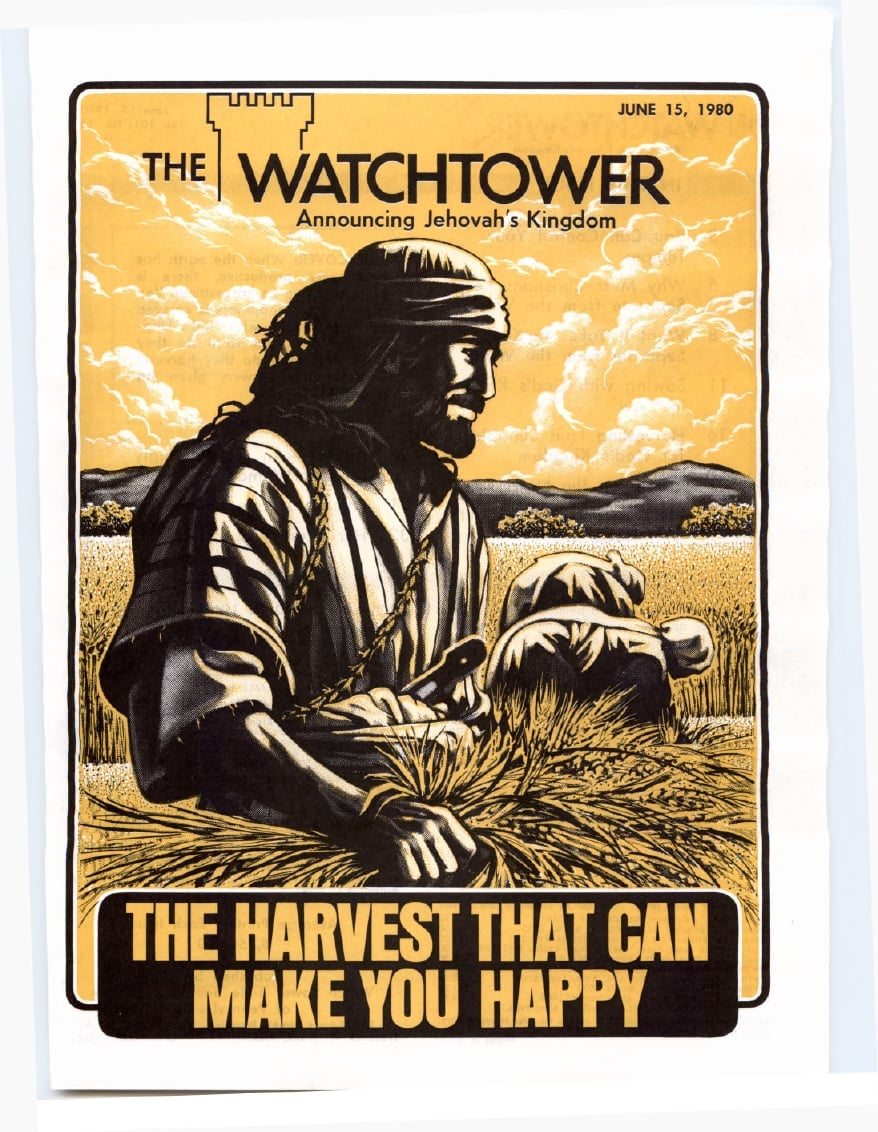
OUR COVER: When the earth has been very productive, there is great rejoicing at harvesttime. Yet, much greater happiness is enjoyed by those sowing with God’s kingdom in view. But what do they sow? And what do they harvest? Consider the answers given on pages 11 to 22
You Can Control Your Temper
You Can Control Your Temper
A man was calmly going about his business for the day. Suddenly, his pulse rate shot up. The pupils of his eyes dilated. His blood pressure rose. His facial expression changed and he started to breathe rapidly. Chemical changes occurred within his body. What happened? Did he have a seizure? No, the man merely lost his temper.
When people lose their temper, a personality change occurs, and unpleasant things are almost sure to result. One young lady will never forget the time she lost her temper. It was her wedding day. As she was leaving the reception with her new husband, she had an argument with him. Then she ran him over with the car, killing him—a tragic result from a lack of control.
The Bible, too, reports that many sins have resulted from the loss of temper. Remember, Cain “grew hot with great anger” and killed his younger brother, Abel. Then there was evil King Herod who “fell into a great rage” and had the baby boys in Bethlehem and vicinity murdered.—Gen. 4:5-8; Matt. 2:16-18.
Hence, “fits of anger” are listed in the Bible as a ‘work of the flesh,’ something Christians have to fight to overcome. (Gal. 5:19, 20) The degree to which we can control our temper partly measures our progress as Christians. That is why men who have a serious problem in this regard are not used as elders in the Christian congregation.—Titus 1:7.
Should a Christian, then, never feel angry? Well, the Bible tells us that Jehovah God is sometimes angry. (Ps. 110:5) Jesus was angry or indignant at the insensibility and lack of compassion shown by the Pharisees. (Mark 3:4-6) Hence, a Christian may have a feeling of anger if, for example, he sees Jehovah’s name being defamed or a fellow human being ill-treated. But he is advised: “Be wrathful, and yet do not sin.” (Eph. 4:26) It is when anger gets out of control, and a person loses his temper, that sin is likely to result.
Remember the case of Simeon and Levi, sons of the patriarch Jacob. Their sister Dinah was raped by a young man named Shechem from a nearby city. Was that a reasonable cause for anger? Certainly. But the reaction of the brothers was extreme. They killed all the men in the city, including Shechem.—Gen. chap. 34.
This illustrates an important point. Often there is real provocation for anger. But losing self-control can lead to words and deeds that are later regretted. Then we have not one but two problems: the original irritation and the angry reaction. Often, the outburst of temper will be remembered longer than the provocation that led to it. In the case of Simeon and Levi, which do you think had greater effect on the minds of the inhabitants of those regions—the rape of Dinah, or the murder of all the men of the city?
On the other hand, controlling one’s anger, even under provocation, can yield good results. A certain Christian woman, for example, was married to an unbeliever who was a gambler. Because of his gambling, he wasted much of the family finances. One day he told his wife that he was going out to sell fish. When he did not return for some time, she went to look for him, and found him, not selling fish, but in the middle of a noisy game of Mah-Jongg. What a provocation! She did not scold him in front of his friends, however. And when he eventually got home, she merely explained to him gently the problems his vice was causing for the family. The husband was impressed with this example of a “quiet and mild spirit.” He abandoned his gambling and eventually became a Christian.—1 Pet. 3:1-4.
CONTROLLING THE TEMPER
Christians are advised: “Let all malicious bitterness and anger and wrath and screaming and abusive speech be taken away from you.” (Eph. 4:31) True, people are different. Some are quite placid, while others are naturally hot-tempered. Nevertheless, many seemingly placid people could testify that at one time they, too, had a problem with self-control. However, they solved it by following fine Scriptural counsel, such as that at Psalm 4:4; Proverbs 15:1 and Pr 22:24; and Romans 12:18.
In this regard, it is good to remember how the quality of love can help us. No one likes to be the object of “anger and wrath and screaming.” (Eph. 4:31) Hence, if we truly ‘love our neighbor as ourself,’ we will not want to subject other people to such unpleasant experiences. (Matt. 22:39) A parent losing his temper can terrify a small child. An appointed Christian elder doing the same can nullify the effects of his good work in the congregation. Someone may say: ‘Well, that is the way I am. I cannot help myself.’ But the Bible says: “Love . . . endures all things. Love never fails.” (1 Cor. 13:4-8) A deep love for our fellows will move us to fight any tendency to be hot-tempered.
Finally, and very importantly, Christians can call for God’s help by means of his holy spirit. Qualities such as love, peace, long-suffering and mildness—which will help us to overcome our lack of self-control—are fruits of the spirit. (Gal. 5:22-24) So if a bad temper is a problem personally, why not plead with Jehovah God for help? Ask for his spirit to strengthen you to control your emotions. With Jehovah’s help, you can succeed!
Yes, we must be “slow about wrath,” since “man’s wrath does not work out God’s righteousness.” (Jas. 1:19, 20) A bad temper can make us look ridiculous. can damage our relationship with others and can betray a lack of love. Moses, because of losing self-control on one occasion, was not allowed to enter the Promised Land. (Num. 20:9-13) Do not allow a lack of self-control to affect your blessings. Rather, always bear in mind King David’s words: “Let anger alone and leave rage; do not show yourself heated up only to do evil. For evildoers themselves will be cut off, but those hoping in Jehovah are the ones that will possess the earth.”—Ps. 37:8, 9.
Why Must Christians Keep Separate from the World?
Why Must Christians Keep Separate from the World?
Today there are many, many millions of persons who profess to be followers of Jesus Christ. However, it is one thing to claim to be a Christian and another thing actually to be a Christian. Jesus himself made this point in his Sermon on the Mount: “Not everyone saying to me, ‘Lord, Lord,’ will enter into the kingdom of the heavens, but the one doing the will of my Father who is in the heavens will. Many will say to me in that day, ‘Lord, Lord, did we not prophesy in your name, . . . and perform many powerful works in your name?’ And yet then I will confess to them: I never knew you! Get away from me, you workers of lawlessness.”—Matt. 7:21-23.
Among the many things that differentiate genuine Christians from those who are such in name only is their keeping separate from the world. Jesus made this very emphatic on the night of his betrayal, saying to his followers: “If the world hates you, you know that it has hated me before it hated you. If you were part of the world, the world would be fond of what is its own. Now because you are no part of the world, but I have chosen you out of the world, on this account the world hates you.” He made the same point in prayer to his heavenly Father that evening, stating: “They are no part of the world, just as I am no part of the world.”—John 15:18, 19; 17:16.
“No part of the world.” That means keeping separate from the world. There is no question about that. But to what was Jesus referring by the expression “the world”? Jesus made a distinction between his followers and that “world” when he said in prayer: “I make request concerning them [his disciples]; I make request, not concerning the world, but concerning those you have given me; because they are yours.” (John 17:9) By the expression “the world,” Jesus there shows that he means the wicked ungodly world, or kosmos, made up of those whom the apostle John describes as “lying in the power of the wicked one.” (1 John 2:15-17; 5:19) Its god and ruler is Satan the Devil.
OF WHAT THE WORLD CONSISTS
Satan has organized this world into various parts or divisions. One of the foremost of these is Babylon the Great, the world empire of false religion, described at Revelation 17:3-6 as “the mother of the harlots and of the disgusting things of the earth.” She is said to be drunk with the blood of the holy ones, the witnesses of Jesus.
Also a very prominent part of Satan’s world are the political kingdoms of the earth, described by the apostle John as a beast that came up out of the sea, having seven heads and 10 horns. (Rev. 13:1) That these kingdoms are part of Satan’s world is seen by the fact that he was able to offer them to Jesus Christ if Jesus would do an act of worship to Satan.—Matt. 4:8, 9.
Satan also controls, as part of his world, a ruthlessly greedy and oppressive commercial system, referred to, at Revelation 18:11, as “traveling merchants.” This exploits the common people and endeavors to keep them in slavery, in an economic bondage, even as Babylon the Great tries to keep people in religious bondage and the governments of this world endeavor to keep people in political bondage.
Satan’s world is also corrupted by all manner of immoral practices, even as the apostle John indicates at 1 John 2:15, 16: “Do not be loving either the world or the things in the world. If anyone loves the world, the love of the Father is not in him; because everything in the world—the desire of the flesh and the desire of the eyes and the showy display of one’s means of life—does not originate with the Father, but originates with the world.”
WHY KEEP SEPARATE FROM THE WORLD
Why are Christians commanded to keep separate from the world that is under the control of Satan? First of all, let us note what keeping separate from the world does not mean. It does not mean that we should have absolutely nothing to do with those who have the spirit of the world, who are involved in false religion, corrupt politics, or in greedy commercial or immoral enterprises. For then, as the apostle Paul reminds us, we would literally have to get out of the world. (1 Cor. 5:9, 10) Nor does keeping separate from the world mean that we may not enjoy wholesome entertainment or that we may not visit relatives or have them visit us just because they are unbelievers.
Rather, keeping separate from the world relates to the issue that had its beginning when Jehovah God foretold that there would be enmity between the seed of the woman, God’s holy organization, and the seed of the god of this world, Satan the Devil. It means keeping balance, not becoming a slave to whatever this world has to offer. It means avoiding compromise with this world. Compromise obviously would be displeasing to Jehovah God. It means ‘not walking in the counsel of the wicked ones, not standing in the way of sinners and not sitting in the seat of the ridiculers.’—Ps. 1:1.
Of interest here is the view of the world as held by the Christians of the second century C.E., as reported by the historian Cadoux in his work The Early Church and the World (1925 C.E.): “Of the state of the human race beyond the limits of the Christian Church, the writers of this period take on the whole a very black view. A large number of evil characteristics are held to apply to ‘the world’ or to ‘this age’: thus, error, darkness, blindness, drunkenness, deceit, evil, iniquity, defilement, corruption, futility, baseness, godlessness, impiety, unbelief, and blasphemy.”
We must keep separate from Satan’s world because of its godlessness and hatred for Jesus Christ. To fraternize with this world, or to become a part of it, causes us to be what? The disciple James answers: “Adulteresses, do you not know that the friendship with the world is enmity with God? Whoever, therefore, wants to be a friend of the world is constituting himself an enemy of God.” (Jas. 4:4) Can we afford to have Jehovah God as our enemy? The apostle Paul answers that question at 1 Corinthians 10:21, 22: “You cannot be drinking the cup of Jehovah and the cup of demons; you cannot be partaking of ‘the table of Jehovah’ and the table of demons. Or ‘are we inciting Jehovah to jealousy’? We are not stronger than he is, are we?”
The “cup” and the “table” of demons is found with “Babylon the Great.” She teaches lies, slanders Jehovah God and has been used by Satan to mislead the entire inhabited earth. (Rev. 12:9) So how can God’s true servants make common cause with any of the religions of this world? Jesus did not practice interfaith. He did not unite himself with any of the sects of Judaism in their opposition to the Roman yoke. Neither can there be any interfaith practiced on the part of his true followers today. They must heed the words of Isaiah 52:11: “Turn away, turn away, get out of there, touch nothing unclean; get out from the midst of her, keep yourselves clean, you who are carrying the utensils of Jehovah.” What powerful reasons there are for Christians to keep separate from the religious part of Satan’s world!
There are also powerful reasons why God’s true servants, sincere followers of Jesus Christ, must keep separate from the political part of Satan’s world, from all nationalism and politics. Are not these also opposed to God’s kingdom? When standing before the representative of the Roman Empire, Pontius Pilate, Jesus testified: “My kingdom is no part of this world. If my kingdom were part of this world, my attendants would have fought that I should not be delivered up to the Jews. But, as it is, my kingdom is not from this source.” (John 18:36) Since neither Jesus nor his followers were part of the political world back there, neither may Jesus’ followers be today. That the nations of the world have nothing in common with the true God can be seen from the fact that they are being gathered by the god of this world, through his inspired expressions, to the war of the great day of God the Almighty at Har– Magedon. (Rev. 16:14, 16) As the apostle Peter so well notes, Christians are aliens and temporary residents. (1 Pet. 2:11) In keeping with that fact are the words of the apostle Paul at Philippians 3:20, showing that the citizenship of Christ’s true followers is in the heavens. That is why the Christian witnesses of Jehovah do not engage in politics, nor do they buy or carry political party cards.
And since 1 John 2:15, 16 warns us against the world’s materialism and immorality, the very opposite of godly devotion, we must also stay clear of these if we would be holy as Jehovah God is holy.—1 Pet. 1:15, 16.
What does it take to keep separate from the world? The next article will answer that question.
[Pictures on page 6]
FALSE RELIGION
CORRUPT POLITICS
GREEDY COMMERCE
LOOSE LIVING
What It Takes to Keep Separate from the World
What It Takes to Keep Separate from the World
Without a doubt, our appreciating just how wicked and corrupt Satan’s world is will help us to keep separate from the world. Such appreciation will make it easy for us to obey the command found at Psalm 97:10: “O you lovers of Jehovah, hate what is bad.” No matter how pleasant, how enticing, wicked things are to the fallen flesh, we must abhor them, even as the apostle commands. (Rom. 12:9) More than that, we want to hate those who willfully show themselves haters of Jehovah, haters of what is good. As David of old expressed it: “Do I not hate those who are intensely hating you, O Jehovah, and do I not feel a loathing for those revolting against you? With a complete hatred I do hate them. They have become to me real enemies.” (Ps. 139:21, 22) We hate them, not in the sense of wanting to do them harm or wishing them harm but in the sense of avoiding them as we would poison or a poisonous snake, for they can poison us spiritually. That is why we are warned: “Do not be misled. Bad associations spoil useful habits.”—1 Cor. 15:33.
And let it be noted that this staying clean from wicked persons applies not just to persons whom we may happen to meet or be thrown together with in our everyday affairs of life but also to those whom we choose as associates when it comes to entertainment. Remember, we are commanded: “Let fornication and uncleanness of every sort or greediness not even be mentioned among you, just as it befits holy people; neither shameful conduct.” (Eph. 5:3, 4) This means that we not only avoid making such things the subject of our own conversations but also do not let such things be mentioned in our presence, as by watching a TV program or attending a motion picture where such things are the subject of conversation. Instead, let us make it a point to cultivate associations with fully devoted fellow believers, not only at the congregation and in the field activities but also socially. Yes, to keep separate from the world we must watch our associations; on the one hand, avoiding bad ones and, on the other hand, being diligent to associate with those who, like us, are no part of the world.
FAITH AND COURAGE NEEDED
To keep separate from the world also takes faith and courage. To build up our faith we must cultivate a healthy spiritual appetite, being conscious of our spiritual need at all times. (Matt. 5:3) That includes both making personal Bible study a habit and regularly attending Christian meetings. This is an area in which many of Jehovah’s people come short. Every one of us should regularly set aside time for personal Bible study. If need be, get up a half hour earlier. Many do, so as to be able to engage in such study. We want to have the appreciation of God’s Word that the psalmist did when he exclaimed: “How I do love your law! All day long it is my concern. I am exulting over your saying just as one does when finding much spoil.”—Ps. 119:97, 162.
The role that strong faith plays in our keeping separate from the world can be seen from the example of faithful men of old. At Hebrews chapter 11 we read of these that “the world was not worthy of them.” They had set their hopes on God’s kingdom and so ‘saw these things afar off and welcomed them and realized that they were aliens, strangers, temporary residents’ as far as this world was concerned.
Courageously going from house to house with the good news of God’s kingdom is not only a demonstration of our faith, serving to strengthen it, but is a great help in our keeping separate from the world. It impresses on our minds what a great gulf exists between those of the world and Christians; and as we note the apathy, indifference, prejudice and outright opposition of many of those whom we meet, we are helped to resist worldly temptations. The same also applies to informal witnessing. Because of doing this, former hippies seldom have any difficulty breaking off from old associates; these stay away because they do not want their former companions to preach to them.
FAITHFULNESS IN LITTLE THINGS
To keep separate from the world also requires being faithful in little things. As Jesus said: “The person faithful in what is least is faithful also in much, and the person unrighteous in what is least is unrighteous also in much.” (Luke 16:10) If we are careful not to follow the world, not to be influenced by it in little things, such as in provocative dress and grooming, in dishonest money matters, in cheating on taxes, in sluggish work habits, or in taking needless risks, in careless conduct between the sexes—all these things will keep us from transgressing God’s laws in more serious matters.
Illustrating this principle are the four Hebrews that were taken captive to Babylon, as recorded in the book of Daniel. Because of proving faithful in the seemingly little matter of food, they were able to come off victorious in matters of life and death, involving the issue of whether to obey God or men.—Dan. 1:1-17; 3:1-30; 6:4-23.
HUMILITY AND SELF-CONTROL
Humility is another quality that will greatly aid us in keeping separate from the world. This means having a lowly opinion of ourselves, never thinking more of ourselves than it is necessary to think. (Rom. 12:3) Those who think too highly of themselves are easy targets for the flatterers of this world. It might be said that Satan used a flattering argument to deceive Eve. (Gen. 3:1-7) Being humble will help us to be content with our blessings spiritually and materially. If we have godly devotion and self-sufficiency, as we are urged to have at 1 Timothy 6:6, we will not restlessly be craving forbidden pleasures, excitement or thrills in watching violence on the screen; we will not be tempted to be dishonest in our relations with others, or to become greedy of selfish gain. Having a lowly opinion of ourselves, we will be content with our mates and will not be casting longing eyes toward others who might seem to be offering more glamour, pleasure or companionship.
To keep separate from the world also takes self-control. Self-control will enable us to endure pain so as not to compromise under severe persecution, as we at all times look to Jehovah God for needed strength. The same is true when it comes to temptations that Satan’s world or circumstances put in our way, that is, temptations to yield to the works of the flesh. (Gal. 5:19-21) If we have cultivated the fruitage of self-control, we will be able to resist all such temptations, doing as the apostle Paul did: “I pummel my body and lead it as a slave, that, after I have preached to others, I myself should not become disapproved somehow.”—1 Cor. 9:27.
FEAR OF JEHOVAH AND UNSELFISH LOVE
To keep separate from the world also requires the fear of Jehovah, which is the beginning of wisdom. (Ps. 111:10) The godly fear of displeasing our heavenly Father will keep us separate from the wicked world. The world is very bad, and the fear of Jehovah means the hating of bad.
But above all, it takes unselfish love to keep separate from the world. The world appeals to selfishness. To the extent that we are unselfish, to that extent the world’s temptations will have no attraction for us. If we truly love Jehovah God with all our heart and soul, with all our mind and strength, we will be loyal to him and so will not consort with his enemies. We will not prove unfaithful to him. And if we love our Christian brothers, we will keep separate from the world, for failure to do so may stumble them, because of our setting a bad example. If we love our own families, we will keep away from all worldly enticements that may tempt us to be disloyal to them in thought, word and deed.
REWARDS FOR STAYING SEPARATE
What are the rewards for keeping separate from the world? For one thing, we can enjoy the pure friendship of Jehovah God, Jesus Christ and our Christian brothers. Furthermore, by keeping separate from the world, we will maintain clean consciences and avoid the bad fruits that result from the works of the flesh. (Gal. 6:7, 8) By keeping separate from Babylon the Great, we will not share in her guilt nor receive her plagues.—Rev. 18:4.
Keeping separate from the political nations also has its rewards. While it frequently has resulted in true Christians’ suffering hardships, yet time and again keeping separate from nationalistic conflicts has also worked to their advantage. In such strife-torn lands as Lebanon and northern Ireland, their neutral stand has enabled them to move about freely in their witness work and has even saved their lives.
And by keeping separate from the world we will be able, with benefit to ourselves, to heed the command found at Zephaniah 2:3: “Seek Jehovah, all you meek ones of the earth, who have practiced His own judicial decision. Seek righteousness, seek meekness. Probably you may be concealed in the day of Jehovah’s anger.” Thus we may go through the “great tribulation” to enjoy everlasting life in God’s new order.—Matt. 24:21; 2 Pet. 3:13.
So may all truly dedicated Christians ever bear in mind the need for them to keep separate from the world dominated by Satan the Devil. May they always appreciate the many reasons why they should do so. And may they be diligent in cultivating the qualities needed to keep separate from the world.
As shown in the following articles designed for study, we are profoundly affected by our attitude regarding this world. Indeed, ‘we reap what we sow.’
[Pictures on page 9]
HATE AND SHUN THE BAD
VIOLENCE
VICES
BUILD STRONG FAITH IN GOD
STUDY
PRAYER
Sowing with God’s Kingdom in View
Sowing with God’s Kingdom in View
1. To what kingdom did a schoolgirl assign the inquiring emperor, and was her answer beyond question?
The emperor of a Middle-European country was making an inspection of a public school of his subjects. He asked the school class a number of questions. As the story goes, he asked a little girl about “the plant kingdom” and “the animal kingdom” and was pleased with her answers. Following this up, he asked her: “To what kingdom do I belong?” Expecting the answer, “The animal kingdom,” he had tears well up in his eyes when the little maid replied: “The kingdom of God.” Though the church to which the emperor belonged thought the girl’s answer to be correct as well as reverential, did he belong to God’s kingdom? Had this political ruler of a worldly government really been admitted to “the kingdom of God”? Here is room for thought!
2. (a) Admittance to God’s kingdom is to what grade of government? (b) How did the Jews of Jesus’ day show that they were not sowing with that kingdom in view?
2 Admittance to the kingdom of God is the greatest honor that could be bestowed upon a person on earth. The kingdom of God is the greatest of all governments. This was the government about which the Founder of Christianity preached in the Middle East. History says of Jesus Christ: “Now after John [the Baptizer] was put under arrest [in the year 30 C.E.] Jesus went into Galilee, preaching the good news of God and saying: ‘The appointed time has been fulfilled, and the kingdom of God has drawn near. Be repentant, you people, and have faith in the good news.’” (Mark’s account, Mr chap. one, vss. 14 and 15) However, the overwhelming majority of the Jewish people did not repent and have faith. Appallingly, they had Jesus put to death as an enemy of the Roman emperor, Caesar. Figuratively, they did not sow with God’s kingdom in view. But who of us today is doing so? How can we know? We shall see.
3. About what illustration given by Jesus to a seaside audience did his disciples ask, and what did he say about the ear?
3 Most of us today like illustrations of things. Jesus Christ became famous for making illustrations or telling parables. As an itinerant preacher, he drew large audiences. Once, from a boat on the Sea of Galilee, he taught a seashore audience. He gave an illustration of four types of agricultural soil. Privately, his intimate disciples asked him about the meaning of this. After explaining and making additional comments, he said, even to these close associates: “Whoever has ears to listen, let him listen.” (Mark 4:1-23) How many of the seashore audience had such kind of ears, we do not know. But Jesus expected his disciples to whom he gave the explanation to have listening ears. By means of such ears what they had heard from him would find permanent lodging within them and furnish enlightenment to them. Who of us today has such kind of listening ears? It will help us in sowing aright with God’s kingdom in view.
4. Of what importance is it for one to have a ‘listening ear,’ and why do we not want to be like the soil along the roadside?
4 If we do not have “ears to listen,” we shall not pay attention to what Jesus taught. Attention is important, for the Bible writer Mark goes on to record: “He further said to them: ‘Pay attention to what you are hearing.’” (Mark 4:24) Never should we be like the first kind of soil in Jesus’ parable. This was the soil alongside the road. It was packed down so hard that it would not let the seed sink in, but left it exposed for the birds to pounce down upon and eat. (Mark 4:4, 15) We do not want Satan the Devil, by means of his agents, to snatch Christian truth away from us due to our inattention. This would betray a lack of respect for what the Teacher, Jesus Christ, was and now is in God’s arrangement.
5. After giving his admonition on paying attention, what did Jesus say about measuring out and receiving back?
5 A rule oft stated is that we get out of a thing what we put into it. Jesus indicated the benefit that we would get from paying the deserved attention to what he was saying. He did this by adding to his admonition on attention the words: “With the measure that you are measuring out, you will have it measured out to you, yes, you will have more added to you. For he that has will have more given to him; but he that does not have, even what he has will be taken away from him.”—Mark 4:24, 25.
6. As regards the measuring out of interest and attention to him, did Jesus promise merely a balancing of accounts in return?
6 Consequently, if we measure out to Jesus little interest and attention, we cannot expect to get much from him, at least from what he is saying for our guidance, for our benefit. But if we show that we do appreciate him as our Teacher and we deal out to him our fullest measure of attention, then he will respond by giving us a comparative amount of information and enlightenment. In this regard, however, he is not concerned with just evening up things and balancing accounts. Rather, in his generosity and according to his ability, he will favor us with more than we expected. Thus we are enriched and are more able to share with others our own abundance, imparting to them the understanding of things.
7, 8. How did Jesus’ foregoing words prove true in the case of his intimate disciples, and why?
7 A favored disciple must have the humility and willingness to learn, yes, genuine regard for his Teacher and an appreciation of what he teaches. Being thus disposed, he will have more given to him. For instance, after Jesus’ speech from aboard the boat, his intimate disciples did not at once dismiss the matter as of only passing interest. They kept his parable in mind. Later, privately, they asked him to explain. For their extra efforts to learn what his teachings meant, more was given to them than to the seashore audience. They were not discouraged by Jesus’ earlier remark: “You do not know this illustration, and so how will you understand all the other illustrations?” (Mark 4:13) That was the state in which most of the seaside audience remained. But Jesus’ apostles had the urge to learn and understand. Therefore, they made it their business to ask for more than the mere outline of things. So more than the expected was given to them. In their case, Jesus’ words proved true:
8 “To you the sacred secret of the kingdom of God has been given, but to those outside all things occur in illustrations.”—Mark 4:11.
9, 10. How did matters work out for the outsiders, and why?
9 The outsiders remained satisfied with merely the outline of things set out in the illustrations. They lacked the driving urge to learn the facts behind the illustrations. So they gained no understanding of the illustrations. They did not want to act on what the illustrations taught. So they avoided the greater responsibility that comes with understanding. Not caring to seek God’s kingdom first, they appreciated material things more than spiritual things, “the sacred secret of the kingdom of God.”
10 By not inclining to seize hold of the opportunity opened up to them by Jesus’ illustrations, the outsiders, in effect, lost everything. What they had in the way of familiarity with Jesus’ illustrations, or parables, was taken away from them. By means of human agents or by means of occult arts, Satan the Devil snatched it away from them. What light they may have had through hearing Jesus’ illustrations became overtaken by darkness. The light of truth, advancing beyond what grasp of things they had from Jesus illustrations, left them in relative darkness, with only a rudimentary knowledge of Biblical things. So they groped like blind persons.
THE PARABLE OF A MAN CASTING THE SEED
11. According to Mark 4:26-29 what illustration did Jesus then give?
11 In illustration of the foregoing, Mark 4:26-29 records: “So he [Jesus] went on to say: ‘In this way the kingdom of God is just as when a man casts the seed upon the ground, and he sleeps at night and rises up by day, and the seed sprouts and grows tall, just how he does not know. Of its own self the ground bears fruit gradually, first the grass-blade, then the stalk head, finally the full grain in the head. But as soon as the fruit permits it, he thrusts in the sickle, because the harvesttime has come.’”a
12. What do some Bible students think this illustration teaches as respects God’s kingdom?
12 In Jesus’ earlier illustration given from aboard a boat, he described a sower whose seed fell on four types of soil. (Mark 4:1-9) Did that sower picture the same as the caster of seed in this later illustration? Many Bible students think so. They think that the man casting the seed abroad also pictures the foremost proclaimer of God’s kingdom, namely, Jesus Christ. On this basis they reason that the “seed” pictures the members of the heavenly Kingdom class. Thus the whole illustration pictures the growth of the Kingdom class from the 3,000 on Pentecost day of 33 C.E. to the final full number of 144,000. (Rev. 14:1) Hence, we must now be in “the harvesttime” of the final members of the heirs of God’s kingdom. However, such an explanation of Jesus’ illustration runs into a number of insurmountable difficulties. What may these be?
13. When did Jesus begin building his spirit-begotten congregation, and in what condition was he at that time?
13 Well, the illustration says that the man scattering the seed “sleeps at night and rises up by day.” How does such a description fit the glorified Jesus Christ since he began building his spirit-begotten congregation on the day of Pentecost? It does not fit at all! First Peter 3:18 speaks of Jesus as “being put to death in the flesh, but being made alive in the spirit,” so that he no longer is the perfect man that he used to be on earth. Ever since God the Almighty raised Jesus from the dead on Sunday, Nisan 16, 33 C.E., the exalted Son of God “is the reflection of his glory and the exact representation of his very being.”—Heb. 1:3.
14. As regards the mere matter of sleeping at night, why could the man casting the seed on the ground not picture the glorified Jesus Christ?
14 That being so, then what? Well, Psalm 121:1-4 says: “My help is from Jehovah, the Maker of heaven and earth. He cannot possibly allow your foot to totter. The One guarding you cannot possibly be drowsy. Look! He will not be drowsy nor go to sleep, he that is guarding Israel.” (Note also Jeremiah 1:12.) How, then, could the glorified Jesus Christ at God’s right hand possibly go to sleep regularly with the setting of the sun in the Middle East like a man on earth? He no longer needs an earthly night’s sleep in order to be fit for the work of the daylight hours. Why, what is 1,000 years for man is like a mere day for the Godlike Jesus Christ! (Ps. 90:4; 2 Pet. 3:8) For this reason alone the man casting the seed upon the ground could not possibly picture the glorified, immortal Jesus Christ.b
15. What shows whether the prehuman Son of God knew about the growth of seed and of how the ground bears fruit of its own self?
15 Another point to note is that Jesus’ illustration goes on to say: “And the seed sprouts and grows tall, just how he does not know. Of its own self the ground bears fruit gradually.” (Mark 4:27, 28) If, now, the seed that sprouts and grows tall pictures the Christian congregation in its growth from a small membership to a large one, it means that the sower does not know how the congregation keeps growing to 144,000 strong. But the prehuman Jesus Christ was a coworker with Jehovah God on the third creative day, when “the earth began to put forth grass, vegetation bearing seed according to its kind and trees yielding fruit, the seed of which is in it according to its kind.” (Gen. 1:12) Thus the prehuman Son of God displayed full knowledge of the growth of plants and of how the ground bears fruit of itself gradually.
16. What vision in the last book of the Bible shows whether the glorified Jesus Christ is drowsy or asleep as to the growth of the Christian congregations?
16 However, as to congregation growth, the Bible’s last book, Revelation, written about 63 years after Jesus ascended to heaven on Thursday, Iyyar 25, 33 C.E. (May 12, 33 C.E.), pictures Jesus Christ as walking in among the seven lampstands that stand for seven congregations in Asia Minor. With his eyes like a “fiery flame,” he should be wide awake as he inspects the spiritual state of these seven prominent congregations. So he is not pictured as being drowsy or asleep with regard to the growth of the congregations. He must have known how those congregations grew to the spiritual state in which he describes them to be.—Rev. 1:14; 2:18.
17. What vision described in Revelation 5:6 shows whether the glorified Jesus Christ could be pictured by the man who casts the seed on the ground and sleeps at night?
17 With regard to Jesus’ ascending and appearing in God’s heavenly presence, he is pictured as a lamb just slaughtered, but again alive with “seven eyes, which eyes mean the seven spirits of God that have been sent forth into the whole earth.” (Rev. 5:6) Far from suggesting drowsiness or sleepiness, such sevenfold vision of the Lamb of God would signify the state of being wide awake and all-discerning, constantly. Plainly, then, the glorified Jesus Christ could not be pictured by the man who casts the seed upon the ground and who sleeps at night and who does not know how the growth of what he planted comes about.
18. Whom, then, does the man in the illustration logically picture?
18 Whom, then, does the man in the illustration picture? The Gospel writer Mark calls this individual farmer to our attention right after Jesus advises his intimate disciples to pay attention to what they are hearing. A certain measure of attention was to be recompensed with proportionate returns, even more being added to such. Reasonably, therefore, the man in the illustration pictures each individual who professes to be a disciple or learner of Jesus Christ, the foremost Preacher of the kingdom of God.
INDICATIVE FEATURES OF THE ILLUSTRATION
19, 20. What two main things embrace the whole illustration, and so what is the point that is made by the illustration, and with what in view, quantity or quality?
19 Jesus opened up the illustration by saying: “In this way [or, Thus] the kingdom of God is just as when a man casts the seed upon the ground.”—Mark 4:26, NW; Kingdom Interlinear Translation.
20 We note two main things that embrace the whole illustration. First, there is a sowing of the seed in connection with God’s kingdom, and, secondly, there is a harvesting, or reaping, of the crop that results from the seed sown. So the point is that, just as surely as there was a sowing, or a planting, of the seed, there must be expected a harvesting, or a reaping. The one thing inevitably follows the other. The solemn truth is that what a person sows with relation to God’s kingdom leads on to what he will harvest, or reap. Rather than quantity, the quality of what he reaps is important!
21. Did Jesus specify the kind of seed or the type of soil on which it was cast, and yet what question arises as to the seed?
21 Jesus did not specify the kind of seed or the type of soil involved in the planting. He said: “But as soon as the fruit permits it, he thrusts in the sickle [a small hand instrument], because the harvesttime has come.” (Mark 4:29) The Jews to whom Jesus gave the illustration had three harvests during the agricultural year. The first took place right after the spring Passover festival, a sheaf of the barley harvest being presented on Nisan 16 by the high priest at Jerusalem’s temple. Fifty days from then, the high priest presented the firstfruits of the wheat harvest at the temple and after that this harvest went forward. The third harvest came at the end of the summer and was memorialized by the festival of ingathering, or of the booths (tabernacles), beginning on the 15th day of the seventh lunar month, Tishri. (Ex. 23:14-17) Which of these three harvesttimes was the one meant in the illustration is not stated. But, whatever seed it was that was sown, what does it picture?
22. If not picturing members of the Christian congregation, what does the seed picture, and is the growth of such “seed” beyond control?
22 Jesus’ illustration says that the seed sown sprouted and grew tall and matured to having the full grain in the head. We have noted that the seed sown does not picture the members of the Christian congregation. As the next article will show, the seed scattered about upon the ground pictures the seeds of the sower’s personal qualities, attitudes and capacities for service in connection with God’s kingdom. He must seek nourishment for these as from the ground. The growth of these personal traits to maturity and ripeness for harvesting is gradual. This is a thing for us to watch, for it is not beyond control.
[Footnotes]
Compare the following with The Watchtower of December 1, 1950, page 492, paragraphs 34 and 35.
See All the Parables of the Bible by Lockyer, page 252, paragraph 8; also, The Pulpit Commentary on Mark by Spence and Excell, Volume I, pages 159 and 205.
[Pictures on page 13]
“In this way the kingdom of God is just as when a man casts the seed upon the ground, and he sleeps at night and rises up by day, and the seed sprouts and grows tall.”—Mark 4:26, 27.
[Picture on page 15]
Each individual professing to be a disciple of Jesus Christ sows seeds of personal qualities, attitudes and capacities for service in connection with God’s kingdom
Harvesting Fruit Suitable for God’s Kingdom
Harvesting Fruit Suitable for God’s Kingdom
1. In Jeremiah 4:3, 4, to what did Jehovah call attention?
In Jeremiah 4:3, 4, Jehovah says: “Plow for yourselves arable land, and do not keep sowing among thorns. Get yourselves circumcised to Jehovah, and take away the foreskins of your hearts, you men of Judah and inhabitants of Jerusalem; that my rage may not go forth just like a fire, and it certainly burn with no one to do the extinguishing, on account of the badness of your dealings.” Jehovah called attention to the bad heart condition of his covenant people.
2. How does the illustration of the seed falling upon thorn-infested ground show we should be careful about the environment in which we do our spiritual sowing?
2 Similarly, in a parable Jesus Christ illustrated the disappointing results from sowing among thorns. Both in Matthew 13:1-9 and Mark 4:1-9 he pictured how some of the seed cast out by the hand of the sower fell upon areas holding the seeds of thorns. From such areas he got no results, for the thorns came up and choked the cereal plants and no grain crop could be reaped. (Luke 8:4-8) This illustrates that we must be careful about the environment in which we do our spiritual sowing.
3. In the illustration at Mark 4:26-29, what does the seed picture, and what do Christians have to cultivate with regard to their personality today just as first-century Christians had to do?
3 In the parable of the sower and the seed, as related at Mark 4:26-29, the seed pictures qualities of personality. To the Jews who rejected the parable of the sower and other parables, Jesus said: “The kingdom of God will be taken from you and be given to a nation producing its fruits.” (Matt. 21:43, 45, 46) According to this, there are “fruits” of the kingdom of God. (Luke 3:8) Allied with those Kingdom fruits there is what is called “the fruitage of the spirit,” namely, “love, joy, peace, long-suffering, kindness, goodness, faith, mildness, self-control.” (Gal. 5:22, 23) Back there in the first century, the Christians to whom the apostle Paul wrote had to sow “seed” in the way of Christian qualities that need nourishment, just as Christians today have to do in connection with the kingdom of God. These personal qualities must be developed to full maturity, completion.—Zech. 8:12; Jas. 3:18.
4. What does the “seed” of personal Christian qualities need for nourishment?
4 At the time of their fully ripening would be the normal time to harvest them. But where should the Christian sower of such “seed” choose to sow it in hope of finally reaping the desired harvest? He wants his crop to have God’s approval, that he may be counted worthy of acceptance in connection with God’s kingdom. Just as natural seed needs ground, so the seed of personal Christian qualities, “the fruitage of the spirit,” needs environment.—Prov. 18:1.
5. To reap the expected harvest, care with respect to what must be exercised, as emphasized in Luke 8:14?
5 Recall Jesus’ parable with reference to the four kinds of soil upon which the seed of the sower fell. (Mark 4:3-20; Luke 8:5-15) This parable illustrates how care and the right choice must be exercised as to the environment for the seed if the expected harvest is to be reaped. Just as Jesus explained concerning the thorn-infested environment for the seed: “As for that which fell among the thorns, these are the ones that have heard, but, by being carried away by anxieties and riches and pleasures of this life, they are completely choked and bring nothing to perfection.”—Luke 8:14.
6. In Galatians 5:7-9, how did Paul call attention to the effect of bad environment?
6 In line with this, the apostle Paul made an observation in connection with the Christians in Galatia to whom he wrote about “the fruitage of the spirit,” to warn them that they were being badly affected by the wrong environment. He said: “You were running well. Who hindered you from keeping on obeying the truth? This sort of persuasion is not from the One calling you. A little leaven ferments the whole lump.” (Gal. 5:7-9; Matt. 13:33) Those Galatian Christians were being influenced by those Judaizers whose hearts were unreceptive to full Christianity, whose ears were unresponsive and whose eyes were pasted shut. (Matt. 13:14, 15; Gal. 5:10) Such hindering associations must be avoided, abandoned.
7. How did Paul express similar concern over the effect of bad environment for the Christians in Corinth?
7 The apostle Paul also feared that the Corinthian congregation might not be cultivating “the fruitage of the spirit,” for he wrote them to say: “I am afraid that somehow, when I arrive, I may find you not as I could wish and I may prove to be to you not as you could wish, but, instead, there should somehow be strife, jealousy, cases of anger, contentions, backbitings, whisperings, cases of being puffed up, disorders.” (2 Cor. 12:20) After quoting those who say, “Let us eat and drink, for tomorrow we are to die,” Paul could, with good reason, issue the warning: “Do not be misled. Bad associations spoil useful habits.”—1 Cor. 15:32, 33.
8. Why will the growth of personality qualities go on in spite of a Christian’s taking of sleep, and why cannot he be certain when judging according to the first out-growth?
8 Like ground, into which the seed falls and which has the God-given power for nourishing either wheat or thorns, the environment in which a Christian chooses to cultivate qualities of personality will affect him for good or for bad. Even if he sleeps while embedding himself in such an environment, the law of environmental influence will relentlessly operate toward him until the outgrowth allows for the sickle to be thrust in because personal harvesttime has come. In this connection, Jesus said: “Of its own self the ground bears fruit gradually, first the grass-blade, then the stalk head, finally the full grain in the head.” (Mark 4:28) To the sower the growth is almost imperceptible and it is by a power that he cannot comprehend. The growth in the one direction or the other will go on gradually, first like a grass-blade, then like a stalk head, finally like the full grain in the head.
9. How does the parable of the wheat and the weeds illustrate the uncertainty regarding the final outcome from sowing in a certain environment?
9 When the seed first sprouts and produces the grass-blade, the sower may not be exactly sure of what he will harvest, to judge from the appearance of things. At that early stage of growth he may not be positively certain of what is coming up; he merely remembers what kind of seed he planted. To illustrate: In Jesus parable of the wheat and the weeds, in Matthew 13:26-30, he said:
When the blade sprouted and produced fruit, then the weeds appeared also. So the slaves of the householder came up and said to him, “Master, did you not sow fine seed in your field? How, then, does it come to have weeds?” He said to them, “An enemy, a man, did this.” They said to him, “Do you want us, then, to go out and collect them?” He said, “No; that by no chance, while collecting the weeds, you uproot the wheat with them. Let both grow together until the harvest; and in the harvest season I will tell the reapers, First collect the weeds and bind them in bundles to burn them up, then go to gathering the wheat into my storehouse.”
10. When will we discern the unmistakable effect of sowing in any given environment?
10 So, after we have sown the seeds of our traits of personality, what comes up like a grass-blade may at first not be distinguishable as to what the soil has yielded. Only later, when the growth matures and bears fruit, there will be no mistaking as to what the soil has yielded to the individual sowing there.
11. Besides the physical features of soil, what else is important in determining the quality of the thing grown on such soil?
11 The soil is an important factor toward what is finally yielded. Jesus said: “Of its own self the ground [not God] bears fruit gradually, first the grass-blade, then the stalk head, finally the full grain in the head.” (Mark 4:28) In the parable of the four types of soil, Jesus described only the physical features of the soils. But the chemical properties of the soil are also important in determining the quality of what is yielded, as when soil is sour, acid, saline, or is treated with inorganic fertilizer or organic fertilizer.
12. What, therefore, does the ground or soil picture?
12 Inasmuch as the ground, or soil, plays such an important part in the matter of growth and its quality, it pictures the social, moral and religious environment in the midst of which we nurture the seeds of our personal traits and, naturally, it involves people.a This is something deserving selectivity.
THE ELEMENT IN WHICH WE CULTIVATE TRAITS
13. Even in a Christian congregation, may there be an environment not conductive to proper Christian growth?
13 Even in the Christian congregation there may be an environment or association that is spiritually not most helpful. Some who recently came out of the world and symbolized their dedication to God by water baptism may tend to bring into the congregation something that still clings to them—a measure of worldliness. Let us remember that it was to a Christian congregation that the apostle Paul wrote: “In my [previous] letter I wrote you to quit mixing in company with fornicators, . . . But now I am writing you to quit mixing in company with anyone called a brother that is a fornicator or a greedy person or an idolater or a reviler or a drunkard or an extortioner, not even eating with such a man.”—1 Cor. 5:9-11.
14. In Galatians 6:7, 8, how does Paul caution Christians against sowing in the wrong direction?
14 Also, to the congregations in the Roman province of Galatia in Asia Minor, the same apostle wrote: “Do not be misled: God is not one to be mocked. For whatever a man is sowing, this he will also reap; because he who is sowing with a view to his flesh will reap corruption from his flesh, but he who is sowing with a view to the spirit will reap everlasting life from the spirit.” (Gal. 6:7, 8) A professed Christian can be sowing to his fallen flesh by seeking to develop his personality qualities in a worldly environment that caters to his fallen flesh.
15. What questions arise, therefore, with regard to seeking out our environment in the Christian congregation?
15 Today, in the congregation, do we gravitate toward members who still smack of worldliness? They regularly indulge in it and want to have the company of other members so as to feel a measure of justification for their frequent indulgence. Do we let our social environment or association inside the congregation hinder us in running well in the race for everlasting life? Do we allow congregation members who still incline to worldliness to persuade us into taking the same direction that they are taking, because it is so pleasing to our fallen flesh?
16. In order to meet the day of tests successfully, what do we have to consider about the environment in which we circulate?
16 At first the effects of our indulgent course may not be distinguishable as to what kind of professed Christians we shall eventually turn out to be. This is so because the “ground” or environment in which we choose to circulate will bear fruit gradually. The “grass-blade” looks innocent to beholders, not dangerously hurtful. We sleep at night and rise up by day, and the growth of our personal traits moves forward relentlessly, just how we do not know. Our persistence in this free-and-easy, liberal course will lead to an inescapable result, namely, the fully matured growth of personal traits due to the environment that is like ground, in which we have allowed ourselves to be nurtured. Will what we harvest by thrusting in the sickle qualify us to meet the tests of the day of reckoning successfully?
17. What should we not forget with regard to environment in which we imbed the seeds of our personality traits?
17 Let us not forget that, like “ground,” or soil, environment in which the seeds of our personal traits are buried and nourished will affect our development. It can make us a poor variety of the real thing, the thing that was intended when we began to sow.
18. What illustration of bad association is given to us in Numbers 11:4-34?
18 A historical example of the effect of bad associations even among Jehovah’s people was furnished in the wilderness of Sinai in Moses’ day. We remember the “vast mixed company” that went along with the Israelites out of Egypt and across the Red Sea. (Ex. 12:38) Concerning this non-Israelite element, the prophet Moses tells us:
And the mixed crowd that was in the midst of them [the Israelites] expressed selfish longing, and the sons of Israel too began to weep again and say: “Who will give us meat to eat? How we remember the fish that we used to eat in Egypt for nothing, the cucumbers and the watermelons and the leeks and the onions and the garlic! But now our soul is dried away. Our eyes are on nothing at all except the manna.” . . . The name of that place came to be called Kibroth-hattaavah [meaning Burial Places of the Selfish Longing].—Numbers 11:4-34; see also 1 Corinthians 10:1-6, 10, 11.
19. How does that experience of the Israelites with the “vast mixed crowd” in the wilderness show that we cannot hold God responsible for bad effects from our chosen environment?
19 Thus that “vast mixed crowd” set things in motion among the Israelites. Unsatisfied with Jehovah’s provision of bread from heaven, they turned back in their hearts to Egypt because of selfishly longing for things once enjoyed in that idolatrous land. (Ps. 105:40) They made their belly their god, because they brought along selfish longing for the material comforts of demon-controlled Egypt. (Phil. 3:19) So they infected the Israelites with such an appetite. For the time being they proved to be bad associates for Jehovah’s chosen people Israel. This historical example serves as a good warning for us today. We cannot make God responsible for the bad effects that we reap from the bad environment that we select.
20. What rather than God is responsible for what results to us from the course we select?
20 If we cannot put God into the picture in the case of the parables of the four kinds of soil and of the wheat and the weeds, is it logical, consistent, to put God personally into the fulfillment of Mark 4:26-29? In a general way, “the earth itself brings forth its sprout” and “the garden itself makes the things that are sown in it sprout.” (Isa. 61:11) So, then, marijuana (“grass”), hashish, tobacco, and poppies grown for the purpose of making opium, will grow from the cultivated ground just the same as cereals. Plainly, then, the crop that is reaped depends upon what the sower plants and on what kind of soil he casts the seed.
21. That illustration from Holland shows that the environment in which the seed finds itself affects matters?
21 The environment in which the seed finds itself affects matters. Let us not forget that soils do not all have the same chemical properties. One is sour or acid, another is salty, and so forth. Thus when the Dutch wanted to reclaim land from the Zuider Zee, they built dikes and impounded the brackish waters in polders. Then they pumped out the seawater, leaving a low-lying land area. But such reclaimed land was impregnated with sea salt. It was not at once fit to grow grains for food. So first they had to accommodate the soil by planting reedy grasses that grew well in salty soil. This worked for purifying the soil. Then they could grow grains with good harvests.
22. Where are we generally bound to sow the seed of our personality qualities, and what is certain as to the outcome of this?
22 So with the seeds of our personality traits: we are bound to sow them somewhere, generally in the environment of our choice. We are bound to meet up with a harvesting, or a reaping. Will what we harvest be suitable for an approved relationship with God’s kingdom? The environment or the association that we regularly seek out will have much to do with that. Even inside the Christian congregation we can seek out social companionship with baptized persons who still cling to worldly things, but who feel no qualms of conscience about sneaking these into the congregation. Our Christian personality and conduct are sure to be affected by such infectious things.
23. Instead of the appearance of things at the beginning, what will determine out ultimate happiness?
23 Growth of an infected Christian in a worldly direction will be gradual, the angle of divergence from the Christian way being at first so slight as not to be discernible. It is like the emergence of the “grass-blade” from the seed. But harvesttime will at last show unmistakably into what we have developed, for there will be the consequences to pay. When at last only true Christianity will be able to meet the test, each individual will have to thrust in his sickle and gather what he has grown to be. Will what he harvests leave him disillusioned, exposed as false to his Christian claims? Happy is the Christian that has Scriptural reasons for being satisfied with what his sickle harvests.—Compare Psalm 126:5, 6.
24. Will our personal holiness counteract the effect of the environment that we put ourselves in contact with constantly?
24 We are steadily growing in one way or the other, in a worldly way or a spiritual way. Woe to us if we mislead ourselves or let others mislead us into thinking that we can entertain bad associations without having our useful Christian habits spoiled. (1 Cor. 15:33) We cannot mock God by trying to nullify his unchangeable law that, as there is a sowing, so there must also be a reaping and that where we sow will affect what we reap. He warns us that our personal holiness will not automatically rub off and make others holy. Rather, our unguarded contact constantly with unclean worldly persons will result in our becoming unclean also.—Hag. 2:10-14.
…