The Watchtower, May 1, 1979
Download: PDF — The Watchtower, May 1, 1979
The Watchtower — May 1, 1979
Source: jw.org
Contents
Page Two
When Others Care
Hope—The Power for Endurance
Hannah—A Woman Who Found Comfort in Prayer
A Drastic Change
A Riddle with a Comforting Answer
Baptism—A Christian Requirement
God’s Word Exerts Power
Giving Our Best to Jehovah
Maintaining Cleanness When Bringing Gifts
Building to Jehovah’s Glory
Insight on the News
Questions From Readers
Dating, Courtship and Marriage
Page Two
Page Two
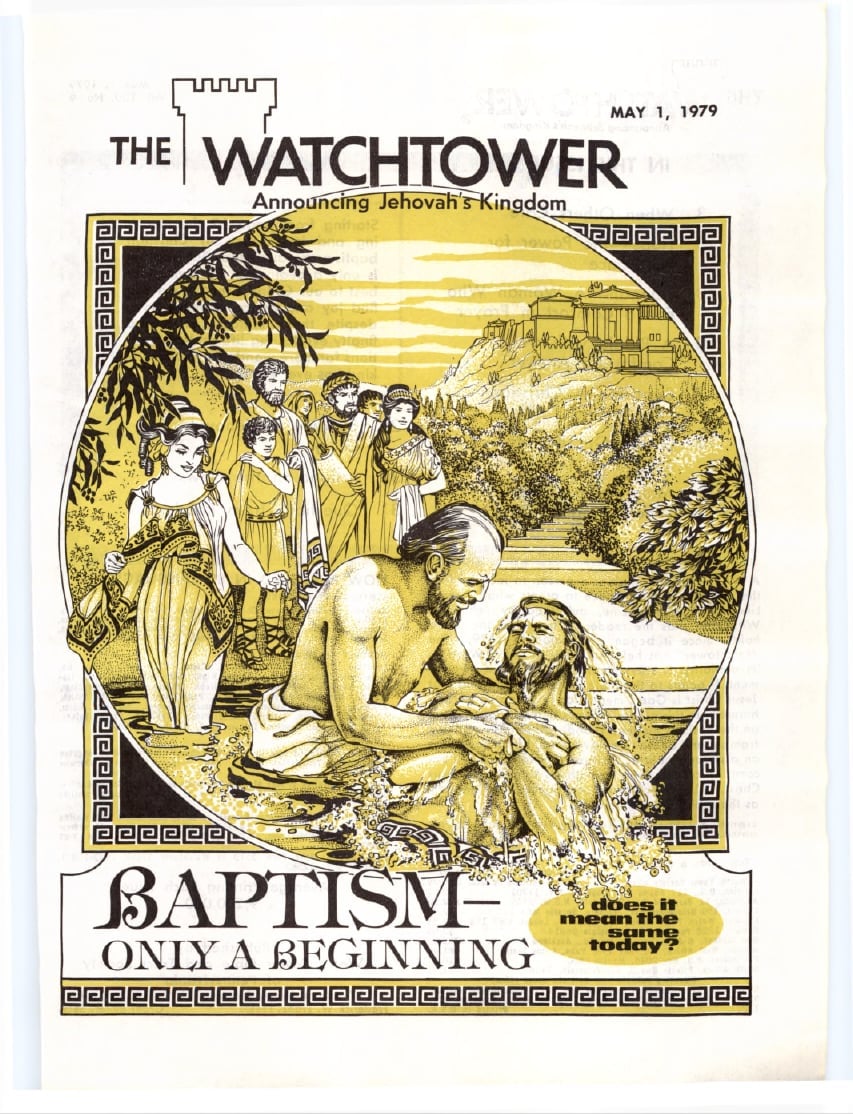
Starting from page 12 the meaning and importance of Christian baptism are discussed. But baptism is only a beginning. By giving our best to our Grand Creator, we can find joy and peace of mind now, despite these critical times, and finally everlasting life under conditions far more wonderful than mankind has ever known.
When Others Care
When Others Care
“I HAVE no fleshly family at all. . . . I take care of myself and have no help from anyone, and, believe me, there is many a time that I could use it. . . . Any attention, no matter how small, touches us very much. It is humbly appreciated.”
So wrote an elderly woman. Like her, older persons often are very grateful when others care.
But that also is true of many younger individuals. To her dear friends, one youthful person wrote: “I’d like to thank you both for being so kind and considerate, for taking us ‘young ones’ along, taking your time for us to have such a good time.” A small group had spent a day in pleasant and upbuilding association. Obviously, it had been a memorable occasion, and the note expressed gratitude to the considerate married couple “for caring so much.”
CARING REALLY HELPS
Those shown consideration often benefit greatly when others care. For instance, they may receive encouragement. Addressing her spiritual sister, another young person wrote: “You encouraged me when I got in a sewing mood, or a cooking mood, and you never criticized . . . I really love you as a Christian sister.” Yes, encouragement in wholesome activities—especially in spiritual pursuits—can benefit others.—Acts 11:23; 1 Pet. 5:12.
Yet, caring really helps in other ways too. Guidance may be needed, and surely it is much easier to accept sound advice when the recipient knows that the giver really cares. One Christian elder was pleased, indeed, to receive a note, saying: “Thanks for all the . . . guidance and time and caring.” The apostle Paul certainly cared about fellow believers, for he wrote: “Besides those things of an external kind, there is what rushes in on me from day to day, the anxiety for all the congregations. Who is weak, and I am not weak? Who is stumbled, and I am not incensed?”—2 Cor. 11:28, 29.
But when others care, there may be added benefits—those that are not so obvious. To the married couple mentioned earlier, a young woman wrote: “No matter how much I do for you, it could never be enough. I hope I never hurt either one of you.” Yes, kindness begets kindness, and it draws people closer together. Moreover, when you know that others care, undoubtedly you will never want to disappoint or hurt them. Just caring in return may supply added incentive to persevere in a loving, godly course.
SHOWING THAT YOU CARE
How can you show that you care about others? Doubtless, the ways are beyond numbering. But consider just a few.
“Become kind to one another, tenderly compassionate,” wrote the apostle Paul. (Eph. 4:32) He also said: “Let your brotherly love continue. Do not forget hospitality.” (Heb. 13:1, 2) Indeed, always do the kind, compassionate, loving, hospitable thing. Such action will show others that you care.
In showing hospitality, for example, is it not desirable to include persons of varying ages and circumstances, not just those of your own age and station in life? Jesus Christ once said: “When you spread a feast, invite poor people, crippled, lame, blind; and you will be happy, because they have nothing with which to repay you. For you will be repaid in the resurrection of the righteous ones.” (Luke 14:13, 14) By all means, remember the less fortunate, among them perhaps widows and widowers who would find pleasure in your company.
Of course, your means may not permit you to spread a feast. But do not let that trouble you. An inspired proverb says: “Better is a dish of vegetables where there is love than a manger-fed bull and hatred along with it.” (Prov. 15:17) On a certain occasion, when Jesus Christ visited his good friends Mary and Martha of Bethany, he stressed the excelling value of spiritual things. But what about a meal? “Martha, Martha,” said Jesus, “you are anxious and disturbed about many things. A few things, though, are needed, or just one.” (Luke 10:38-42) Yes, Jesus would have been satisfied with just one item of food, so the distracted Martha, as well as attentive Mary, could have gained some benefit from his teaching.
Christians can show that they care about others by associating with them socially. These occasions are made memorable by relating fine experiences enjoyed in God’s service, or by encouraging one another through wholesome, spiritually upbuilding conversation, group Bible reading or Scriptural discussion. Old and young alike can benefit from these things, and often the time seems to fly by. Friendships are strengthened and those present may long remember such pleasant hours spent together.
But what about recipients of hospitality or other acts of kindness? How fitting that they express their keen appreciation! This shows that they also care. “In view of the times we live in,” wrote a young person to cherished friends, “I don’t think we as Christians should waste (lose) any opportunities to tell each other how much we appreciate each other’s friendship. You . . . have been a help to me in many ways, some you may not even realize.”
Those who are properly motivated in showing concern for others do not seek praise for their efforts. Nevertheless, for giving of themselves they are rewarded because, as Jesus said, “there is more happiness in giving than there is in receiving.” (Acts 20:35) So both the giver and the recipient benefit from thoughtful words and deeds. What blessings result when others care!
“Throw all your anxiety upon him, because he cares for you.”—1 Pet. 5:7
Hope—The Power for Endurance
Hope—The Power for Endurance
HOW valuable endurance is! Without it the well-known violin player would never have become famous and the renowned soprano would not have been able to captivate her audiences. Yes, endurance is not only desirable but necessary in attaining a goal. This is especially true for a Christian who is running in the race with everlasting life in view. “Let us run with endurance the race that is set before us,” urged the Christian apostle Paul. Without endurance the “finish line” will not be reached.—Matt. 24:13; Heb. 12:1.
Seeing the importance of endurance, certain questions may arise. Can a godly person endure in his own strength? Why should Christians help one another to endure? How can they provide such aid?
A NEED TO “SPEAK CONSOLINGLY”
We are living in “critical times hard to deal with.” (2 Tim. 3:1) Many factors now make it very difficult for a Christian to endure. He can do so only if he heeds the Scriptural admonition to “go on acquiring power in the Lord and in the mightiness of his strength.” Above all, godly persons must fight “against the wicked spirit forces in the heavenly places,” the demons under Satan’s control. (Eph. 6:10, 12) Their influence can become so powerful that a Christian may lose his confidence in God’s power and become weak in faith. Prompt spiritual assistance then becomes necessary. But what can be done?
Consider how a certain Christian elder rendered spiritual aid on one occasion. He visited a married couple who had been very active members of the congregation. Due to sickness in the family and great stress at the man’s place of employment, they had almost given up in the Christian race. But at the end of his visit the elder was pleased to hear these words: “I am so glad you came to talk to us. My wife and I have renewed strength to continue to serve Jehovah.” A similar expression was heard from another Christian family, one in which pressures and problems had resulted in a nervous breakdown and very low spirituality. What caused these families to say, ‘We have renewed strength to serve Jehovah’?
The visiting elders had encouraged their fellow believers to view matters as Jehovah does. God knows that his people are made of dust and that, due to pressures, sickness and the like, a Christian may feel dejected. (Ps. 103:14) That is how some early Christians at Thessalonica felt. Accordingly, the apostle Paul advised: “Speak consolingly” to the depressed souls.”—1 Thess. 5:14.
To “speak consolingly” means to talk soothingly, to cheer, to encourage, to uplift another’s spirit with gladdening assurance. Yes, to speak consolingly means to fortify the listener’s heart so that his horizon widens out. In the case of the two discouraged families cited earlier, it was as if bright sunshine had wiped away an early morning mist that had obscured their spiritual vision. Their hearts were lifted up with renewed hope. What is this hope?
THE HOPE THAT “DOES NOT LEAD TO DISAPPOINTMENT”
“To hope” means to desire with expectation of fulfillment. Hope, therefore, has sustaining power, a driving force, because it looks ahead to its fulfillment. Of course, a person could easily cherish a false hope, one lacking a real basis. To illustrate: For millenniums mankind has hoped for the realization of perfect human government. But this expectation has not been fulfilled because humankind is imperfect, sinful, selfish and subject to death.—Rom. 5:12; 7:14.
Reliable hope must look to God, the first Cause of everything visible and invisible. (Rev. 4:11) Indeed, true hope finds its basis in God’s unfailing purpose for mankind, and, therefore, this “hope does not lead to disappointment.” (Rom. 5:5) For instance, the prophet Isaiah pointed out that God created the earth for human habitation. (Isa. 45:18) This is God’s purpose, and it will be accomplished. God will clear the way for paradise to be restored to this earth. (Luke 23:43) This restoration will come about by means of God’s kingdom, the theme of Jesus’ preaching and the government for which he taught his followers to pray.—Matt. 4:17; 6:10.
What this kingdom of God will bring about is almost beyond comprehension. It will restore perfect health and everlasting life. Yes, death will be no more and this means that even sin will be done away with, because death is the result of sin. (Rom. 6:23; Rev. 21:4) Gone, too, will be sin’s harmful effects that have plunged man into physical and mental distress. What a relief! This hope does not lead to disappointment, because it is based on God’s promise, and he cannot lie. (Titus 1:1, 2) Why, then, do some Christians become so depressed that the future seems hopeless?
HOPE MUST BE MAINTAINED AND MADE STRONGER
The start of the loss of hope may hardly be noticeable. Perhaps fulfillment of the hope seems to drag and this makes the heart sick. (Prov. 13:12) Or, circumstances in someone’s life may cause a person to become preoccupied with himself instead of his relationship with God. The individual may become discouraged because of sickness, mistreatment or just because of negative thoughts. Maybe he becomes somewhat jealous of the material or spiritual prosperity of others. Gradually being overtaken by these things, he may cease throwing his burden upon Jehovah. (Ps. 55:22) Soon the Christian finds himself thinking negatively, so that the reality of the Kingdom hope fades in his heart and mind. Yes, hope can be lost and then individuals stop enduring in the race for life.
The very nature of hope makes it something that can easily vanish if not constantly kept before the mind’s eye. Therefore, we must fight hard to keep our hope strong. This is because we hope for something that is invisible. (Compare Romans 8:24, 25.) But this does not mean that hope is necessarily weak.
Hope has such power that it is compared to an anchor that can hold a ship so secure that it will ride out a terrible storm. In fact, hope is called “an anchor for the soul.” (Heb. 6:19) When Paul wrote these words, he was discussing God’s promise to bless Abraham. This promise is the basis for hope in the kingdom of God, for Jehovah assured that faithful patriarch: “By means of your seed all nations of the earth will certainly bless themselves.” (Gen. 22:18) Jehovah added his sworn oath to this promise so that “through two unchangeable things in which it is impossible for God to lie, we who have fled to the refuge may have strong encouragement to lay hold on the hope set before us.” (Heb. 6:18) Keeping in mind this sworn promise of God strengthens the Christian’s hope and makes it indeed “an anchor for the soul.” It stabilizes, makes strong, gives the power to endure.
Our hope is strengthened from day to day when we make expression of the hope within us. The more we speak about it, the more we treasure it and the stronger it becomes. In a comparable way, the expressions made by the Shulammite maiden regarding her beloved shepherd boy doubtless strengthened her love for him. (Song of Sol. 5:10-16) Concerning such love, it could be said: “Its blazings are the blazings of a fire, the flame of Jah. Many waters themselves are not able to extinguish love, nor can rivers themselves wash it away.”—Song of Sol. 8:6, 7.
The same is true regarding warm expressions about the Christian hope. Therefore, Paul admonished his Hebrew brothers to “hold fast the public declaration of our hope without wavering.” (Heb. 10:23) This public expression of hope, this talking about it, will strengthen our hope, making it very real to us. Such vivid mental reality forges the chains that make hope a strong anchor for the soul.
THE POSITIVE APPROACH
To revive hope, positive help is needed. Knowing that hope is such a driving power for endurance, the visiting elders mentioned earlier turned the attention of the discouraged families away from themselves and talked about the reality of the kingdom of God. Hope is something of a spiritual nature. Therefore, the mind and heart must be filled with the spiritual things of God’s Word, the sure promises of God and the sayings of Jesus. Strong communication with Jehovah God must be restored, and this will surely lead to joy. Is that not what Paul shows as the positive result of prayer? “Do not be anxious over anything,” said the apostle, “but in everything by prayer and supplication along with thanksgiving let your petitions be made known to God; and the peace of God that excels all thought will guard your hearts and your mental powers by means of Christ Jesus.”—Phil. 4:6, 7.
To endure under tribulation, we must “rejoice in the hope” and “persevere in prayer.” (Rom. 12:12) And we will be happy, even during trials, if we realize that Jehovah God is not trying to find fault and ‘does not forget our work and the love we show for his name.’—Heb. 6:10.
Hope-inspiring, too, are Paul’s words: “We desire each one of you to show the same industriousness so as to have the full assurance of the hope down to the end, in order that you may not become sluggish, but be imitators of those who through faith and patience inherit the promises.” (Heb. 6:11, 12) May this strengthening assurance that God is on our side help us to make the Kingdom hope our power for endurance.
Hannah—A Woman Who Found Comfort in Prayer
Hannah—A Woman Who Found Comfort in Prayer
CHILDLESS Hannah lived at a time when women regarded barrenness as a terrible curse. Their feelings were like those of Rachel who, in desperation, said to her husband Jacob: “Give me children or otherwise I shall be a dead woman.” (Gen. 30:1) Hannah, too, felt her womanhood unfulfilled because of having no children. The fact that she was only one of Elkanah’s two wives added to the problem. This was especially so because, by his wife Peninnah, Elkanah had sons and daughters.
When Elkanah and his family traveled to the sanctuary at Shiloh for worship, Peninnah would take advantage of the situation to vex Hannah, taunting her respecting her barrenness. Hannah would give way to weeping and would not eat her portion of the sacrificial meal. Her husband would then try to comfort her, saying: “Hannah, why do you weep, and why do you not eat, and why does your heart feel bad? Am I not better to you than ten sons?”—1 Sam. 1:2-8.
Finally, Hannah committed all her concerns to Jehovah God. While at Shiloh on one occasion, she left the table and “began to pray to Jehovah and to weep greatly.” (1 Sam. 1:9, 10) With real earnestness, Hannah pleaded: “O Jehovah . . . if you will without fail look upon the affliction of your slave girl and actually remember me, and you will not forget your slave girl and actually give to your slave girl a male offspring, I will give him to Jehovah all the days of his life, and no razor will come upon his head.”—1 Sam. 1:11.
Since only her lips were moving as she inwardly poured out her distress before Jehovah God, high priest Eli mistakenly concluded that she was drunk and reproved her. But Hannah quickly explained: “No, my lord! A woman hard pressed in spirit I am; and wine and intoxicating liquor I have not drunk, but I pour out my soul before Jehovah. Do not make your slave girl like a good-for-nothing woman, for it is out of the abundance of my concern and my vexation that I have spoken until now.”—1 Sam. 1:15, 16.
Recognizing his mistake, Eli wished her God’s blessing, saying: “Go in peace, and may the God of Israel grant your petition that you have asked of him.”—1 Sam. 1:17.
How did Hannah’s prayer, along with the words of Eli, affect her? She found real comfort. Hannah resumed eating, and “her face became self-concerned no more.” (1 Sam. 1:18) Having committed the matter to Jehovah God, she was freed from deep inward sorrow. Hannah realized that the Most High was interested in her as a person, and she confidently looked to him for help. Though not knowing just what the outcome would be, Hannah enjoyed an inner peace. She must have recognized either that her period of childlessness would end or that Jehovah God would in some other way fill the lack resulting from her barrenness.
Hannah’s trust in the Almighty God was certainly not misplaced. She gave birth to a boy and named him Samuel. After weaning him, Hannah turned Samuel over for sanctuary service. (1 Sam. 1:19-28) Since the Bible mentions a genealogical enrollment for Levites “from three years of age upward,” it may well be that the boy was at least three years old at the time.—2 Chron. 31:16.
Appreciative of Jehovah’s kindness toward her, Hannah offered up a prayer of thanksgiving. This prayer glorified Jehovah as the One who is without equal. Hannah said: “There is no one holy like Jehovah, for there is no one but you; and there is no rock like our God.” (1 Sam. 2:2) In her own case, Hannah had experienced that the Most High is like a firm rock, that is, dependable and stable. On him one can indeed rely.
Additional blessings were ahead for Hannah. Once, when she came with her husband to Shiloh, Eli blessed both of them, saying: “May Jehovah appoint to you an offspring from this wife in place of the thing lent [Samuel], that was lent to Jehovah.” (1 Sam. 2:20) Hannah had the joy of seeing that blessing fulfilled. Eventually she became the mother to three more boys and two girls.—1 Sam. 2:21.
Just as Hannah found comfort in prayer, we too can find encouragement in committing all our cares to Jehovah God. He will answer all requests that are in harmony with his purpose. Hence, when we pour out our hearts to our heavenly Father, may we, like Hannah, become “self-concerned no more,” confident that he will remove our burden, whatever that may be, or enable us to bear it.
A Drastic Change
A Drastic Change
IN THE time of the prophet Isaiah, the women of Jerusalem were very haughty and arrayed themselves in showy dress and with lavish ornamentation. When it came to marriage, there was then no shortage of eligible males. (Isa. 3:16-24) However, through Isaiah, Jehovah indicated that a drastic change was at hand: “By the sword your own men will fall, and your mightiness by war.” (Isa. 3:25) This circumstance was to affect the women of Jerusalem as follows: “Seven women will actually grab hold of one man in that day, saying: ‘We shall eat our own bread and wear our own mantles; only may we be called by your name to take away our reproach.’”—Isa. 4:1.
There would be so few marriageable males that seven women would take the initiative to ask the first man that came along to marry them. All they wanted was to be known by his name, to be freed from the reproach of being without a husband. According to the Mosaic law, a husband was required to provide sustenance and clothing for his wife. (Ex. 21:10) But, because the situation of these women would be so desperate, they would be willing to release the man from his legal obligations. They would ‘eat their own bread and wear their own clothing.’
A Riddle with a Comforting Answer
Psalms
A Riddle with a Comforting Answer
THROUGHOUT human history, many people have been perplexed at seeing the prosperity of lawless men. Often unprincipled persons gain a position of great authority and then exploit and oppress the poor and afflicted. But should we fear corrupt men? This question is a basic element of the riddle that is answered in Psalm 49, written by a Levite of the “sons of Korah.”
The opening statement reads: “Hear this, all you peoples. Give ear, all you inhabitants of the system of things, you sons of humankind as well as you sons of man, you rich one and you poor one together.” (Ps. 49:1) With these words, the psalmist calls upon all to pay attention—the “sons of humankind,” the ‘earthlings of lower station in life,’ as also the “sons of man,” those of higher station. Yes, all, both rich and poor, could benefit from what would be set forth.
The psalmist continues: “My own mouth will speak things of wisdom, and the meditation of my heart will be of things of understanding. To a proverbial utterance I shall incline my ear; on a harp I shall open up my riddle.” (Ps. 49:3, 4) What the psalmist was about to express originated from meditation under the guidance of God’s spirit. It was not mere human wisdom, for the psalmist spoke of himself as ‘inclining his own ear to a proverbial utterance,’ an utterance from a divine source. On receiving this inspired expression, he would present his riddle or perplexing problem, doing so to the accompaniment of a harp.
Then comes the puzzling question: “Why should I be afraid in the days of evil, when the very error of my supplanters surrounds me?” (Ps. 49:5) Yes, should he give way to dread when days of suffering come to him on account of oppressive supplanters, men who would deprive him of his God-given rights? As the following Ps 49 verses 6-10 indicate, these “supplanters” were wealthy individuals. While such ones may use their position to make unjust gain at the expense of others, we should not yield to panicky fear, nor should we become envious of the prosperity that self-seeking men might enjoy. All they have is their material wealth. They boast about what they own and, instead of looking to the Creator for protection and security, trust in unstable material riches. The psalmist goes on to show clearly why we should not fear or envy any of such men. They will not live to time indefinite, nor is their wealth a lasting possession. He writes:
“Those who are trusting in their means of maintenance, and who keep boasting about the abundance of their riches, not one of them can by any means redeem even a brother, nor give to God a ransom for him; (and the redemption price of their soul is so precious that it has ceased to time indefinite) that he should still live forever and not see the pit. For he sees that even the wise ones die, together the stupid one and the unreasoning one perish, and they must leave to others their means of maintenance.”—Ps. 49:6-10.
As the psalmist pointed out, riches are of no value in saving a brother from death. The world’s combined wealth would not provide a ransom price of sufficient value even for one human life. There is no way to hold off death. As far as humans are concerned, such a ransom price is beyond their reach. No one can pay a particular sum that would save a person from going down into the pit of death and enable him to continue living. The wise, the stupid and the unreasoning—all must die. Whatever possessions may have been acquired during a lifetime must be left behind for others to enjoy.
Of course, the wealthy oppressors want this to be otherwise. At least, they desire to keep their memory alive for generations to come. But can they succeed? Note the psalmist’s answer:
“Their inward wish is that their houses may be to time indefinite, their tabernacles to generation after generation. They have called their landed estates by their names. And yet earthling man, though in honor, cannot keep lodging; he is indeed comparable with the beasts that have been destroyed. This is the way of those who have stupidity, and of those coming after them who take pleasure in their very mouthings. . . . Like sheep they have been appointed to Sheol itself; death itself will shepherd them; and the upright ones will have them in subjection in the morning, and their forms are due to wear away; Sheol rather than a lofty abode is for each one.”—Ps. 49:11-14.
Consider what the psalmist is saying. Inside themselves, the wealthy who have accumulated riches by devious means hope that their property might last for endless years to come, being handed down from generation to generation. Since they have called their holdings by their own names, they think to perpetuate their memory. Yet they fail to see that they are mere earthlings, made of dust. Though they may be held in honor on account of their riches, self-seeking men cannot reside on the earth indefinitely. All attempts to keep their names alive are doomed to failure. They are no better off than unreasoning animals that perish.
Despite their wealth, lawless men come to an end that is no different from that of animals killed for food or to prevent their depredations. There is nothing in their life that elevates such men above the brute creation, for their life totally ignores the Creator, the eternal God. Hence, it is stupidity on their part to imagine that they can perpetuate their names. Those who adopt the philosophy or “mouthings” of self-seeking men are likewise stupid and will come to the same inglorious end. They must go down into Sheol, being shepherded, or led there, by death.
But what of those who put their trust in Jehovah? These faithful servants of God will gain the upper hand “in the morning.” This will be at the start of the new day after their deliverance from affliction and oppression.
Then, while righteous persons are enjoying divine favor, the wicked, though they had enjoyed wealth and power, will molder in the dust. Thus their ‘forms will wear away.’ Instead of enjoying a palatial dwelling place, they will rot in the depths of Sheol.
The “upright ones,” the remnant of Kingdom heirs and the “great crowd,” will survive the war at Har–Magedon and experience the promised deliverance, whereas the lawless ones will have been destroyed. During the millennial reign of Christ all the dead in Sheol will have a resurrection.
Contrasting his lot with that of unprincipled men, the Levite psalmist continues:
“However, God himself will redeem my soul from the hand of Sheol, for he will receive me. . . . Do not be afraid because some man gains riches, because the glory of his house increases, for at his death he cannot take along anything at all; his glory will not go down along with him himself. For during his lifetime he kept blessing his own soul; (and people will laud you because you do well for yourself,) his soul finally comes only as far as the generation of his forefathers. Nevermore will they see the light. Earthling man, although in honor, who does not understand, is indeed comparable with the beasts that have been destroyed.”—Ps. 49:15-20.
Like the psalmist, we rightly make the doing of the divine will the center of our lives. With full trust in his God, this Levite could rest assured that Jehovah would redeem him from Sheol, not allowing him to experience a premature death. Thus he would be received, not by Sheol, but by his rescuer, Jehovah. When we have Jehovah as our God, there is no reason to be fearful of a wicked man nor to envy him. His wealth may increase, and his home and other possessions may become more luxurious. During his lifetime he may have congratulated himself on the position and wealth that he had been able to procure. Also, people generally may have praised him for having done well for himself materially, and they may have deferred to him.
In the final analysis, though, he attains nothing more than did his forefathers, namely, death. Thus he has only a world of darkness, not light. So, regardless of how greatly honored he may be in this system of things, the earthling who does not understand or appreciate spiritual things and makes no room for the Creator in his life is like a beast that has no capacity to worship the Creator. Thus the wealthy, self-seeking man lives like a beast and perishes like a beast.
The answer to the perplexing problem about fearing the oppression by the wicked should certainly help us to see what should continue to come first in our lives. Nothing of a material nature has any permanence. If we want an abiding future, we need to put our trust in the eternal God who can restore even the dead to life.
Baptism—A Christian Requirement
Baptism—A Christian Requirement
BAPTISM has been part of Christianity since its beginning. What does baptism signify? How important is it that persons be baptized? Let us consider some basic information about baptism and its significance from the standpoint of the Holy Bible.
The Scriptures indicate that the correct method of baptism is complete immersion. The word “baptize” is taken from the Greek word baptízein, meaning “to dip, to plunge.” When one is immersed in water, one is temporarily buried from sight and then lifted out of the water.
The first mention of baptism in the Bible concerns the activity of John the Baptist. In the year 29 C.E., God authorized John to do baptizing. The Scriptures state that John “came into all the country around the Jordan, preaching baptism in symbol of repentance for forgiveness of sins.”—Luke 3:1-3.
Going under and coming up out of the water symbolized that a person had sincerely repented, or felt sorry for sinning against God’s law given through Moses. He was, so to speak, dying to such a course and coming alive to renewed efforts at observing that Law. Since the Mosaic law was to serve as a “tutor leading to Christ,” John’s baptism was an important step in preparing Israelites for meeting the promised Messiah.—Luke 1:16, 17; 3:4-6; Gal. 3:24.
Jesus himself submitted to baptism by John. On that occasion God’s holy spirit came down upon Jesus, anointing him as the promised Messiah. (Mark 1:9-11) Though not a sinner in need of repentance, Jesus entered on a new course of life at that time. (1 Pet. 2:22) Thereafter he was to do his Father’s special “will” that would involve offering his life as a ransom sacrifice for the sins of mankind.—Ps. 40:6-8; Heb. 10:5-10.
Jesus did not put a stop to the baptizing activity of John the Baptist. In fact, we read that early in his ministry “Jesus was making and baptizing more disciples than John—although, indeed, Jesus himself did no baptizing but his disciples did.” (John 4:1, 2) This baptizing directed by Jesus was in symbol of repentance in the manner of John’s baptism.
A CHANGE OF MEANING
After Jesus’ death, resurrection and ascension to heaven, the Mosaic law came to its end. (Rom. 10:4; Eph. 2:15) Did that do away with the need for baptism? No, but now, for the Jews, it symbolized a presentation of themselves to Jehovah God on the basis of the atoning sacrifice of Jesus as the Messiah. However, just before Jesus ascended to heaven, he gave his disciples the commission: “Go therefore and make disciples of people of all the nations, baptizing them in the name of the Father and of the Son and of the holy spirit, teaching them to observe all the things I have commanded you.”—Matt. 28:19, 20.
Did you notice that now baptism would include not only Jews but also “people of all the nations”? During his earthly life Jesus had foretold that God’s special favor toward the Jews would end. (Matt. 8:11, 12; 21:43) This happened in 36 C.E. when God directed the apostle Peter to enter the house of Cornelius, a non-Jew, and declare the Christian message to him and his household. After these Gentiles accepted the truth about Jesus Christ, they received the miraculous gift of the holy spirit and were baptized.—Acts 10:1-48.
Since God was no longer dealing with a nation of people specially dedicated to him from birth, from that time on baptism became a fitting symbol of wholehearted dedication to God. Going under the water would indicate that a person was dying to a course of life centered around himself. Coming up from the water would symbolize coming alive to putting God’s revealed will in first place. (Compare Matthew 6:33; Philippians 1:10.) Jesus showed this to be a requirement when he said: “If anyone wants to come after me, let him disown himself and pick up his torture stake and continually follow me.”—Matt. 16:24.
What is the idea behind being baptized “in the name of the Father and of the Son and of the holy spirit”? (Matt. 28:19) We can better understand this from considering Jesus’ words as recorded at Matthew 10:41: “He that receiveth a prophet in the name of a prophet shall receive a prophet’s reward; and he that receiveth a righteous man in the name of a righteous man shall receive a righteous man’s reward.” (Authorized Version; Rotherham) This means the receiving of a prophet or a righteous man in recognition of what he is. Candidates for Christian baptism must recognize the Father, the Son and the holy spirit for what they are: the Father as Supreme Sovereign; the Son as ransomer and king; and the holy spirit as God’s active force that aids persons to do the divine will.—Ps. 83:18; Matt. 20:28; Rev. 19:16; John 14:16, 17.
HOW IMPORTANT?
How important is it that people submit to Christian baptism? Consider the apostle Peter’s counsel at Pentecost, 33 C.E., to Jews who shared community responsibility for sinfully impaling the Messiah or Christ, and who needed cleansing from that sin: “Repent, and let each one of you be baptized in the name of Jesus Christ for forgiveness of your sins, and you will receive the free gift of the holy spirit.” (Acts 2:38) According to the Scriptures, persons who wish to gain forgiveness of sins through Jesus Christ must repent and be baptized.
Does this mean that the waters of baptism wash away sins? It would be wrong to draw such a conclusion. When commenting on the flood of Noah’s day, Peter gives baptism a deeper meaning, saying: “That which corresponds to this [the passing of eight persons through the Flood waters in an ark] is also now saving you, namely, baptism, (not the putting away of the filth of the flesh, but the request made to God for a good conscience,) through the resurrection of Jesus Christ.”—1 Pet. 3:21.
How, then, do we make a request to God for that good conscience? By doing as Noah did, dedicating ourselves before passing through the water. Like Noah, we dedicate ourselves to Jehovah God to do his will and from then on proceed to do it. This results in our getting a good conscience, for when we know that we are doing God’s will we enjoy a good conscience. Thus the dedication of ourselves to God is really a “request made to God for a good conscience.” The good conscience results, not from doing our own works of self-righteousness, but from doing God’s prescribed works, God’s will. This is what we dedicate ourselves to do.
Thus our dedication of ourselves to God through Christ constitutes a “request made to God for a good conscience.” Of ourselves, in our imperfect, sinful condition, we are not acceptable to God. So, because we repent of sin and turn around and dedicate ourselves, Jehovah applies the cleansing blood of Christ’s atoning sacrifice to us, thereby relieving us of the condemnation of sin and giving us a good conscience toward Him. Therefore, our obediently passing through the baptismal water symbolizes our dedication of ourselves to Jehovah God through Jesus Christ.
Does this suggest that after baptism a person should no longer recognize himself as sinful? Not at all. Even Paul, a baptized Christian and an apostle of Jesus Christ, lamented: “So, then, with my mind I myself am a slave to God’s law, but with my flesh to sin’s law.” (Rom. 7:25) However, dedicated, baptized Christians can have a good conscience in that they know that the sin-atoning value of Jesus’ sacrifice blots out past sins and those they may commit from day to day through human imperfection. (1 John 2:1, 2) Therefore, Christians need not feel weighed down with guilt feelings because of their former course of life and inherited sinful state.
ONLY A BEGINNING
Should persons view their baptism as evidence that they have finally “made it” and are all set to receive life everlasting? That would be unwise, for the Bible portrays baptism as only the beginning of a person’s dedicated sacred service to God. Remember, Jesus’ baptism occurred at the start of his Messianic service. With his apostles and other early disciples too it was a preliminary step. Did you notice the apostle Peter’s expression that baptism “is also now saving you?” (1 Pet. 3:21) The commentary by G. F. C. Fronmüller notes: “The Present [tense of the Greek word for “saving”] is used because the saving has only begun and is not yet completed.”—Matt. 10:22; Rom. 13:11; Phil. 2:12; Rev. 2:10.
Showing that more is required for salvation than just baptism are the following words of the apostle Paul: “For if you publicly declare that ‘word in your own mouth,’ that Jesus is Lord, and exercise faith in your heart that God raised him up from the dead, you will be saved. For with the heart one exercises faith for righteousness, but with the mouth one makes public declaration for salvation.” (Rom. 10:9, 10) It is evident from this that besides faith and baptism, “public declaration” to the effect that Jesus Christ is Lord and that God raised him up from the dead is a requirement for salvation.
While this public declaration is made at the time of one’s baptism, this does not mean that thereafter there is no need for further declaration of one’s hope before others. To the contrary, the Bible shows that we must continue to declare such at congregational meetings, before governmental or judicial authorities who may demand an explanation of our Christian hope, and in publicly proclaiming the “good news” of God’s kingdom.—Heb. 10:23; 1 Pet. 3:15; Matt. 24:14.
Clearly, for all who wish to gain an approved standing with God, Christian baptism is a requirement. In view of what it symbolizes, baptism is not to be taken lightly or entered into without careful advance preparation. Are you thinking of getting baptized soon? If so, reflect seriously on its meaning. Be determined forever to live up to the dedication to God that it represents.
God’s Word Exerts Power
God’s Word Exerts Power
The apostle Paul wrote: “The word of God is alive and exerts power.” (Heb. 4:12) A recent experience from Spain confirms that statement.
While engaging in witnessing on the street, a Christian elder approached a young man who identified himself as a Buddhist. Although he preferred observing people instead of reading, the man accepted an older issue of The Watchtower. Also, he was invited to attend a meeting at the local Kingdom Hall of Jehovah’s Witnesses.
A few days later, the young man appeared at the hall. After being introduced to some individuals present, he was invited to sit down. But he declined and stood for two hours without moving. In conversation afterward, he said that he did not care to read, preferring to listen and observe.
However, on one occasion the elder asked the young man if he had ever read the Bible through. He had not, but was encouraged to do so, the Witness mentioning that the Bible is an Oriental book. This Buddhist read the entire Bible in just a few days. From then on, Jehovah helped him to grow spiritually. Today, he is a baptized Christian. God’s Word truly does exert power.
Giving Our Best to Jehovah
Giving Our Best to Jehovah
“‘Cursed is the one acting cunningly when there exists in his drove a male animal, and he is making a vow and sacrificing a ruined one to Jehovah. For I am a great King,’ Jehovah of armies has said, ‘and my name will be fear-inspiring among the nations.’”—Mal. 1:14.
1. Can humans really give anything to Jehovah?
DOES it not seem strange that imperfect humans should even think about giving anything to the Great Creator, Jehovah? Why, there is not a thing in the whole universe that does not already belong to him! In his Word, he himself declares: “The silver is mine, and the gold is mine.” (Hag. 2:8) “To me belongs every wild animal of the forest, the beasts upon a thousand mountains. I well know every winged creature of the mountains, and the animal throngs of the open field are with me. If I were hungry, I would not say it to you;, for to me the productive land and its fullness belong. Shall I eat the flesh of powerful bulls, and the blood of he-goats shall I drink?” (Ps. 50:10-13) Surely Jehovah God has no need of gifts from anyone, for he is complete in himself. He is the self-existent One.
2. What did David recognize about voluntary offerings made to Jehovah?
2 As a youth who had been taught the Mosaic law, David the son of the Judean Jesse knew that Jehovah owns the whole earth. (Ex. 19:5) In later years, when making contributions for the temple to be built at Jerusalem, David prayerfully addressed the Most High in these words: “Who am I and who are my people, that we should retain power to make voluntary offerings like this? For everything is from you, and out of your own hand we have given to you. O Jehovah our God, all this abundance that we have prepared to build for you a house for your holy name, from your hand it is, and to you it all belongs.”—1 Chron. 29:14, 16.
3. (a) What questions might be raised about the gifts made to Jehovah? (b) What is the Scriptural answer to such questions?
3 So David recognized that we humans cannot enrich the Almighty in any way. Indeed, whatever we may give is merely a returning of a small part of what we have received from the Source of “every good gift and every perfect present.” (Jas. 1:17) But does this mean that the bringing of gifts to our Creator has no value? Does he spurn the offerings of his devoted servants? The answer of God’s Word is, No. Jehovah God invites humble worshipers to bring their gifts. At Psalm 96:8 we read: “Ascribe to Jehovah the glory belonging to his name; carry a gift and come into his courtyards.”
4. What kind of gifts are pleasing to Jehovah?
4 Of course, Jehovah wanted fine offerings that were prompted by appreciative hearts. These would be gifts that involved self-denial as well as prayerful and thoughtful preparation. For example, while the Mosaic law was in force, an Israelite could not bring just any animal to the gate of the tabernacle courtyard and expect to receive favorable recognition from God. The Law stated: “In case a man should present a communion sacrifice to Jehovah in order to pay a vow or as a voluntary offering, it should prove to be a sound one among the herd or the flock, in order to gain approval. No defect at all should prove to be in it. No case of blindness or fracture or having a cut or wart or scabbiness or ringworm, none of these must you present to Jehovah.”—Lev. 22:21, 22.
5. What did the Law stipulate regarding grain offerings?
5 As for grain offerings, these were to be of fine flour. (Lev. 2:1, 4; 6:14, 15; Num. 15:4) This requirement would have ruled out all coarse flour, flour that was not sifted well. Yes, only the best was appropriate as an offering to the Holy One, Jehovah.
6. What bearing did heart motivation have on the acceptability of an Israelite’s sacrifices?
6 Another important requirement for making acceptable offerings to Jehovah was that of a person’s having the right heart motivation. Without a deep inward desire to please his Creator, an Israelite would be making sacrifices in vain. Note how this is stressed in the following words: “‘Of what benefit to me is the multitude of your sacrifices?’ says Jehovah. ‘I have had enough of whole burnt offerings of rams and the fat of well-fed animals; and in the blood of young bulls and male lambs and he-goats I have taken no delight. When you people keep coming in to see my face, who is it that has required this from your hand, to trample my courtyards? Stop bringing in any more valueless grain offerings. Incense—it is something detestable to me . . . Your new moons and your festal seasons my soul has hated. To me they have become a burden; I have become tired of bearing them. And when you spread out your palms, I hide my eyes from you. Even though you make many prayers, I am not listening; with bloodshed your very hands have become filled.’” (Isa. 1:11-15) When genuine devotion and a spirit of generosity were lacking, the outward forms of worship were comparable to bribes designed to buy divine favor. They were wholly unacceptable.
OUR GIFT TO JEHOVAH
7. Why do we today not offer animal sacrifices?
7 Unlike the Israelites, we disciples of Jesus Christ do not present sacrifices on some material altar. The Law covenant that commanded such offerings was canceled on the basis of Jesus’ death on a stake. (Col. 2:13, 14) This gives rise to the question, What sacrifices can we offer?
8. At Romans 12:1, what did the apostle Paul write about sacrifice, and how are we to understand his words?
8 The Christian apostle Paul encouraged spirit-anointed believers who would give up their body of flesh and receive a glorious spiritual body on being raised from the dead: “I entreat you by the compassions of God, brothers, to present your bodies a sacrifice living, holy, acceptable to God, a sacred service with your power of reason.” (Rom. 12:1) Thus, they were encouraged to use their energies and capabilities in serving the Creator. The body members are the instruments through which a person can speak and act. Hence, ‘to present their bodies a living sacrifice,’ these Christians had to be active, ‘doing all things to God’s glory.’ (1 Cor. 10:31) For that sacrifice to be “holy,” they had to maintain moral and spiritual cleanness. And only by letting unhypocritical love motivate their actions would such presenting of their bodies be “acceptable to God.” (1 Cor. 13:3) When they led a life of full devotion to God in attitude, word and action because of deliberate choice, appreciating that it was right in view of the divine compassion that has been shown them, they were performing sacred service with their “power of reason.” Regardless of what our present hope may be, whether heavenly or earthly, can we not likewise be whole-souled in our service to God?
9. At Hebrews 13:15, 16, what encouragement are we given?
9 In the letter to the Hebrews, we learn still more about acceptable sacrifices. Hebrews 13:15, 16 says: “Through [Christ] let us always offer to God a sacrifice of praise, that is, the fruit of lips which make public declaration to his name. Moreover, do not forget the doing of good and the sharing of things with others, for with such sacrifices God is well pleased.”—Compare Hosea 14:2.
10. What does “the fruit of lips” include, and what questions might we ask ourselves in this regard?
10 Our offering “the fruit of lips” would include sharing in the fulfillment of Matthew 24:14: “This good news of the kingdom will be preached in all the inhabited earth for a witness to all the nations.” Are we truly giving our best to this important preaching work? Do we eagerly seize opportunities to give a witness? Is our life as Christians exemplary so that “the fruit of lips” constitutes an acceptable sacrifice of praise?—Rom. 2:21, 22.
11. Why is it beneficial to examine our attitude about Christian meetings?
11 Public expressions at Christian meetings are also a part of our sacrifice. Obviously, this necessitates our being present when fellow believers are assembled for worship. Do we really long to be with others of like precious faith? Or, do we allow other activities and interests needlessly to occupy the time that we could be with our brothers? We do well to imitate the example of the psalmist who compared his intense desire for communion with Jehovah God in association with fellow worshipers to the longing of a hind for water. Without water, a deer simply could not survive. (Ps. 42:1, 2) Do we really appreciate that we cannot live without Jehovah, “the source of living water”?—Jer. 2:13.
12, 13. How can we derive the greatest benefit from Christian meetings?
12 While at meetings, we would certainly want to derive the greatest benefit. This we can do by seeking to apply the following inspired advice: “Let us consider one another to incite to love and fine works, . . . encouraging one another, and all the more so as you behold the day drawing near.” (Heb. 10:24, 25) Since the great day of Jehovah for executing his judgment is bound to come, do we not have good reason to give prayerful consideration to what we can do to strengthen and encourage our brothers? Surely we do not want any of them to be found in a disapproved state when that day comes. (Luke 21:34-36) Do the expressions we make reveal that we are genuinely concerned about their spiritual well-being? Through our comments at meetings, are we promoting love, an unselfish interest in the eternal welfare of others? Do our statements encourage all to continue performing fine works, being zealous in proclaiming the “good news” and being exemplary in all aspects of daily living?—Compare Titus 2:1-14.
13 By inciting others “to love and fine works,” we also arouse ourselves, impressing on our minds and hearts the importance of works that are consistent with faith. This can have a highly beneficial effect on us, causing us to examine ourselves and to make improvement in Christian living and activity. And when we listen to what others say and then apply the Scriptural encouragement, we gain the happiness that comes from being “doers of the word.”—Jas. 1:22-25.
14, 15. Besides spiritual giving, what else do our “sacrifices” include?
14 The letter to the Hebrews encourages sharing, responding to the needs of others. Those to whom this letter was directed were told: “Keep on remembering the former days in which, after you were enlightened, you endured a great contest under sufferings, sometimes while you were being exposed as in a theater both to reproaches and tribulations, and sometimes while you became sharers with those who were having such an experience. For you both expressed sympathy for those in prison and joyfully took the plundering of your belongings, knowing you yourselves have a better and an abiding possession.” (Heb. 10:32-34) Do we likewise express sympathy to those who are suffering and do we come to their aid?
15 The situation in which God’s servants find themselves varies considerably. Some may be poverty-stricken. Others may be sad and depressed, in sore need of comfort and fellowship. Still others may be discouraged on account of serious personal problems. It is true that Jehovah God will see to it that the righteous are not entirely forsaken. (Ps. 37:25) But should we not personally feel the responsibility of being God’s agents for extending kindness and help? Our being neglectful in this respect is a serious matter. The apostle John wrote: “Whoever has this world’s means for supporting life and beholds his brother having need and yet shuts the door of his tender compassions upon him, in what way does the love of God remain in him? Little children, let us love, neither in word nor with the tongue, but in deed and truth.”—1 John 3:17, 18.
WHY WE ARE INVITED TO BRING OUR GIFTS
16, 17. Why does Jehovah invite us to make “sacrifices”?
16 In order for us to be faithful in offering our spiritual sacrifices, we need to appreciate why Jehovah God invites us to do so. Our heavenly Father already knows our inmost thoughts and attitudes. But he wants us to express our love for him by the positive good that we do for others. It is his desire that his servants be like him in showing kindness and generosity. (Matt. 5:43-48) This provides the means for him to draw humans to himself. How so? By observing our laudable way of life, others may come to recognize that real happiness comes from doing God’s will.—Matt. 5:16.
17 Since Jehovah God made us, he knows what is in our best interests. This is another reason for his inviting us to bring our gifts to him. A generous spirit contributes toward our enjoying peace of mind and heart as well as genuine happiness now. The Bible states: “There is more happiness in giving than there is in receiving.” (Acts 20:35) Additionally, we can rest assured that our heavenly Father will reward us richly both now and in the eternal future. The Son of God said: “When making gifts of mercy, do not let your left hand know what your right is doing, that your gifts of mercy may be in secret; then your Father who is looking on in secret will repay you.” (Matt. 6:3, 4) “When you spread a feast, invite poor people, crippled, lame, blind; and you will be happy, because they have nothing with which to repay you. For you will be repaid in the resurrection of the righteous ones.”—Luke 14:13, 14.
18. What should be true of our giving, and why?
18 So, taking a comprehensive view of our sacrifices, we must admit that at meetings, when sharing the “good news” with others, and in attitude, word and action, yes, in all areas of life, we should be prepared to give our very best. We should not be halfhearted about such vital matters. What is at stake is Jehovah’s approval and our being granted life. May we, therefore, live in harmony with the Scriptural assurance: “God is not unrighteous so as to forget your work and the love you showed for his name, in that you have ministered to the holy ones and continue ministering.”—Heb. 6:10.
[Pictures on page 17]
ALL MAY SHARE IN:
COMMENTING AT MEETINGS
PREACHING AND TEACHING
ENCOURAGING OTHERS SPIRITUALLY AND MATERIALLY
INCITING OTHERS TO LOVE AND FINE WORKS
Maintaining Cleanness When Bringing Gifts
Maintaining Cleanness When Bringing Gifts
“Ascribe to Jehovah the glory belonging to his name; carry a gift and come into his courtyards. Bow down to Jehovah in holy adornment,”—Ps. 96:8, 9.
1, 2. Why must God’s people be pure, and how was this impressed on the Israelites?
THE holiness, purity or cleanness of Jehovah requires that his people remain pure. (1 Pet. 1:14-16) This fact was deeply impressed on the Israelites by the provisions of the Mosaic law. They were to remain separate from the immoral and degrading practices of surrounding nations, and avoid, if possible, touching a dead body or anything else that would defile them, and not eat animals that were unclean.—Lev. 11:4-8, 10-20, 24, 25; 18:3-24.
2 When on military expeditions, the Israelites were under command to maintain cleanness in their camp. The Law stated: “Your camp must prove to be holy, that [Jehovah] may see nothing indecent in you and certainly turn away from accompanying you.” (Deut. 23:14) If an Israelite did become defiled in some way, he had to ‘wash his garments, and he was unclean until evening.’ (Lev. 11:40) Even the washing was insufficient. Not until a new day came at sunset, according to the Hebrew manner of counting days, would the person again have a proper standing with Jehovah. During the period of Israel’s wandering in the wilderness, when the camp numbered into the millions, upholding the divine standard for cleanness was no small matter.
3. In matters of cleanness, what responsibility did the Aaronic priests have?
3 To offer an acceptable sacrifice, an Israelite had to be ceremonially clean. (Lev. 15:31) It was the duty of the priests to uphold God’s standard of cleanness, maintaining purity themselves and helping their fellow Israelites to be in an acceptable condition to present offerings that would be divinely approved.—Mal. 2:7.
4. How did Jehovah God view the sacrifices of the Israelites who were not measuring up to his requirements?
4 When the Israelites ignored the divine requirements for proper conduct, their sacrifices not only became meaningless but were actually detestable to Jehovah God. The Scriptures tell us: “The sacrifice of the wicked ones is something detestable to Jehovah, but the prayer of the upright ones is a pleasure to him.” (Prov. 15:8) “The one slaughtering the bull is as one striking down a man. The one sacrificing the sheep is as one breaking the neck of a dog. The one offering up a gift—the blood of a pig! The one presenting a memorial of frankincense is as one saying a blessing with uncanny words. They are also the ones that have chosen their own ways, and in their disgusting things their very soul has taken a delight.”—Isa. 66:3.
5. Why should we today be concerned about our standing with God?
5 The righteous principles incorporated in God’s law to Israel have not changed. They apply at all times, in all situations and under all conditions. That is why Christian witnesses of Jehovah today would want to consider soberly their own standing before God. Each one might ask himself: ‘Am I striving to remain clean mentally, morally, physically and spiritually? Do I contribute personally to the cleanness of the Christian congregation—a cleanness that causes it to stand out in contrast to a wicked, unclean generation? Does the way in which I care for and use my home and other possessions, including my fleshly body, demonstrate close adherence to Jehovah’s way? Is this true of my whole way of life?’ Our affirmative answer to these questions would be an evidence that we are striving to heed the inspired exhortation to guard against “every defilement of flesh and spirit.”—2 Cor. 7:1.
LEARNING ABOUT ACCEPTABLE SACRIFICE FROM OTHER PROVISIONS OF THE LAW
6. What did the Law say about the anointing oil?
6 The stipulation regarding the anointing oil contained in the Mosaic law also makes clear the importance of upholding God’s standard of holiness. When given the special recipe for making the anointing oil, Moses received strict rules governing the use of this substance. We read: “This is to continue as a holy anointing oil to me during your generations. It is not to be rubbed in the flesh of mankind, and with its composition you must not make any like it. It is something holy. It is to continue as something holy for you. Anyone who makes an ointment like it and who puts some of it upon a stranger must be cut off from his people.” (Ex. 30:31-33) A failure to respect the sacred purpose of anointing oil constituted a capital offense.
7. What vital lessons can we draw from the divine commands about the anointing oil?
7 This furnishes vital lessons for us. The Bible identifies the oil as being representative of Jehovah’s holy spirit. (Compare Zechariah 4:2-6.) It was, not with anointing oil, but with holy spirit that the great King-Priest Jesus Christ was anointed. (Matt. 3:16, 17; Luke 4:18; Heb. 1:8, 9) Truly, then, we want to have the highest regard for God’s spirit, doing our utmost to follow its leading. This includes preserving a good conscience so that we do not slight or ‘grieve the spirit.’ (Eph. 4:30) Moreover, since it is by means of his spirit that Jehovah God is building up the Christian congregation, we need to guard against giving credit to men for what is being accomplished. (1 Cor. 3:5, 6) Our firm faith in the inspired prophecies also is a confirmation of our having a proper attitude toward the spirit that is responsible for those prophecies. (2 Pet. 1:21) Do our words and actions demonstrate that we are awaiting “new heavens and a new earth” and want as many others as possible to learn about this grand hope?—2 Pet. 3:13, 14.
…