The Watchtower, January 15, 1979
Download: PDF — The Watchtower, January 15, 1979
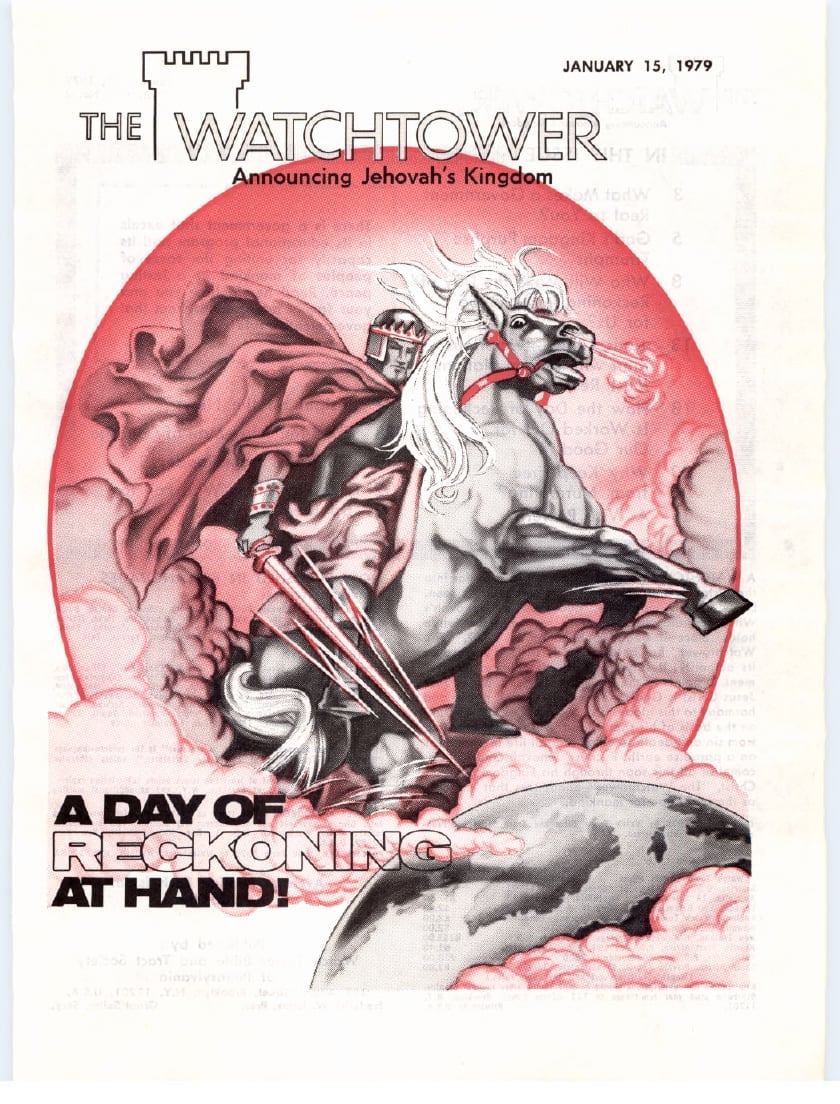
The Watchtower — January 15, 1979
Source: jw.org
Contents
Page Two
What Makes a Government Real to You?
God’s Kingdom Purpose Triumphs
Who Will Make the Day of Reckoning Work Good for Us?
Jesus Christ—Victorious King with Whom Nations Must Reckon
How the Day of Reckoning Is Worked Out for Our Good
Why Keep Free from Murmuring?
A Wise Proverb
Insight on the News
Ebed-Melech—Man of Courage
Questions From Readers
Like Physicians Who Fail to Do Their Job
What Do You Know About the Bible?
Page Two
Page Two
There is a government that excels in its educational program and its capacity for uniting the races of peoples of mankind in a lasting peace. Read herein how you and your family may benefit from that governmental rule
What Makes a Government Real to You?
What Makes a Government Real to You?
THERE are now 150 countries that belong to the United Nations. Likely you live in one of these countries, since over 4,000,000,000 people do—practically the whole world population! Each of these countries has some form of government. Do you know what kind is the most common?
Republics are. The United States, Egypt, the Soviet Union and China are among the more than 100 nations of the United Nations that are republics. According to Webster’s Third New International Dictionary, a republic is: “A government characterized by having a chief of state who is not a monarch and who in modern times is [usually] a president.” Contrary to what some persons may think, no nation today is a true democracy, which is “a form of government in which the supreme power is vested in the people and exercised by them directly.”
Are these governments—these republics—real to you? ‘Of course,’ you may answer. But why are they? For one thing, is it not because the leaders of these nations are real persons? Such men as President Carter, President Sadat, and President Brezhnev have become household names. Also, the places from which such men govern are real—Washington, Cairo and Moscow. The effects of their decisions are felt, not only by their own citizens, but by people earth wide.
KINGDOMS OF THE WORLD
Kingdoms are another common form of government. According to The World Almanac, some 15 nations of the United Nations are kingdoms. A kingdom is a government in which a king is the ruler. Among the kingdoms in the United Nations are Lesotho, Nepal, Denmark, Sweden, Norway, Jordan, Saudi Arabia and Morocco.
True, many kings or queens today are only figureheads, as, for example, in Denmark, Sweden and Norway. The monarchs in such places exercise little, if any, real power. But in some countries this is not the case. Consider Jordan, Morocco and Saudi Arabia. The rulers in these countries are King Hussein, King Hassan and King Khalid. They exercise real authority, although recently King Khalid’s activities have been limited by a serious illness.
Are the kingdoms belonging to the United Nations real to you? ‘Yes,’ you may say. What makes them real? It is not only that the kings are real persons, but also that they have real subjects—Jordanians, Moroccans and Saudi Arabians. These subjects are governed by a set of laws, as the World Book Encyclopedia notes: “Every group of people—from a family to a nation—has rules of conduct to govern the lives of its members.” These laws, as well as a nation’s language, customs and culture, often make a people of one government distinctive from another.
ANOTHER KINGDOM
The kingdoms belonging to the United Nations are not the only ones. The most significant kingdom of all is no part of that world body of nations. What makes this kingdom so important?
It is not the number of its subjects, although they are quite numerous. In comparison with the 150 nations of the United Nations, this kingdom now has more people than 42 individual nations of that world organization. Yes, it has over 2,100,000 loyal subjects! However, in a recent year these subjects, along with their friends, totaling all together 5,095,831, assembled on one day in meetings world wide to review what their king has done for them. And that is a significant number! Only 77 nations of the United Nations—about half of them—have, individually, a greater population.
Many governments of the world have fine educational systems. But this kingdom has a superior one. Its principal textbook has a greater distribution in more languages than any other book in the world. And several of the books that it prints to help people to understand the Bible are among the world’s top 10 most widely distributed books. Additionally, each year its subjects print and distribute hundreds of millions of such educational books, booklets and magazines. They hold five classes each week, in over 40,000 groups around the world, where they study the laws of this government and encourage one another in allegiance to it.
What kingdom government is this?
In an ancient prophecy concerning the one who would become its ruler, the Bible says: “For unto us a child is born, unto us a son is given; and the government shall be upon his shoulder: and his name shall be called Wonderful, Counsellor, Mighty God, Everlasting Father, Prince of Peace. Of the increase of his government and of peace there shall be no end.”—Isa. 9:6, 7, American Standard Version.
You may recognize the above as a prophecy about Jesus Christ. Prior to his birth, the angel Gabriel told his mother Mary: “Jehovah God will give him the throne of David his father, and he will rule as king . . . and there will be no end of his kingdom.” (Luke 1:32, 33) When Jesus grew to manhood he devoted his life to the interests of that government.
On one occasion Jesus explained: “To other cities I must declare the good news of the kingdom of God, because for this I was sent forth.” (Luke 4:43) Jesus even taught his followers to pray regarding this government: “Our Father which art in heaven, Hallowed be thy name. Thy kingdom come. Thy will be done in earth, as it is in heaven.”—Matt. 6:9, 10, Authorized Version.
Is this kingdom of God a real government to you?
Jesus Christ spoke of it as a government that was to have loyal subjects. When the Roman governor Pontius Pilate asked him if he was a king, Jesus answered: “My kingdom is no part of this world. If my kingdom were part of this world, my attendants would have fought that I should not be delivered up to the Jews. But, as it is, my kingdom is not from this source.”—John 18:36.
Shortly before his death, Jesus told the Jewish religious leaders: “From henceforth you will see the Son of man sitting at the right hand of power and coming on the clouds of heaven.” (Matt. 26:64) What did Jesus mean by this?
He was referring to the Bible prophecy of Daniel about the promised “son of man” who was brought before “the Ancient of Days,” Jehovah God. “To him there were given rulership and dignity and kingdom,” the prophecy says, “that the peoples, national groups and languages should all serve even him.” (Dan. 7:13, 14) This shows that the resurrected Jesus Christ would rule in heaven, and that the whole earth will be the territory over which he exercises authority as king.
But since God’s kingdom is heavenly—its ruler Jesus Christ now being invisible—many persons do not consider it to be a real government. Yet, as we have seen, there is sound reason to believe that it is.
EARMARKS OF A REAL GOVERNMENT
As already mentioned, one outstanding evidence of a real government is that it has subjects. “In the multitude of people there is an adornment of a king,” the Bible says. (Prov. 14:28) It also has laws that are enforced, as well as some kind of educational system. Does God’s kingdom have such earmarks of a real government?
Yes, we have seen that it does. An entire society of more than two million people world wide have adopted the laws in the Bible as their constitution, as the rules to govern their lives. These people have taken the name of the Great Lawmaker, calling themselves Jehovah’s Witnesses. (Isa. 33:22; 43:12) In the Christian congregations of Jehovah’s Witnesses earth wide, the laws of God’s kingdom are loyally obeyed.
Although living in many countries throughout the world, speaking different languages and having different cultural backgrounds, these Kingdom subjects are marvelously united. They speak the unifying “pure language” of Bible truth. (Zeph. 3:9) In obedience to their King’s instructions, they take no part in the political affairs or conflicts of the nations of the world. (John 17:16; 18:36) In this, they also adhere to their King’s commandment to “love one another,” and are thus identified as his disciples.—John 13:34, 35; 1 John 4:20, 21.
When you consider the factors that make a real government, it becomes clear that God’s kingdom has all the earmarks of such a government. It is vital that we not only recognize this fact but also become active supporters of that heavenly government.
God’s Kingdom Purpose Triumphs
Psalms
God’s Kingdom Purpose Triumphs
GOD has a purpose. The nations have a purpose. These purposes differ greatly because, in God’s words, “as the heavens are higher than the earth, so my ways are higher than your ways, and my thoughts than your thoughts.” Just so much better is God’s good purpose for mankind.—Isa. 55:9.
This working at cross-purposes is described by the psalmist, who wrote: “Why have the nations been in tumult and the national groups themselves kept muttering an empty thing?” Their purpose is empty, futile, doomed to failure, yet they keep pursuing it. They cannot bring peace and harmony to the earth. Nevertheless, they carry their actions so far as to oppose God’s rulership, for, says the psalmist: “The kings of earth take their stand and high officials themselves have massed together as one against Jehovah and against his anointed one.”—Ps. 2:1, 2.
GOD’S KING
This anointed one is Jesus Christ, God’s king. The apostles applied Psalm 2:1, 2 to Jesus. (Acts 4:24-27) The nations could acknowledge him, but they feel that they would not like to come under the requirements and limitations that Jehovah and his appointed king will bring, and so they say: “Let us tear their bands apart and cast their cords away from us!”—Ps. 2:3.
Do these efforts of the nations to go ahead with their own sovereignty and form of rule worry God? He says: “The very One sitting in the heavens will laugh; Jehovah himself will hold them in derision.” He goes ahead with his purpose as though these rulers were nothing. However, he is not pleased with their attitude, for, at the time that they make efforts to counteract his purpose, “he will speak to them in his anger [as the sound of a terrible roll of thunder] and in his hot displeasure [as a great lightning stroke] he will disturb them.” What he declares greatly upsets them: “I, even I, have installed my king upon Zion, my holy mountain.” The throne over earth is already occupied by God’s own appointed king, his choice. There is no room for another.—Ps. 2:4-6.
Then the King Jesus Christ himself speaks: “Let me refer to the decree of Jehovah [God had already made with his Son a covenant for the Kingdom]; he has said to me: ‘You are my son; I, today, I have become your father.’” The King, then, is God’s own Son, the one holding the position closest to Him, his tried and loyal, reliable One. The King then refers to his title to the kingship, for God has said to him: “Ask of me, that I may give nations as your inheritance and the ends of the earth as your own possession.” He has the inheritance as the one whom God has made firstborn; all he has to do is request it, which he does because of his great desire to carry out God’s will toward the earth.—Ps. 2:7, 8.
GOD’S DECREE AGAINST THE NATIONS
So, then, what is the position of the nations today, together with all their armaments of war? God’s decree to the King will be carried out by him: “You will break them with an iron scepter, as though a potter’s vessel you will dash them to pieces.” The scepters of ancient kings were made of wood, ivory or other materials. Some were made of iron, as this one was. The imagery here shows the ease with which Christ the King will destroy the nations beyond recovery.—Ps. 2:9.
Do the national rulers necessarily have to experience a shattering to their destruction? No, for the psalmist appeals to them: “And now, O kings, exercise insight; let yourselves be corrected, O judges of the earth.” They are called on to take heed, consider the emptiness of their plans, as contrasted with what God’s kingdom will do for the benefit of the people, and correct their course.—Ps. 2:10.
The kings of earth are admonished to “serve Jehovah with fear and be joyful with trembling.” If they would take this action, they could, instead of being in tumult, rejoice at the prospects that the King sets before them. But they would need to abandon all haughtiness and pride, which they have in the past demonstrated in their rulership. And they would have to do it now, before it is too late. It would be necessary for them to exercise insight regarding the great superiority of God’s sovereignty and the irresistibleness of Jehovah and his Messiah.—Ps. 2:11.
A MERCIFUL INVITATION
The rulers are therefore advised that, instead of massing together in opposition, they should “kiss the son, that He [God] may not become incensed and you may not perish from the way.” (Ps. 2:12) Jehovah the great Sovereign should be heeded when he makes a decree. When he set his Son upon the throne, the rulers of the earth should have quit “muttering an empty thing.” They should have acknowledged the King immediately, rendering him complete obedience.
Those who refuse to recognize the authority of the King that God has chosen actually insult the Most High. They deny his universal sovereignty and his ability and authority to choose the king that is the best ruler for mankind. Such ones will find that Jehovah’s fury will overtake them suddenly, when they are pursuing the way to carry out their own devices, “for his anger flares up easily,” or, is quick to blaze, irresistibly. Certainly this is a fair warning and one that they should accept gratefully, for it means life to them to heed it.—Ps. 2:12a.
There is still time, then, for those who have been going along tacitly with the plans of the nations—even for those who may have opposed the kingdom of God’s appointed One—to find safety. In the danger that impends, these can flee to Jehovah, for he willingly provides refuge under the kingdom of his Son, before this kingdom smashes the opposing nations.
How can this place of refuge be reached, and what does it mean for the one seeking shelter in it? The psalmist concludes: “Happy are all those taking refuge in him [Jehovah].” (Ps. 2:12b) This protection is not hard to find. But how is it to be found? A person must first see the need for something better than what the worldly nations have to offer. Then, he must sincerely look into the Bible to find out how his life can be conformed to God’s way. This does not mean living an abnormal life in any way.
Those who study the Bible, where God’s guidance is found, can live a more satisfying life. Following the Bible’s counsel gives them happier family relations, freedom from many of the fears and worries that beset the world today, and a knowledge and confidence that they are pleasing the Creator. No one other than the universal Sovereign can give a guarantee of “the life now and that which is to come [after his anger clears the earth of those who oppose what is right by rejecting his rule].” (1 Tim. 4:8) As the Creator, who knows what is best for the people, he will accomplish his purpose to bless them with peace, lasting security and contentment under the kingdom of his Son. (Matt. 6:33) Truly, it is high time to “exercise insight,” yes, to “kiss the Son,” before Jehovah God, in his anger, consumes earth’s rulers and their kingdoms.
Who Will Make the Day of Reckoning Work Good for Us?
Who Will Make the Day of Reckoning Work Good for Us?
“Then what can I do when God rises up? And when he calls for an accounting, what can I answer him?”—Job 31:14
1. Why do we who are suffering helplessly from conditions long for a day of reckoning in our lifetime, and on what scale?
A DAY of reckoning is a good thing. There are so many of us who long for things to be set straight with benefit to everybody. Yes, and we could welcome such a day. We are affected by the wrongs committed, the oppression, the defrauding, and we cannot help ourselves and get relief. We cannot call the wrongdoers to account. Our comfort lies in the fact that there is in operation such a thing as “the law of retribution.” So eventually justice will be done. O that this would occur in our own lifetime! Yes, on a worldwide scale! Then everybody suffering injustice would benefit.
2. What may be said about our social and natural environment, with what fear being excited?
2 Today our social environment is in a bad way. Even our natural environment is being polluted and ruined. There is bound to be a day of reckoning for this, shortly—so we are told by authorities on environment. Human society cannot keep on upsetting the balance of natural arrangements of the earth without at last reaping the consequences. Death to all human society is feared, in an earth unfit for life.
3. What may be said about a reckoning with regard to morals, to war preparations and to something considered untouchable, sacrosanct?
3 We might also think of the day of reckoning that is approaching because of the decline in good morals that is taking place in all lands. Likewise, because of the military arms race, with the United Nations organization being no inducement for slowing it down, but with all nations turning to reliance on military preparedness for safety. There is, however, still another sector of human affairs that is due for a reckoning, a sector that may seem to many of us to be an untouchable thing, like something sacrosanct. What is that? It is religion!
4. Why does religion deserve to be overtaken by a day of reckoning, and what will be the effect when this happens?
4 More and more persons are dismissing religion from their lives as being something irrelevant, useless, even hurtful. Nevertheless, religion remains as one of the most potent forces in the life of mankind. Few, if any, are able to escape from its influence. It has proved to be responsible for so much badness in the conduct of men and of nations that it deserves to be overtaken by a day of reckoning. When this happens, it will surprise hundreds of millions, and the outcome will be most awesome.
5. (a) How has religion proved to be the most divisive force on earth? (b) Why could not the many religions of Christendom and the rest of the world all be the truth and be right?
5 In human history, religion has proved to be the most divisive force on earth. It has separated races, nations, peoples, tribes and even members of a family. Thus it has caused human disunity. Difference of religion has led to bitter hatreds and prejudices, and, sad to say, to violent conflicts, to feuds that have lasted for centuries down till now. No exception to this has been that part of the religious world known as Christendom. In fact, she has been most outstanding in this respect. Because of hideous wars her realm has been drenched with seas of human blood. Responsible for this is her being split into many hundreds of religious sects and denominations. In itself, this disunity proves that she is not what she claims to be—Christian. Christendom’s Babel of religions and the differing religions of the rest of the world could not all be right. Truth is one, absolute, for it is at unity with itself.
6. (a) Why must all nations today meet up with a day of reckoning, and now all together? (b) What kind of entity must it be that will hold a reckoning with the nations?
6 Discordant religions, natural environment, standards of morality, management of human affairs—all nations have been involved with these consequential things. No nation has proved faultless. All have proved to be violators of right rules of conduct and of government. In line with the pattern of all past human history, the nations must all meet up with a day of reckoning. Only now, with all the rapid means of communication and transportation and with such interdependence between themselves, the nations will enter that day of reckoning together. But who or what will hold a reckoning with them? Their national god or set of gods? The so-called “sacred cow” of science? The United Nations, or some other international agency for regulating the relations between Communist nations and capitalist nations or between the laboring class and management? Not at all, for the failure of such things is what has brought mankind to its present predicament. Logically, then, it must be some intelligent entity that is more than equal to all the deep-rooted difficulties of peoples and that is impartial to the races and nations, an almighty Intelligence that can turn this day of reckoning into one of relief for all lovers of what is right.
WHAT IS NEEDED FOR AN ACCOUNTING TO BE IMPARTIAL
7. (a) In what state of affairs will the nations be on the day of reckoning of which we here speak? (b) What kind of Judicial Authority would be the proper one for holding the reckoning?
7 We are here not talking about some imaginary “Day of Judgment” in a spirit world after death of the citizens of nations. We are talking about a day of reckoning for all nations while they are still going concerns and striving to perpetuate their rule in the styles of government that they prefer. Will the nations survive the coming day of inspection and of settling accounts with the superhuman Judicial Authority to whom all the nations are accountable? That is the question that concerns us individuals who are members of these guilt-bearing nations. So we desire for the day of reckoning a Judicial Authority that is superior to all the impotent gods of the nations, One that cannot be bribed by the wealthy, highly developed nations, One that does not stand in fear of the heavily militarized superpowers of the world, like the United States of America and Communist Russia.
8. (a) So, whom do our hearts long for as the Final Judge and Administrator of justice? (b) Apart from such a Being, what things about heaven and earth could not be accounted for logically?
8 Ah yes, what our hearts instinctively want is for the Supreme Being of the universe to serve as the Final Judge and Administrator of justice. When we come to think about it, What would not merely our tiny earth but, rather, the whole universe do without such a Supreme Being, such a Universal Sovereign? Where would the harmony, the orderliness, the preciseness of the operation of our universe be without such a universal Lawgiver? Where would the beneficial cooperation of all the interdependent things that make up our natural environment be without such a Designer and Creator, the one Source of life for all animals, plants and human creatures? They would be nowhere. In no way could their existence be accounted for apart from such a Supreme, Almighty Being!
9. (a) How is the eternal existence and activity of such a Being demonstrated? (b) What did Moses rightly call him, and what relation does he have with all national groups?
9 The acknowledged need for such a Being did not force him to come into existence out of nothing, but the existence of all these creations before the appearance of man on earth establishes and demonstrates His eternal existence and activity. Rightly he is called “the God of gods and the Lord of lords.” That is what he was called by the most eminent lawgiver and jurist of ancient times, Moses. Such a comparison Moses could make intelligently, for he was personally acquainted with the gods of ancient Egypt and was also schooled “in all the wisdom of the Egyptians.” (Deut. 10:17; Acts 7:22) Centuries later this Supreme God was called to the attention of the highest judicial court in ancient Greece, the court that sat on Mars Hill in Athens. This occasion was when the Christian apostle Paul said to that court: “The God that made the world and all the things in it . . . made out of one man every nation of men, to dwell upon the entire surface of the earth.” (Acts 17:24-26) Because of his superiority over all national groups he is called “King of the nations.”—Jer. 10:7.
10. Why is this “King of the nations” able to take on as his antagonists all the military political superpowers of today?
10 More about this supranational God we can read in the sacred Book written by Moses, Paul and other men who were, in many cases, eyewitnesses of events about which they wrote for our information today. No nations are able to hold their ground against this God. He was able to show his mastery over such world powers as ancient Egypt, Assyria and Babylon. It is foolish to think that he was merely another god of ancient history and that he passed out of existence with the writing of the last book of the Bible 19 centuries ago. This God is immortal, self-existent. Today he is able to take on as his antagonists all the mighty political superpowers of our modern world. As “King of the nations,” he will call them all to account. Lasting good will result to all lovers of righteousness and goodness.
GOD’S AGENT WITH WHOM TO RECKON
11. According to Acts 17:31, what has God appointed for himself on the day of reckoning, and what guarantee has he given?
11 For that coming day of reckoning, God has appointed a personal representative, an associate judge. The Christian apostle Paul referred to this deputy when he further said to the Supreme Court on Mars Hill in Athens, Greece: “He [God] has set a day in which he purposes to judge the inhabited earth in righteousness by a man whom he has appointed, and he has furnished a guarantee to all men in that he has resurrected him from the dead.”—Acts 17:31.
12. Why is the existence of this guarantee nothing to be shrugged off, as was the case with the Greek judges who heard Paul?
12 What more remarkable “guarantee” could the Almighty God give of his set day for judgment for all the inhabitants of earth than the resurrecting of his associate judge from a martyr’s death? Just because we may have a different religious view of matters, we ought not to look at God’s “guarantee” as something to be shrugged off, as the majority of those Supreme Court justices on Mars Hill did. This “guarantee” is furnished by the “King of the nations.” It is nothing to be scoffed at as something unscientific and ridiculous. In the first century C.E. there were more than 500 eyewitnesses to the existence of that “guarantee” from God, including the apostle Paul himself.
13, 14. (a) In proof of God’s guarantee, why is the resurrected Jesus Christ not on earth today? (b) How is it that God has not remained alone like a hermit in his spiritual realm?
13 The “man” whose resurrection from the dead is the “guarantee” of the coming “set” day of judgment is identified as Jesus Christ. (1 Cor. 15:3-8, 12-20) The reason why he is not on earth today is that he sacrificed his perfect human life and was resurrected, in order that dead humankind might also have a resurrection to an opportunity for endless life on a cleansed earth that will be converted into a global paradise. As a reward he has been elevated to heaven and is at the right hand of the Supreme Judge, the God with the power of resurrection. Jesus Christ spoke of himself as the “only-begotten Son” of God and as “the beginning of the creation by God.” (John 3:16; Rev. 3:14) Why is this?
14 It is because he was God’s first creation in heaven and God then used him as His colaborer in making all other things, including our earth and its first inhabitants, Adam and Eve. (Col. 1:15-18) The creating of the invisible heavenly angels preceded the creating of mankind. By reason of the creating of his “only-begotten Son” and all the holy angels, God has not remained alone like a hermit in his own spiritual realm. According to the Bible’s account, these superhuman angels number up into the hundreds of millions.—Ps. 104:4; Dan. 7:9, 10; Heb. 1:7; 12:22.
15. How was the only-begotten Son of God once made “a little lower than angels”?
15 Those myriads of angels will be at God’s beck and call on the day of reckoning for all the earthly nations. They are also at the service of his associate Judge by means of whom he will judge the inhabited earth on his set day. (Matt. 25:31, 32) When God miraculously sent his only-begotten Son to become a perfect man on earth through birth from a virgin Jewess, this Son of God was made “a little lower than angels.”—Heb. 2:9; Ps. 8:4, 5.
16. To what station was Jesus Christ resurrected, and for what beneficial purpose?
16 What, though, is the status of this only-begotten Son of God today—now? He has been resurrected by God to a heavenly station even far higher than that of the angels due to his proving faithful to God down to a sacrificial death in innocence. That this lamblike Son of God might extend the benefits of his sacrifice to all mankind, God resurrected him on the third day, not, though, as a man, inasmuch as he had sacrificed his human nature forever. So God resurrected him to heavenly life, to immortality and to greater superiority over all angels. (1 Pet. 3:22) Thus he could serve as the “seed” for blessing all the nations of the earth.—Gen. 22:18; Gal. 3:8-16.
17. In Hebrews 1:3-9, what did Paul write about the glorification of Jesus Christ as the Son of God?
17 So, then, ought we not to be glad over this glorification of Jesus Christ in the heavens? Yes, for now we have a brighter outlook on life in the future. The Christian apostle Paul, who miraculously saw the resurrected Jesus Christ, wrote about his glorification. In a letter to the Hebrews who accepted Jesus as the Messiah of Bible prophecy, Paul wrote: “After he had made a purification for our sins he sat down on the right hand of the Majesty in lofty places. So he has become better than the angels, to the extent that he has inherited a name more excellent than theirs. . . . Also, with reference to the angels he says: ‘And he makes his angels spirits, and his public servants a flame of fire.’ But with reference to the Son: ‘God is your throne forever, and the scepter of your kingdom is the scepter of uprightness. You loved righteousness, and you hated lawlessness. That is why God, your God, anointed you with the oil of exultation more than your partners.’”—Heb. 1:3-9.
18. By means of this Son, what will God do respecting the coming day of reckoning?
18 By means of this super-angelic King as his Deputy Judge, God will make the coming day of reckoning for all the nations work out for our lasting good.
[Picture on page 9]
Judgment of All Earth’s Inhabitants in Righteousness Is Guaranteed by Christ’s Death, Burial and Resurrection
Jesus Christ—Victorious King with Whom Nations Must Reckon
Jesus Christ—Victorious King with Whom Nations Must Reckon
1. In Hebrews 1:8, 9, what did Paul write to the Christians in Jerusalem in order to prove God’s Son far superior to angels?
BEFORE Jerusalem was destroyed by the Romans in 70 C.E., the Christians in that city needed to have it proved to them from the inspired Hebrew Scriptures that Jesus Christ, the Son of God, was made higher than the heavenly angels. So, in writing to those first-century Christians, the apostle Paul called their attention to these prophetic words that applied to the glorified Jesus Christ: “God is your throne forever, and the scepter of your kingdom is the scepter of uprightness. You loved righteousness, and you hated lawlessness. That is why God, your God, anointed you with the oil of exultation more than your partners.”—Heb. 1:8, 9.
2. Why did God become the “throne” of his Son, and in what way?
2 The kingdom of such a lover of righteousness and hater of lawlessness would surely be most beneficial for all of us on earth. Hence, the scepter that he wields is “the scepter of uprightness.” No wonder that God serves as a “throne” for him, God being the only Source of his kingdom and the One upholding his kingship. All the nations of this world could no more overthrow his kingdom than they could overthrow God as Universal Sovereign and as “King of the nations.” With his enthroned Son all nations must now reckon.
3. From what did Paul quote the words of Hebrews 1:8, 9, and what does this prove?
3 The words that the writer to the Christianized Hebrews applied to the glorified Son of God were quoted from the Bible book of Psalms, or from Psalm 45:6, 7. This proves that the whole psalm was prophetic. By studying it we shall gain information as to what God’s anointed king will do for God’s glory and man’s lasting happiness.
4. The enthusiasm radiated by Psalm 45 is over what?
4 The sponsors of the psalm were official Levites who served in God’s temple at Jerusalem. The psalm fairly radiates enthusiasm. The enthusiasm is that felt over the coming in of a good government in the hands of an incorruptible righteous ruler. The occasion is something heartstirring, for the psalmist bursts forth with the words: “My heart has become astir with a goodly matter. I am saying: ‘My works are concerning a king.’ May my tongue be the stylus of a skilled copyist.”—Ps. 45:1 and the Ps 45:superscription.
5. The “goodly matter” of Psalm 45 was the outstanding theme of whose preaching, and was worthy of what publicity?
5 The “goodly matter” that stirred the heart of the inspired psalmist has proved to be an outstanding feature of what Jesus Christ called “this good news of the kingdom.” So “goodly” was the Kingdom message that it deserved to “be preached in all the inhabited earth for a witness to all the nations,” in view of the fact that the “end” of these nations has to come. (Matt. 24:14) Today, are our hearts stirred with the “goodly” theme of God’s kingdom by Christ?
6. (a) Our “works” are principally in behalf of what? (b) How does our “tongue” become like the stylus of a skilled copyist?
6 Are we joining in with the psalmist and saying for everybody to hear: “My works are concerning a king”? We have no reason to be ashamed of this king, God’s own anointed one. So our principal “works” should be our speaking, teaching and preaching about this royal Messiah. We are working mainly in behalf of his Kingdom interests, not in behalf of any of the worldly kingdoms that are nearing their disastrous end. We are stirred to use our tongues in advertising God’s kingdom and his anointed King. What our tongues utter flows forth like the writing made by the pen or stylus of a scribe who is skilled in making manuscript copies of the Holy Scriptures. What flows forth from our tongues we also want to write down for others to read with joy. Better still, we are able today to put it in print, rolling it off high-speed printing presses by the millions of identical copies in scores of languages for distribution among the reading public world wide.
AN INSPIRED ADDRESS TO THE KING
7. What question arises about the description given in Psalm 45:2?
7 Is God’s anointed king according to our liking? He should be, if we like the description given of him as the psalmist addresses him and compares him with earlier kings in the royal line of descent from King David of Jerusalem, saying: “You are indeed more handsome than the sons of men. Charm has been poured out upon your lips. That is why God has blessed you to time indefinite.”—Ps. 45:2.
8. What is it that contributes to the beauty or handsomeness of Jesus Christ?
8 Jesus Christ was a perfect man, as perfect as the first man Adam in the garden of Eden. The pictures that the artists of Christendom have painted of him doubtless fall far short of his real looks when he was on earth. The psalmist’s description of him differs altogether from that given in Isaiah, chapter 53, where he is pictured as God’s suffering servant. But when we view him in the light of what he really is and does, he takes on a beauty that does not depend on facial features but that still surpasses the handsomeness of all other men, even that of Adam.
9. What imparted charm to the lips of Jesus Christ, and what adds charm to our own lips?
9 The king’s lips were well-formed. But it was what poured forth through those lips that added charm to them, and this charm was from God. Evil-minded enemies accused his lips of speaking blasphemy against God. Yet, even police officers who were sent out to arrest him and bring him into court were obliged to say to critics: “Never has another man spoken like this.” (John 7:46) The message of God’s kingdom that he spoke imparted charm to his lips. We who recognize him as our Teacher are charmed by what he says. As his disciples we add charm to our lips by repeating what he said.
10. Why did God bestow upon Jesus Christ his indefinitely lasting blessing, and how was this blessing expressed?
10 This handsome, charming King has God’s indefinitely lasting blessing. The reason why is that he spoke what God taught him to speak. He preached and taught God’s truth about the theocratic government that is to bless all mankind. When Jesus Christ was standing trial for his life and the Roman governor Pontius Pilate asked him whether he was a king, he fearlessly answered: “You yourself are saying that I am a king. For this I have been born, and for this I have come into the world, that I should bear witness to the truth. Everyone that is on the side of the truth listens to my voice.” (John 18:37) For his faithfully telling the truth about the Kingdom, God blessed him with a resurrection from the dead. Moreover, God gave him a heavenly kingship, not only over the Israelite subjects of King David, but also over all mankind. God’s indefinitely lasting blessing upon him portends good for all of us.
THE APPOINTED ONE WITH WHOM NATIONS MUST RECKON
11. What did Jesus, shortly before his death, tell his disciples about world hatred, and why will the nations have to reckon with him in a violent war?
11 When Jesus Christ was on earth as a perfect man, he had his enemies. It is not strange, then, that he still has enemies on earth after his enthronement as king in heaven since “the appointed times of the nations” ended in 1914. (Luke 21:24) Some hours before his martyr’s death he said to his disciples: “If the world hates you, you know that it has hated me before it hated you.” (John 15:18) Today the world has not turned to loving Jesus Christ. Not even Christendom has done so. Her persecution of the true Christlike disciples proves that. The worldly nations would like to block the enthroned Jesus Christ from ruling over mankind. They would like to limit his rulership to heaven and to keep rulership of the earth for themselves perpetually. So the cause of truth, humility and righteousness is implicated. Because the worldly nations have taken such an unyielding stand since the Gentile Times ended in 1914, they will have to reckon with Jesus Christ in a violent war.
12. Because of what would confront the newly enthroned King, what did Psalm 45:3-5 tell him to do?
12 What would confront the newly enthroned Messianic king was foreseen by the psalmist under inspiration. Hence, he went on to write as with the “stylus of a skilled copyist”: “Gird your sword upon your thigh, O mighty one, with your dignity and your splendor. And in your splendor go on to success; ride in the cause of truth and humility and righteousness, and your right hand will instruct you in fear-inspiring things. Your arrows are sharp—under you peoples keep falling—in the heart of the enemies of the king.”—Ps. 45:3-5.
13. How does the psalmist’s description help us to identify the one seen in vision in Revelation 6:1, 2, and who is the one identified?
13 Arrows require a bow for propulsion. Hence, the psalmist’s description helps us to identify who is pictured in Revelation 6:1, 2, where the Christian apostle John speaks of a vision and says: “I saw when the Lamb [Jesus Christ] opened one of the seven seals, and I heard one of the four living creatures say with a voice as of thunder: ‘Come!’ And I saw, and, look! a white horse; and the one seated upon it had a bow; and a crown was given him, and he went forth conquering and to complete his conquest.” That crowned bowman astride the white horse pictured the glorified Jesus Christ proceeding to war against his enemies. Victory to a completion is what he aims for. His conquest must be earth wide.
14. Why is the newly inaugurated King a “mighty one,” even as foretold in Isaiah 9:6?
14 In his dignity and splendor, as of an officially inaugurated king, Jesus Christ girds himself with the sword of war in order to lift it up against the opposing nations on earth. Being no longer a man of flesh and blood, but clothed with heavenly powers, he is now indeed a “mighty one.” The prophecy of Isaiah 9:6 says that one of his titles was to be “Mighty God.” The heavily armed nations of today must yet learn to know him as such a mighty one.
15. In contrast with his triumphal ride into Jerusalem, why will Jesus Christ ride a horse when reckoning with the nations?
15 Once, like King Solomon at his coronation, Jesus Christ rode a peaceful ass when he made his triumphal entry into Jerusalem, offering himself to her as the king of David’s line. (Matt. 21:1-14; Zech. 9:9) But when, shortly, he rides forth in the cause of truth, humility and righteousness, he will, figuratively speaking, ride a war steed. Properly so, for he has a reckoning to carry out with those who violate truth, humility and righteousness.
16. What truth have national governments trampled underfoot despite notification by Jehovah’s Witnesses?
16 A few days after Jesus rode the ass into Jerusalem, he told Governor Pilate that he had come into the world to bear witness to the truth. That was primarily the truth about God’s kingdom, about which he had just borne witness to Pilate. (1 Tim. 6:13) Today the governments of nations trample that truth underfoot, even though Jehovah by His witnesses has notified them that the Gentile Times of world domination by them ran out in 1914.
17. The cause of what class has Jesus Christ championed, and why must he fight for a new order of righteousness?
17 Worldly rulers show no humility before God. They do not yield peacefully to earth’s rightful King, Jesus Christ, who showed the greatest humility before God and who championed all the helpless humble ones on earth, especially his persecuted disciples. Now in these “last days” man’s unrighteousness has “gone to seed,” with more and more lawlessness spreading alarmingly. Mankind needs to be given a new start in righteousness. Hence, the Warrior King Jesus Christ must ride in the cause of righteousness and fight for the establishment of a new order over all the earth.—Isa. 26:9.
18. What warning is given to the nations by the words to the King, “your right hand will instruct you in fear-inspiring things,” and how is the wholesale slaughter indicated in Psalm 45:5?
18 In modern times, warfare has gone far beyond the use of swords and arrows. Military superpowers now count on using nuclear and neutron bombs and intercontinental ballistic missiles. But they should not think that the glorified Jesus Christ cannot surprise them with scientific weapons of war even superior to theirs. Psalm 45:4 sounds the warning to the nations that Christ’s right hand will instruct him in “fear-inspiring things.” His superhuman missiles will not be less accurate than man-made missiles in striking their human targets. With deadly aim, they will hit “the heart of the enemies of the king.” The wholesale slaughter resulting is indicated by the wartime news release that under him “peoples keep falling” in his fight for truth, humility and righteousness.—Ps. 45:5.
19. What should persons “shocked” by such a picture of Christ and his heavenly Father ask about their own nations, and how will the earth polluted with innocent blood be cleansed?
19 People of Christendom today may say that such a prospect pictures Jesus Christ as a spiller of blood and his heavenly Father as a cruel, bloodthirsty God. Such persons may claim to be shocked at the presenting of God and Jesus Christ in such a way. But how do they feel about the nations of Christendom of which such persons are patriotic citizens? Are the hands of such nations clean from the stain of blood, shed, not in theocratic warfare, but in unchristian warfare? Let such bloodguilty nations recall that, after the deluge that wiped out all of earth’s population except Noah and his family inside the ark, God said to them: “Anyone shedding man’s blood, by man will his own blood be shed, for in God’s image he made man.” (Gen. 9:6) Christendom has led the nations in shedding blood by political wars, religious crusades and persecuting conscientious Christians who stuck to the Bible. In what way, then, will the ground polluted by human blood be cleansed? Only by the shedding of the blood of the bloodguilty to balance the scales of justice.
20. How does this harmonize with God’s law concerning cities of refuge for unintentional manslayers, and how will our earth be made fit for Paradise to be established upon it?
20 This harmonizes with God’s law concerning the cities of refuge that he set up in Israel for unintentional manslayers. By means of the prophet Moses, he said: “You must not pollute the land in which you are; because it is blood that pollutes the land, and for the land there may be no atonement respecting the blood that has been spilled upon it except by the blood of the one spilling it. And you must not defile the land in which you are dwelling, in the midst of which I am residing; for I Jehovah am residing in the midst of the sons of Israel.” (Num. 35:33, 34) If ever our blood-polluted earth is to be made fit in order that Paradise may be established here for man’s everlasting home, it must be cleansed. The innocent blood spilled upon it must be atoned for by the blood of the nations who today threaten us with a third world war.
21. Why with respect to justice must God give Christ the victory, and what good will the nations’ combining forces in the United Nations do them?
21 For this just reason all the nations must shortly reckon with Jesus Christ. He must gain the victory over them. Otherwise the claims of justice would not be satisfied. Jehovah God will give him the victory over them. The combining of their forces in the United Nations organization will not spare them utter defeat. They will fight against the Kingdom interests of the once-sacrificed Lamb of God, and concerning this the last book of the Bible says: “These have one thought, and so they give their power and authority to the wild beast [the United Nations]. These will battle with the Lamb, but, because he is Lord of lords and King of kings, the Lamb will conquer them.” (Rev. 17:13, 14) About that fight we further read:
22, 23. (a) What does Revelation 19:11-16, 19 further tell us about that fight? (b) Where is the war fought, and how is the innocent blood shed on earth atoned for, in cleansing the earth?
22 “Look! a white horse. And the one seated upon it is called Faithful and True, and he judges and carries on war in righteousness. . . . Upon his head are many diadems. . . . He is arrayed with an outer garment sprinkled with blood, and the name he is called is The Word of God. Also, the armies that were in heaven were following him on white horses, and they were clothed in white, clean, fine linen. . . . And upon his outer garment, even upon his thigh, he has a name written, King of kings and Lord of lords.
23 “And I saw the wild beast and the kings of the earth and their armies gathered together to wage the war with the one seated on the horse and with his army.” (Rev. 19:11-16, 19) Because the gathered nations insist on their national sovereignty and perpetual man-rule of all the earth, they force the fight that ensues. The world situation to which they bring matters to a climax is likened to the battlefield that, in Hebrew, is called Har–Magedon. (Rev. 16:14-16) There “the war of the great day of God the Almighty” is fought. There the blood of all the nations must atone for all the innocent blood with which they polluted the earth. Thus the whole earth will be cleansed for Paradise to be established here earth wide.
24. Will any of the nations survive that day of reckoning, and about what should we as individuals be concerned?
24 What a day of reckoning that will be for all the nations of the earth, whether inside or outside Christendom! Will any of those nations survive that day? That was the vital question that we raised earlier in this discussion. And now the answer definitely is, No! Not one! That is why we, who are citizens of these doomed nations, should be seriously concerned. We should like to learn how we as individuals can survive guilt-free.
How the Day of Reckoning Is Worked Out for Our Good
How the Day of Reckoning Is Worked Out for Our Good
1. Why will the nations not gain the victory at Har–Magedon, and how will their accounts on the day of reckoning be settled?
THE “war of the great day of God the Almighty” at Har–Magedon is inexorably ahead for all earthly nations. Although heavily armed as never before for global warfare, they could never be expected to gain the victory over the Almighty God. As Commander in Chief of all the heavenly armies, he will give the victory to his grand Field Marshal, Jesus Christ, because this one is “King of kings and Lord of lords.” He will hold the final day of reckoning with all the opposed nations. Weighed in the scales of divine justice, they will be found wanting. Their accounts will be settled by their everlasting destruction.—Rev. 19:11-21; 17:14.
2. Why were the words of Psalm 45:6, 7 addressed to the King after the fight, and what does his wielding of the scepter betoken for mankind?
2 The victory at Har–Magedon will vindicate the universal sovereignty of God the Almighty. Because he successfully uses Jesus Christ to gain this victory, God will count him worthy to retain his heavenly throne. As long as God lasts, the throne of his anointed King Jesus Christ will last. This important fact is emphasized by the words of Psalm 45:6, 7, which the psalmist addresses to the King, saying: “God is your throne to time indefinite, even forever; the scepter of your kingship is a scepter of uprightness. You have loved righteousness and you hate wickedness. That is why God, your God, has anointed you with the oil of exultation more than your partners.” These words we recognize to be the ones quoted by the apostle Paul to prove Christ’s superiority over the angels. (Heb. 1:7-9) Because he loved righteousness and hated wickedness or lawlessness, Christ’s scepter was bound to be wielded in behalf of uprightness. This betokens good for mankind.
3. Who were the “partners” of Jesus Christ, and why was the “oil of exultation” with which he was anointed more than theirs?
3 As a man on earth, Jesus had kings as forefathers. The psalmist mentions that he would have earthly forefathers. Many of these, from King Jehoiachin back to King David, had been his “partners” in sharing the kingdom set up by God and in sitting on “Jehovah’s throne.” (1 Chron. 29:23; 2 Chron. 13:5, 8; Matt. 1:6-12) Those royal forefathers doubtless exulted in their kingship over God’s chosen people. But none of those royal “partners” could feel exultation to the extent that the glorified Jesus Christ feels it. His kingship is far superior to theirs, it being heavenly, yes, superangelic. Jehovah, the God of Jesus Christ, anointed him more abundantly with the “oil of exultation” because of his perfect, incorruptible devotion to God’s righteousness.
MARRIAGE AND CHILDREN
4, 5. What does the psalmist, in Psalm 45:8-14a, show the victorious King as doing next, and why might this be surprising to us?
4 After Jesus Christ has waged a victorious war against his enemies on earth, he can turn his attention to peaceful pursuits. The inspired psalmist pictures him as getting married and raising a family. This might seem surprising, because the Son of God did not become a man on earth in order to marry one of the daughters of men. He did not follow the course of certain angelic “sons of God” in the days of Noah. (Gen. 6:1-4) So a person might wonder how the further words of Psalm 45 could be true:
5 “All your garments are myrrh and aloeswood and cassia; out from the grand ivory palace stringed instruments themselves have made you rejoice. The daughters of kings are among your precious women. The queenly consort has taken her stand at your right hand in gold of Ophir. Listen, O daughter, and see, and incline your ear; and forget your people and your father’s house. And the king will long for your prettiness, for he is your lord, so bow down to him. The daughter of Tyre also with a gift—the rich ones of the people will soften your own face. The king’s daughter is all glorious within the house; her clothing is with settings of gold. In woven apparel she will be brought to the king.”—Ps. 45:8-14a.
6. Who is this “king’s daughter” that is brought to the King, and what did John the Baptizer have to do with her?
6 Who, now, is the “king’s daughter,” who is brought to the longing king for marriage as formal instrumental music gladdens the occasion? She is indeed the daughter of a King, namely, Jehovah God, the “King of eternity.” (Rev. 15:3) Thus she is a princess. She is the glorified Christian congregation of 144,000 members, these being viewed as a unit, as a composite body. John the Baptizer had the honorable privilege of introducing the first members of this bridal company to Jesus Christ on earth. John said: “He that has the bride is the bridegroom. However, the friend of the bridegroom, when he stands and hears him, has a great deal of joy on account of the voice of the bridegroom. Therefore this joy of mine has been made full.”—John 3:29; 1:35-42; Rev. 14:1-5.
7. To whom did the apostles, by making disciples, espouse these, and in heaven what do these all together constitute?
7 Likewise, by making disciples of Christ, the apostle Paul and the other apostles espoused them like a “chaste virgin” to Jesus Christ as the “one husband.” (2 Cor. 11:2) Like an engaged girl who leaves her parents’ home to join her husband and live with him, the disciples who are promised in marriage to the heavenly Bridegroom must forget their own earthly people and earthly father’s house and set their affections on their heavenly Fiancé, Jesus Christ. After finishing their earthly course faithfully in virgin chastity, they must await their Bridegroom’s voice as he calls them forth in a resurrection from the dead. (1 Thess. 4:16, 17; John 6:54) In heaven, all the 144,000 together constitute the “daughter” of Jehovah the King, for by means of His spirit he begot them as their adoptive Father. Unitedly they form the New Jerusalem, which is called “the bride, the Lamb’s wife.” On that occasion she is “prepared as a bride adorned for her husband.”—Rev. 21:2, 9.
8. Because of the nature of the event, who properly attend according to Psalm 45, and who are those who attend in fulfillment of the psalm?
8 It is a royal event, this marriage of a King’s son to a King’s daughter. This makes it fitting that royalty should attend, a “queenly consort” and princesses. All of God’s heavenly organization, like a queenly “wife” of this “King of eternity,” rejoices like a mother, the angelic members of that organization rejoicing together as if they were princesses. All these heavenly creatures bear in mind that Jehovah God made all of this possible, and so they say: “Let us rejoice and be overjoyed, and let us give him the glory, because the marriage of the Lamb has arrived and his wife has prepared herself.”—Rev. 19:7.
9. Where does the rejoicing of the “virgins in her train as her companions” occur, and why there?
9 However, will anyone on earth rejoice with the holy heavens over this brilliant event of universal importance? Yes! Psalm 45:14b, 15 indicates this, as it goes on to say: “The virgins in her [the bride’s] train as her companions are being brought in to you [the King Bridegroom]. They will be brought with rejoicing and joyfulness; they will enter into the palace of the king.” Where, now, does the rejoicing of these virgin companions of the Bride take place? It is true that they are said to enter into the palace of the king, who is heavenly, but do they marry the king? No! Of course not, for they do not get as far as even being espoused to him. So they do not get begotten by God’s spirit to heavenly life.—John 3:3, 5.
10. Whom do the “virgins in her train as her companions” picture today, and how is it that they are on earth when the marriage takes place in heaven?
10 The members of the “king’s daughter” class are espoused to Christ down here on earth, hence, while they are still human. Therefore, the bridesmaids who are merely “in her train” and are not in line for marriage to the Bridegroom King would be an earthly class. They make their appearance on earth when the heavenly marriage is about to be consummated. Those virgin companions therefore picture the “great crowd” who began appearing in this “time of the end” and who join themselves to the remnant of the bride class before these leave the earthly scene to join the Bridegroom Jesus Christ in heaven. Quite in keeping with this, the “great crowd,” as foretold in Revelation 7:9-17, began forming in 1935 and associating themselves with the last members of the spirit-begotten bride class. By being preserved through the coming “great tribulation,” they will be alive here on earth when the heavenly marriage takes place. At that event they will greatly rejoice.—Ps. 45:15.
“PRINCES IN ALL THE EARTH”
11. Does Christ’s present and future glory depend on any fame of his earthly forefathers, and how does Psalm 45:16 show his marriage to the congregation in heaven to be fruitful?
11 When on earth, Jesus Christ had illustrious forefathers. But his present and future glory does not depend upon any luster imparted by such forefathers. With him, the royal dynasty of King David remains fixed, for he is the Permanent Heir of King David and his kingdom will never be passed on to a successor. (Luke 1:31-33) However, Psalm 45:16 pictures his marriage to the congregation of 144,000 glorified disciples as being fruitful, just as marriage was meant to be. Hence, this verse, addressed to the Bridegroom King, says: “In place of your forefathers there will come to be your sons, whom you will appoint as princes in all the earth.”
12. What is the highest station to which these “sons” on earth can attain, and why will the King have enough of them for appointments “in all the earth”?
12 None of these “sons” will become the successor to the heavenly King. A princely station on earth is the highest station to which any of these “sons” could attain. For the appointment of “princes in all the earth” there will have to be many of them. The King will have sufficient “sons” for this purpose, for, in addition to his title “Mighty God,” another of his titles will be “Eternal Father.” (Isa. 9:6) His perfect human sacrifice for all mankind enabled him to become such. By that ransom sacrifice he bought them all.
13. How will the King become the life-giving Father to all the ransomed dead, and how will the “great crowd” be able to furnish the King with his first “princes”?
13 Consequently the King can become the life-giver to the “great crowd” of bridesmaids who survive the “great tribulation” and come under his 1,000-year kingdom. He can also become the father to all the dead of mankind, including his earthly forefathers. How? By resurrecting them from the dead back to life here on earth. (John 5:28, 29) The worthy God-fearing males among all such earthly children he can make “princes in all the earth.” In this way he will exercise his rulership around the whole globe. Logically, the “great crowd” that survive the “great tribulation” and become the first earthly subjects of his kingdom will furnish the King with his first “princes” to serve as earthly representatives of him.
…