Awake!, June 8, 1977
Download: PDF — Awake!, June 8, 1977
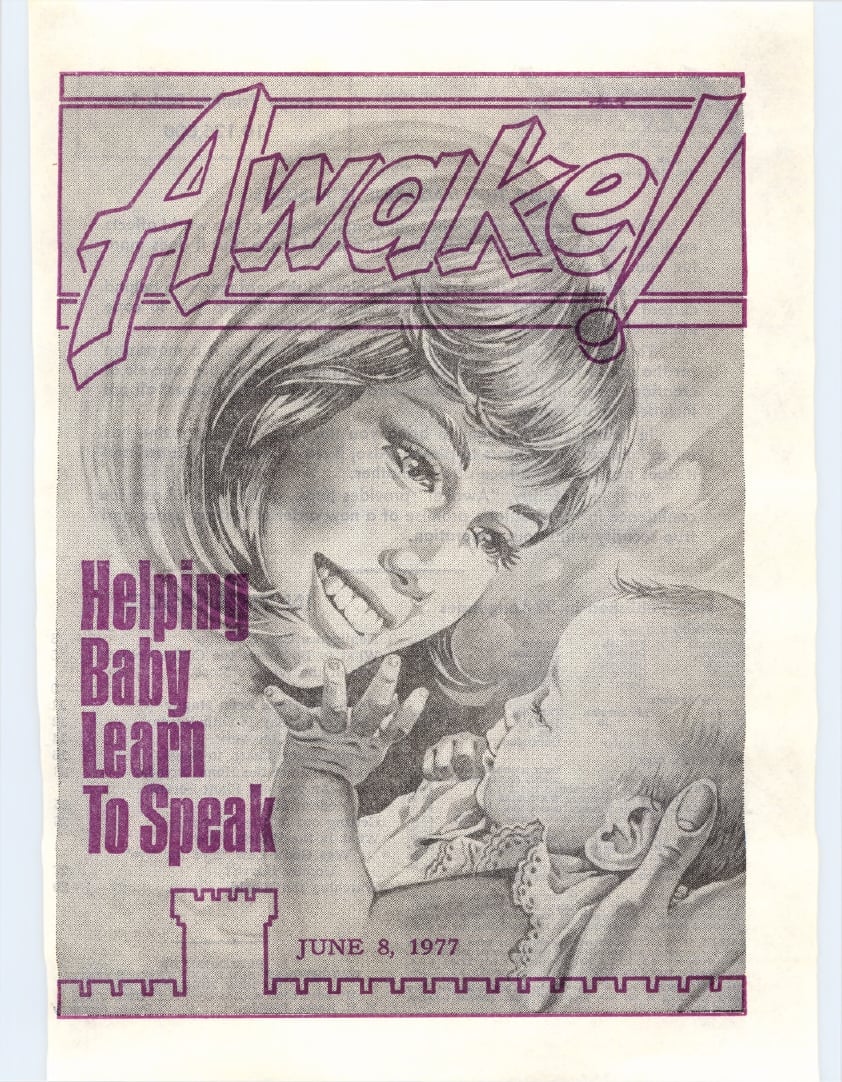
Awake! — June 8, 1977
Source: jw.org
Contents
Negligence Can Kill You
What to Do About the Coffee Crisis?
One of the World’s Most Unusual Libraries
He Would Have Been Happy
The Krobos Say It with Beads
An Amazing Recovery
Helping Baby Learn to Speak
The “Double Sanction”
Guard Against the Home Invader
A Form of Housing with a Long History
Corn—An Ancient Plant Serves Modern Man
Getting out of the Kitchen
Was God’s Law “Eye for Eye” Unduly Harsh?
Watching the World
Better Times Are Ahead
What About Those “Ape-Men”?
Negligence Can Kill You
Negligence Can Kill You
HOW many people in the world die each year because of accidents? It is impossible to say, but the figure is enormous. A report by the American Trial Lawyers Association pointed out that, in the United States alone, highway deaths numbered more than 1,500,000 in twenty-five years, while only 605,000 Americans died in battle in all the wars from the American Revolution to Vietnam. More alarming is the fact that the home is the greatest single scene of accidents—nearly half of all the injuries suffered accidentally occur in the home.
Says the magazine The International Operating Engineer: “Accidents are considered the natural run of things . . . We live life experimentally, carelessly, accidentally. However, . . . an accident is a mistake. An accident is the end result of a wrong move, a wrong decision, a wrong thought that need not have happened had common sense, forethought, and a certain amount of right planning been used.”
If negligence and carelessness could be eliminated, there would be few damaging accidents. Imagine a world where quality control was really maintained. There would be few failures in materials. If builders and manufacturers would exercise care in erecting buildings and in manufacturing machines, cars and appliances, there would be few mechanical failures. Then if the user of these things respected the potential danger of automobiles and machines, electricity, fire, high speeds, and so forth, and used tools and other items for their intended purpose, not operating machinery when under the influence of alcohol or drugs, accidents would be drastically reduced. If everybody checked the labels on bottles in the medicine cabinet, accidental poisoning would be almost eliminated.
Of course, no one is perfect, so there are mistakes, oversights and moments of inattentiveness, pride and lack of self-control that would, even then, bring about some accidents. That is one reason why laws and rules are made. Obeying the laws, particularly traffic and safety laws, would prevent a great many of such mishaps.
It is not good, however, to excuse ourselves because of imperfection, for carelessness is a form of laziness or it springs from pride and disrespect for the law and for our fellowman, and these things are undesirable. A person can be convicted in the courts for serious negligence, but one can immediately suffer the penalty for even minor negligence with regard to the natural laws. Carelessness in going down a flight of stairs, or when standing on a box to reach a higher shelf, has brought death to many people. One writer says: “Most of [the injuries in the home] are the result of culpable negligence on the part of the victim.”
In the law given to the ancient Hebrew nation the deadly seriousness of negligence was deeply impressed upon the people. If a man accidentally killed another—for example, if his axhead flew off and struck a man working with him—the one causing the accident had to flee immediately to one of six cities set apart in the land, called “cities of refuge.” There he would receive temporary sanctuary. Then a trial was held, and if the court found the incident to be truly accidental, the unintentional manslayer was required to live within the boundaries of the city of refuge until the death of the nation’s high priest, which might be many years.—Num. 35:11-13, 22-25.
Certainly an individual having such an experience, as well as all those who knew him, would be prompted ever thereafter to exercise extraordinary carefulness.
How to Fight Negligence
Is there a “best” way to fight our imperfect traits of carelessness or negligence? Yes, there is. It is simply by having respect for life and for neighbor. If we love life we want to make our life as long and as happy as possible. We will see that any equipment that we use is properly maintained. We will realize that when we are doing a job or driving a car, where danger of an accident is greater, we will not do so in a sleepy condition, or after drinking alcoholic beverages. We will keep in mind the need to stay alert.
Additionally, we must realize that our negligence can affect our fellowmen. We will, in love of neighbor, do our work conscientiously. If, for example, a person is an automobile mechanic or a serviceman, he will not knowingly use a defective part or leave any part of the car without lubrication or not functioning properly. He will not ignore a condition that could prove to be dangerous. If there is something wrong that he has not been asked to correct, he will at least warn the owner or the driver of the car that it needs attention, for safety’s sake.
If a person has in mind the well-being of his fellowman he will not do things that will endanger his fellowman’s life. The Bible says that we actually owe love to our neighbors, for “love does not work evil to one’s neighbor; therefore love is the law’s fulfillment.” (Rom. 13:10) No matter what a person does he should seriously consider whether he is doing anything that could result in harm to someone else.
Moreover, the careless person can become bloodguilty, just as the unintentional manslayer in ancient Israel who accidentally caused a death. Though such a person was not a murderer, he was bloodguilty. Life was sacred, and he had to remain in the refuge city. To leave it would show unconcern for life and for God’s law as to the sanctity of life. He would show that he was not sorry for the death that he had caused, and would himself be deserving of death.
The Bible stresses the importance of carefulness and of love for neighbor, and considers a person bloodguilty who causes a death, even if it be accidental. This shows that if sin, with its consequent imperfection, had not entered into the world, as it did through the first man Adam, there would have been no pride, no laziness, no lack of alertness as causes of accidents. Furthermore, with love for God and for his kind provision of life, along with love for neighbor, there would have been a world free of serious accidents. This was God’s original purpose. And he says that he will “gather all things together again” under his rulership and bring perfection again to the earth. (Eph. 1:10) He will do away with death.—1 Cor. 15:26; Rev. 21:3, 4.
There is no carelessness or haphazardness with God, for ‘his activity [or, work] is perfect.’ (Deut. 32:4) When his will is done ‘on earth as it is done in heaven,’ men and women will be in full control of all their faculties, and in perfection of love will use them in a way that will make negligence and accidents a thing of the past.—Matt. 6:10.
A Most Serious Form of Negligence
Since the Bible speaks of a time when God’s will is to be done on earth as it is done in heaven, it is obvious that the desirable thing is to live at that time. Therefore, negligence toward an opportunity of living then would be a most serious kind of negligence. In his famous Sermon on the Mount, Jesus said: “Happy are those conscious of their spiritual need.” (Matt. 5:3) It is essential for life for an individual to turn to the Bible to find what God has to say. By this a person can avoid doing things contrary to the physical and moral laws governing the universe. Man’s nature is such that he must constantly take in knowledge of God. It is literally true that, “not by bread alone does man live but by every expression of Jehovah’s mouth does man live.”—Deut. 8:3.
So, no man can with impunity neglect the spiritual side of his life. We see the results of such neglect by people of the world in general, as they follow material pursuits rather than spiritual ones. But to those professing to be Christians such negligence is even more serious. The apostle Paul wrote to Christians living in his day, warning them to give the closest attention to the things that they had heard. He pointed to the fact that, under the Law in ancient Israel, every disobedient act would receive retribution in harmony with justice. Then he asked: “How shall we escape if we have neglected a salvation of such greatness” as that brought to light by Jesus Christ?—Heb. 2:3.
Carefulness now with regard to learning God’s purposes from his Word, the Bible, will help us to live happier lives now, and will lead us to everlasting life in a negligence- and accident-free world.
What to Do About the Coffee Crisis?
What to Do About the Coffee Crisis?
BACK in the 1930’s coffee was in such oversupply that Brazilian growers reportedly burned 70 million bags of it! And in the 1940’s, a New York Post coffee advertisement offered two one-pound bags for 77 cents.
As coffee drinkers well know, things have changed considerably in the 1970’s. Coffee at $4 to $5 a pound made what used to be an almost insignificant market-basket item into a major purchase. In Tokyo, when a cup of coffee rose to 300 Yen (about $1.00) in some shops, the owners were accused by the Daily Yomiuri newspaper of “reaping opportunistic profits from the price rise.”
High coffee prices are not such a great problem for the tea-loving Japanese, who drink an annual average of only about 100 cups of coffee. But for the Swedes, who average over 1,300 cups a year, coffee can be a real expense. The average American’s habit lies between these extremes, at about 800 cups annually. Thus coffee brewed at home became about a $75-a-year habit for them.
Behind the Price Rise
But what triggered the lofty prices? Is there any truth in the charges of a conspiracy among coffee-growing nations to jack up their prices, as the oil cartel did? Or was there truly a shortage that drove up the prices due to market pressures? The issue became highly charged among some coffee lovers. Angry accusations erupted from consumers and politicians. A coffee boycott was called for, those responsible hoping to force the prices down by lessening the demand.
The evidence seems to indicate that there is more than one cause for coffee-price escalation. And there may be truth both in some of the charges by consumers and in the defenses by coffee producers.
The starting point, of course, was the 1975 killer frost in Brazil that cut her annual production by over two thirds in 1976. New coffee bushes could not begin producing until 1978 at the earliest. Additionally, problems in other coffee-growing countries combined to hinder production somewhat. The war in Angola, troubles in Uganda and Ethiopia, the earthquake in Guatemala and the flooding in Colombia have all been cited as causing crop reductions or delays.
Still, 1976 world production dropped only about 15 percent below the previous year. With generally large reserves to draw upon, this was not an intolerable blow to the supply. In fact, Brazil reportedly was able, by drawing on her reserves, to supply even more coffee to world markets in 1976 than she did in 1975. Then why the enormous price increases?
Well, some authorities say that part of the cause was the uncertainty created by the production difficulties just cited. This was enough to trigger a flurry of buying in the international coffee markets. Speculators and wholesalers bought up coffee in anticipation of shortages. Snowballing demand rapidly multiplied the prices. Similarly, many housewives will recall the sudden steep rise of sugar prices before collapse of these not long ago. Of course, greed and profiteering no doubt played their usual role in both cases.
But market pressures were not the only factor behind the sudden price rises. Some producing countries raised their export taxes drastically, doubtless taking advantage of the increased demand. Thus by mid-January, Colombia was getting nearly $1.50 a pound in export taxes, while Brazil had quadrupled hers to almost $1.00 a pound by early March. Taxes alone amounted to as much or more than consumers had been paying retail for coffee not too many months before!
Of course, there were some benefits to the generally underpaid small coffee farmers in the producing countries, though many coffee pickers reportedly still only received about $1 a day for their work. But the large landholders and buyers reaped rich windfalls and the coffee countries greatly improved their balances of trade with other nations. Brazil, for example, more than doubled her coffee earnings in 1976, and expects to nearly quadruple them in 1977.
However, portents of change are looming. The U.S. Department of Agriculture now estimates that in 1978 world supplies will again exceed demand, by about 25 percent. Another ominous sign for coffee producers was the 20-percent decrease in American coffee consumption during 1976, matching the steady price increases.
Some experts warn that the same thing could happen as occurred in England in the mid-nineteenth century. Rust destroyed Ceylon’s coffee bushes and the price shot up. The English, who had been coffee drinkers, switched to tea—permanently. Now they drink nine cups of tea for every cup of coffee.
Will skyrocketing prices ‘kill the goose that laid the golden egg’? Well, the sudden rise and then collapse of sugar prices a few years ago may be a portent of what could happen to coffee. To forestall such a boom-and bust cycle, coffee-producing nations have tried to work out a price stabilization program before conditions of overproduction return. But what can the world’s coffee drinkers do if their favorite beverage has become too costly for their pocketbooks?
The Alternatives
In their desperation to have a refreshing hot drink, many people are trying different methods of stretching coffee or are turning to substitutes. The National Observer tells of a California family who dry used coffee grounds in the oven for use a second time. Others just use fewer grounds the first time, making a weaker brew.
Experts suggest other ways to get more “mileage” out of coffee grounds. To keep ground coffee strong, they recommend that opened cans be stored airtight in the freezer or refrigerator. Another way to get the most out of coffee beans is to grind as you go, using the small electric grinders sold for this purpose. Some believe that this fresh-ground coffee is the best tasting of all. The whole beans stay fresh for several months, while the taste of ground coffee fades much faster. At least one company is marketing also a flaked coffee that is said to extract about 15 percent more flavor from the same amount of coffee.
You might try less expensive kinds, including store brands. Some people are surprised to find that they like these just as well, or can tolerate them for the price difference. Switching to instant coffee may also save. One investigator found that a nonfreeze-dried instant worked out to be about one third less costly per cup than a name-brand ground coffee.
For those who are not purists, adding extenders such as chicory can make the coffee go farther. Chicory is sold already mixed with coffee or separately for those who want to make their own blend. Though the cost of a commercial blend can be about the same as plain coffee, only about half as much may be required to get the same strength brew. Acceptance of the flavor depends on individual taste.
“Hard-times coffee,” made from roasted barley mixed about half-and-half with real coffee, is reportedly an economy measure Americans learned during the Great Depression. In fact, roasted barley is used in Japan and Korea today to make a dark barley tea whose roasted nutty flavor is said to resemble coffee. It can be purchased in many Oriental markets.
Coffee substitutes have been marketed under various brand names in the United States and Europe. They are primarily made from cereals, and, of course, do not contain the caffeine that gives coffee drinkers the “boost” that many seem to desire even more than the taste. However, tea is an alternative that does satisfy this desire. As a replacement for coffee, tea seems to be without equal.
Try Tea and See
“The high price of coffee is the best thing that’s happened to tea,” declared the secretary of London’s Tea Council. A ten-year decline from almost five daily cups of tea per Briton down to just over four cups was apparently halted by the stiff price rise of coffee. Americans, too, imported almost 15 percent more tea in 1976 than in 1975.
Tea prices have also multiplied rapidly with increasing demand, and tea is not cheap by the pound, ranging from somewhat less than coffee to as much as $35 for one variety from China. But a pound of tea makes four to five times as much to drink as a pound of coffee—about 200 to 250 cups compared with 50 or less from coffee. The exotic $35 tea from China can be steeped more than once and may yield as many as 700 cups per pound.
Another favorable aspect of tea is that there are varieties and blends available to suit almost every taste, except perhaps that of the most hardened coffee drinker. Some experimenting with different kinds will usually reveal one that pleases you.
Tea contains about half or more the quantity of caffeine that coffee has. Therefore it provides some of the boost that coffee drinkers expect from their beverage. But, additionally, The Wall Street Journal reports, “brewed tea contains other ingredients that slow the release of caffeine, thus making it less of a shock to the nervous system than coffee and prolonging its stimulating effect.” Two British. industrial researchers also claim that tea has “the unique property of eliminating unpleasant side effects of caffeine without altering its ability to relieve hypertension.”
Hence, if the high price of coffee is bothering you, you are certainly not without choice. The coffee crisis opened the door to new pleasures of taste for many who would not otherwise have explored beyond their present favorite hot drink.
[Box on page 7]
Did You “Taste” Your Coffee This Morning?
Not exactly. The book The Human Senses tells us: “The sense of taste . . . fails utterly to encompass the full flavor of meats, fruits, butter, and coffee. These, together with nearly all other foods, depend for their appreciation mainly on their appeal to the sense of smell.” Yes, without the ability to smell there would be little enjoyment in eating and drinking. You would have to force yourself to eat to keep your energy and strength. It would be almost as mechanical as putting coal in a furnace to keep it running. Aren’t you glad that your Designer made this necessary procedure so pleasurable?
One of the World’s Most Unusual Libraries
One of the World’s Most Unusual Libraries
By “Awake!” correspondent in Korea
DO YOU like to read? In these days of radio and television, in many parts of the earth reading is often spoken of as a “lost art.” But it is still one of the best means of learning. Since the invention of movable type in the fifteenth century, ‘of the making of books there has been no end,’ and knowledge has been available for many. (Eccl. 12:12) Libraries contain millions of books on every imaginable subject. However, we would like to invite you to visit, through the printed page, a most unusual library in the Far East. It is an ancient religious library, located in a temple area.
We start our trip from Taegu, the third largest city in Korea. By bus it takes about an hour and a half to reach Mt. Gaya, which lies in Gyongsang Namdo Province. The library is located in this mountain terrain, one of the most beautiful places in Korea. The Buddhist temple, and the library connected to the temple, is called Haein-Sa and is situated halfway up Mt. Gaya. On our way up Mr. Gaya we see many old women dancing as they sing old Korean folk songs. They invite us to join them, but we go ahead with our sight-seeing. Passing through three big wooden gates we come into the temple area, with its thirteen hermitages, nine for men and four for women.
One of the monks living here kindly offers to guide us around the temple area. He first directs our attention to the temple itself, its outside walls containing pictures painted in bright colors. Our guide explains that each picture has a meaning, each describing some episode in the history of Buddha and Buddhism. For example, one of them depicts Buddha leaving his former way of life to find out why wickedness and suffering exist. Yes, he even left his wife and his firstborn son. Another illustrates how Buddhism was brought to Korea from its place of origin in India, through China to Korea and then to Japan. The monk explains to us that Buddhism came to Korea about 1,600 years ago. So, because Buddhism is older here than in Japan, many Japanese devotees come here to worship.
On the rear side of the temple is yet another display of pictures showing some of the doctrines and philosophies of Buddhism. One especially catches our eye. It depicts the souls of wicked persons being tormented in a burning hell. This is interesting because it confirms the fact that the false doctrine of hell fire has a non-Christian origin.
The Unusual Library
Behind the temple we mount stone steps to two long wooden buildings, larger than the temple itself. These buildings house this strange library of—not books—but more than 80,000 ancient wooden printing blocks. It is the oldest and most complete collection of the Pali canon of Buddhism, with its three Pitaka, or “baskets.” The first contains sermons, the second, rules of discipline, and the third, a résumé of the doctrines. Our guide relates the interesting history of these blocks.
When the Mongols invaded Korea in the thirteenth century many of Korea’s early cultural and religious relics were destroyed. The Mongols burned the temple where the original version of the Pali canon, carved two hundred years earlier, was kept. All the Buddhist sutras, laws and treaties engraved on wooden plates were destroyed. The king fled to Ganghwa Island, north of the port of Inchon. Since the scriptures were considered vital to the physical and spiritual survival of the kingdom, the king immediately commissioned the carving of a new copy.
After establishment of production headquarters on Ganghwa Island, the carving work began. Hard white birch was cut into blocks all measuring 23 by 67 centimeters (9 x 26 inches), with a thickness of 3 centimeters (1 inch). For three years the blocks were soaked in seawater, then carefully dried in the shade. Next they were steamed in salt water and again carefully dried. This made the wood soft enough for delicate woodcarving. After each block was carved on both sides with about 300 Chinese characters, it was varnished as a protection against insects.
It took nearly sixteen years to complete the carving. Starting in 1236 C.E., the work was finished in 1251, with a total of 84,000 blocks engraved. Interestingly, the Buddhist doctrines and teachings are said to be 84,000. The blocks were kept in a temple on the island, were later moved to Seoul, and, finally, toward the end of the fourteenth century, were transported to Haein-Sa. Of the original 84,000 blocks, 81,340 have survived the transportation and erosion by the elements and are kept in the two fifteenth-century halls, which are specially designed to maintain proper humidity, temperature and ventilation. The Korean Encyclopædia gives the number as 81,258, but the monks and the people working in the Haein-Sa temple area claim that it is 81,340, according to the latest counting. Each block weighs 3.5 kilograms (7.7 pounds). They are indeed a testimony to the fine skill and craftsmanship of the Koreans.
Because of this library, Haein-Sa has become a center for Buddhist pilgrims and scholars. The blocks served as the text for the first Buddhist literature in the Korean language, when they were translated from the classical Chinese characters into the phonetic Korean script. These seven-hundred-year-old blocks have been used in printing books. About 7,000 books have been printed, each containing the entire contents of the existing blocks. A few copies have been sent to other countries for research and study.
In Buddhism, people are taught not to kill, not to lie, not to steal, not to commit adultery and to avoid drunkenness—in themselves good principles. Yet it has been impossible for Buddhism really to inculcate these principles in its devotees. And, in talking with many who believe in Buddhism, it becomes very clear that this religion does not tell how to cope with the many problems that mankind is facing in this twentieth century. Really, no real hope for the future of mankind is held out in the holy writings of Buddhism.
There is a book, however, that does hold out a bright hope for mankind’s future. That book is the Bible, distributed in billions of copies and, the whole or in part, in about 1,600 languages. Its origin was much earlier than any other religious books, and it has the power to transform one’s personality because it is not the philosophy of a man seeking the truth. It is from the actual Source of life and all material things—the Creator. You probably have a copy of the Bible in your personal library. Look into it for a richer life now and a hope of everlasting life ahead.
He Would Have Been Happy
He Would Have Been Happy
IN 1972 Robert Romero, a young man whose parents were living in Honduras, began studying the Bible with Jehovah’s Witnesses in California. His progress in Bible knowledge was rapid, and he began encouraging his fiancée to investigate Bible teachings with him.
This girl was a prominent member of the community, since her father is the superintendent of the Madera high school. At first she was not particularly interested, but as a result of Robert’s persistence she began to involve herself more and more in Bible study, despite the opposition of her parents.
Robert also encouraged his older sister to study the Bible. Her husband was strongly opposed, yet she was soon studying fervently and attending most of the congregational meetings.
Robert’s father returned from Honduras to the United States in the spring of 1973. His government wanted him to complete his education in agriculture and farm administration at the California State University in Fresno. Since both Robert and his father were attending college at Fresno, they would drive to school together every morning.
One very foggy morning a light drizzle left the highway slippery. Suddenly their Volkswagen bus skidded off the road and flipped over several times. Mr. Romero was seriously injured, his back being broken. Robert was killed instantly.
What developed thereafter was exactly the opposite of what many in the local congregation anticipated. His former fiancée, instead of dropping her interest in the Bible truths that Robert had been helping her to learn, was baptized as one of Jehovah’s Witnesses a short time later. She has been a “pioneer” (as full-time proclaimers of the good news are called) for over two years now. And she has even seen her family’s opposition toward her activity mellow considerably.
Robert’s sister is now thrilled that her husband has finished studying the book The Truth That Leads to Eternal Life, and he attends most of the congregation meetings. And Mr. Romero, after recuperating from the accident, was later baptized as one of Jehovah’s Witnesses in Honduras. He has already helped another man to the point of baptism.
Robert would surely have been happy to see these fine developments in people’s lives to which he, by his faithful course, had contributed.
The Krobos Say It with Beads
The Krobos Say It with Beads
By “Awake!” correspondent in Ghana
BEADS—tiny perforated bits of glass—how small and insignificant they appear! But beads of many varieties have long been prized by man. They have been discovered in royal tombs of Ur, home of the patriarch Abraham, on Egyptian mummies of great antiquity and in the old graves of Greece and Italy. King Solomon of Israel, enraptured at the sight of a beautiful girl from Shunem, declared: “Your cheeks are comely among the hair braids, your neck in a string of beads.” (Song of Sol. 1:10) Long before the first European traders made their way to the coasts of West Africa, fascination with beads occupied the Krobos of Ghana.
The beads (called adiagba) made by Krobo craftsmen, both ancient and modern, are highly prized in Ghana for their beauty, rarity and durability. They are often given as presents. Before the advent of modern coins, they served as a medium of exchange. Why, adiagba are even used as security for loans or mortgages on buildings and land. A string of beads can cost anywhere from as little as ten cedisa up to one hundred cedis, depending on the variety and number.
How the Beads Are Used
While many of the beads are just for everyday use, there are those that become the property of the family and are preserved for generations. Such family beads are highly valued and, often, somewhat reverenced. They are never sold, and are displayed at funerals in remembrance of dead family members and, sometimes, just to show the family’s wealth. These beads are prominently used in connection with traditional puberty rites for girls.
Though not practiced by true Christians, the customary rites performed for young Krobo girls entering womanhood are accompanied by a show of beads not generally observed otherwise. The young girls are bedecked with the family beads, some of which were worn by their great-great-grandmothers when they were young. Displayed in public in little more than their expensive and valued ornaments, the girls attract a lot of local attention, especially on the part of the town’s eligible single men. The girls, swaying rhythmically to the beat of drums, in effect say, ‘We are ready for marriage!’ On this occasion, too, there is an opportunity for different families to display their wealth to a greater extent than usual.
It is especially true then that the Krobos ‘say it with beads.’ Different beads have different names and meanings. Powa means “I am challenging you,” while Koli declares “You are not better than I,” and Odonor speaks up with, “You are envious because I have and you do not.” Omitiomete, being more modest, simply says, “The results of my labor.” People travel from far and wide to witness prominent ones of the various families strutting around town displaying their beads.
The more brightly colored beads are for celebrations and traditional festivals of the Krobos. Black or dark-colored beads are worn to signify times of mourning, whereas white beads are used on occasions of joy, such as when a baby is born, a new marriage is contracted or on recovery from serious illness.
Intricate Designs and Fascinating Colors
The skill of the native artisans is clearly reflected in the beads. A close look reveals that the beads can be of practically any color—yellow, rich brown, red and blue being prominent. By a clever mixing of different colors, the craftsmen have created designs that look like miniature explosions of molten, colored glass on a background of darker glass. Little patterns that resemble miniature pressed flowers, stripes, whorls and pinwheels are common. The highly polished finish of good-quality beads sparkles and twinkles in the light. No wonder the Krobos enjoy their beads and use them to express their thoughts and feelings. But, how are they made?
Krobo Craftsmen at Work
The first step is to prepare a furnace, measuring about two feet (.6 meter) in diameter and about two feet in height. It is carefully constructed from good, heat-resistant clay obtained from a nearby riverbank. Several iron rods are laid across the furnace just above the point where the fire will be.
Next the craftsman makes several molds from the same clay. These consist of tablets, about six inches (15 centimeters) square and about one inch (2.5 centimeters) in thickness, punched with holes measuring anywhere from one quarter to three quarters of an inch (about 6 to 18 millimeters) in diameter, and about half an inch (12 millimeters) or so in depth. The materials for making the beads will be put into these holes. Both the furnace and the molds are left to dry hard in the sun. When well dried the molds are carefully polished with chalky limestone so that the inside and edges of the holes are very smooth. After preparing his furnace and molds, the native worker will select his raw materials for the beads.
The basic substance used to make the beads is called soso. It is usually yellowish in color and is finely ground glass, silica or porcelain. The grinding is done on a smooth stone and then the powder is carefully sieved. The material for the contrasting colors is prepared likewise.
The craftsman moistens the basic powder slightly with a little water when pouring the substance into the holes in the clay tablets. Next he inserts a very thin stick of wood into the middle of the powder all the way to the bottom of the hole. But how are the various designs achieved? After the basic material for the beads is put into the mold, four or more small holes are bored into the wet powder around the stick at predetermined intervals. Into these holes colored glass powder is poured. This results in the designs and patterns that make the beads so fascinating and attractive. After all the holes in the molds are filled the tablets are ready for the furnace.
The craftsman lays the tablets on the iron rods in the furnace, places a quantity of dry hardwood under the rods and sets fire to it. To increase the intensity of the heat to a temperature sufficient to melt the glass, silica or porcelain, he uses bellows. When the molds are seen to contain molten materials only, they are quickly hooked out of the furnace. Then the Krobo artisan holds each mold—carefully so as not to burn himself—and gives it an expert shake, twist or knock. This serves to blend or intermingle the colors so as to form the desired patterns. The tablets then are set aside to cool. Later, the individual beads are extracted from the tiny molds by inserting a pointed hook into the holes that were formed when the thin sticks burned away as the substance surrounding them melted in the furnace.
If you expected to see beautifully colored beads at this stage, your first reaction will be one of disappointment. But, with a little hard work, this will change.
The workman first takes a rough flat stone and rubs the crude bead on it to remove most of the irregularities and blemishes. Then, using a smooth flat stone, he carefully brings the bead to a high degree of finish and polish. The completed bead glows softly and attractively. With the stringing of the beads, the work is completed.
The native craftsman can now relax and smile in satisfaction over a job well done. It will speak to someone, not in words but in beads, for the Krobos often like to say it with beads.
[Footnotes]
One cedi is about 87c in United States currency.
An Amazing Recovery
An Amazing Recovery
SUPPOSE your employer came to you, advising that your nineteen-year-old son had been involved in a traffic accident. What thoughts would flash through your mind? This was my experience here in Belgium.
On arriving at the hospital, my wife and I learned how critical the situation was. The surgeon told us: “Your son not only has a skull fracture, with serious brain concussion, but also has broken ribs that have penetrated the lungs, resulting in profuse bleeding. His blood already looks like colored water. Without blood, he has only a few hours to live.”
Till then the doctors had abstained from administering blood. Why? Because they had respected the two written statements found among our son’s identification papers, asking that no blood be given under any circumstances. They had waited until our arrival to get permission to administer it, as everything was ready to do so.
It was an extremely tense moment for both of us. We went to Jehovah in prayer and experienced how he is a God ‘that is a help readily to be found during distress.’—Ps. 46:1.
Deep in our hearts we were grateful that the doctors had shown respect for our stand on the sanctity of blood. We thanked them for this and for the good treatment that they had so far given to our son. We asked them to continue doing everything within their power to respect our son’s wishes to abstain from blood. Convinced that the high principles of the Bible about the sanctity of blood had been given by our loving Maker, the Creator, Jehovah God, we explained to the doctors how the three of us were concerned about having divine approval and that we wanted to obey his laws. We knew that we would never regret having taken a faithful stand for Jehovah.—Acts 15:28, 29; 21:25.
Arriving in the postoperative unit, we immediately noticed how well our son was being cared for. But he was still unconscious. Since the surgeon had told us that he might possibly hear something now and then, I approached him and managed to say: “Freddy, you just keep sleeping and don’t worry. Everything will be all right.”
The following day, at six o’clock in the evening, there was a tremendous drop in Freddy’s pulse rate. This was a sign of decline in his vital energy. A nurse was continuously at his side, attending him and watching every little sign that could give us hope. At eight o’clock in the evening the nurse opened the door of his room and told us that the blood loss had remained stable for a while. This gave us renewed hope for his survival.
Imagine our happiness, when on the afternoon of the third day after his accident, our son was able to say a few words. He felt as though he were awakening from a dream. He had not been conscious of anything during the whole incident and never felt any pain. From then on improvement was rapid.
Twenty-eight days after the accident Freddy was allowed to leave the hospital, to the amazement of many. One doctor said, “How nice it is to see a dead person come back to life.” Another commented, “My hat’s off to their stand.”
Now, with Freddy along, we descended the same steps that we had climbed the morning of the accident. We were more than ever aware of the wide gap existing between life and death, between fear and joy, between anguish and peace. Because of our determination to continue obeying God’s law, we went down the steps as conquerors.
During this difficult time we were moved by the deep concern of our brothers and sisters in the faith. They truly knew how to comfort us. Even persons that we never saw on other occasions came to ask how our son was. The doctors also were a great source of encouragement, especially because they respected our Christian conscience.
Particularly did thanks go to Jehovah, who had sustained us so strongly with his spirit in answer to our prayers. Never did he forsake us in those difficult hours. Even more than before, the three of us are happy to visit our fellowmen, showing them that Jehovah soon will bring an end to all sadness, for “he will wipe out every tear from their eyes, and death will be no more, neither will mourning nor outcry nor pain be anymore.” (Rev. 21:4)—Contributed.
Helping Baby Learn to Speak
Helping Baby Learn to Speak
DAMON gurgled with pleasure as his aunt picked him up and sat him on her lap. While being gently rocked, he voiced a happy “Ahhh.” His aunt, a student of speech therapy, softly repeated his “Ahhh” sound. He reacted to the sound ‘coming back to him,’ which pleased his aunt. And she was even more pleased when he said “Ahhh” again.
The infant liked the “game,” and they played it for some time. But to his aunt the “game” meant much. She knew that at an early age he had begun “sound imitation.” This was a strong indication that his mind was alert, his hearing was good and that he would someday speak clearly.
Listening to the jabber of small infants, is that not a waste of time? True, many babies just eventually “start talking on their own,” or so it appears. However, in the last twenty years, the study of speech development in children has revealed a great deal. Today the “babbling” of babes and the attention parents (and any who look after infants) should pay to such is not taken lightly by many doctors and speech specialists.
Is such concern misplaced? Consider the effect on the entire personality of some who from childhood developed speech defects:
“[At the restaurant] I wanted coffee and rolls, but I ordered milk and oatmeal because I knew I’d stutter hard on those other words and I didn’t want the old lady who waited on me to feel sorry for me. I hate oatmeal.”
“Even when I was a little girl I remember being ashamed of my speech. And every time I opened my mouth, I shamed my mother. I can’t tell you how awful I felt. If I talked, I did wrong. It was that simple. I kept thinking I must be awful bad to have to talk like that.”
“My father wouldn’t ever listen to me when I stuttered. He always walked off. I finally got so I’d say everything to him by having mother give him the message.”—Speech Correction.
The adults quoted above would be the first ones to tell you how important it is to know how to help your child speak correctly. Further, this is not a matter to consider when the child starts school (in most countries around age six) but, rather, from infancy. For if there is one point on which most authorities agree it is that the treatment of the baby during the first four years is crucial in speech development and, thus, many claim, in thinking ability.
However, before we investigate the development of speech, we face the question: What talking “equipment” and inclination does a normal newborn babe have? Research answers: “A miraculous abundance of provisions!”
The Multiple Miracle
The word “miracle” might seem exaggerated. Yet speech (the sounds, breathing pattern) and language (what the sounds stand for) are very complex interrelated systems.
In fact, the coordination alone is a marvel. Saying one short, two-syllable word can require twenty different adjustments of the lips, tongue, larynx and jaws. These twenty delicate adjustments must be made precisely, in correct sequence, in about one fourth of a second. This would mean that each movement takes place in about one one-hundredth of a second. And it is all completed automatically!
A second miracle is the variety in sounds and when we are capable of making them. Babies the world over, report speech specialists, within the first few months of life may produce all speech sounds that the human vocal system can manufacture: “. . . French vowels and trills, German umlaut and gutteral sounds, and many that are only describable in phonetic symbols.” So, universally, newborn infants quickly develop the potential of a full range of sounds, but their environment (local language, noises they hear) affect which ones they tend to use.
Such evidence argues strongly against the evolutionists’ position that “by accident, primitive man probably produced audible speech sounds.” (The Psychology of Communication, p. 16) To the contrary, it declares that speech is an “inborn miracle.” A Creator gave babies the equipment, desire and predisposition or tendency to talk.
This view is further supported by scientific studies that indicate that infants everywhere demonstrate remarkably similar patterns and stages of speech development. Besides recognizing speech as a “gift” to cherish, learning about these patterns and cooperating with them are positive steps that you can take to help a baby.
From First Cry to First Word
Below are listed the stages through which many speech specialists believe that all “normal” children proceed on the way to speaking sentences or groups of words. However, it is good to insert a note of caution here.
“Normal” simply means that this is what most children are doing within the time noted. But no child is a statistic or an average; every child is very much an individual. Thus while all children who speak normally usually go through this pattern, the age at which they do so may vary considerably.
Also, recognize that heredity is believed to play a role. So, in some families speech begins later than in others. Keeping these factors in mind, let’s follow the pattern from first cry through first words:
1. From birth through the first month or so the baby’s sole vocalization will be crying with little difference in tone no matter what the reason for the discomfort. Then, usually, from the fourth through about the sixteenth week the baby will “coo” and make “laughing” noises. He will produce some (mostly vowel) sounds. The crying will take on differences in tone. (Yes, mother is not just learning what baby means when he cries, baby is varying the tone when he cries.)
2. At or around the twentieth week what is called “babbling” begins. The baby will string together “chains” of one-syllable sounds that often are the repetition of similar sounds. The child usually enjoys making these and they will include some consonant nasals (such as m, n).
3. From the sixth month through the ninth the infant’s babbling will lead into what is called “sound imitation.” This starts as “self imitation,” that is, the child repeats the sound he himself made. Later he will begin repeating the sounds that an adult or another child makes to him. (As in the example at the beginning of our article.)
4. During the tenth through the twelfth months the baby may begin actually to say short words, but normally this is simply repeating what adults have said; it is still imitation.
5. By the eighteenth month the infant will have a vocabulary of from three or four to fifty words and will increasingly show by voice inflection that they mean something, they identify something. At this time the child may begin to use two-word utterances.
Usually little girls will start speaking slightly ahead of little boys. And, as noted earlier, the individual child may linger at one stage and then rapidly go through another. However, speech specialist Dr. Jon Eisenson contends: “Most children who are going to talk, perhaps up to 90 percent of them, say their first words by 15 months.”
Now in considering these stages perhaps the most important thing to note is: Children learn to speak by mimicking those around them. Thus you play a major role in helping your child at each new level.
How to Help
While not keeping a checkoff list as to ‘when Junior should be able to do this,’ it is important that you watch your child’s reactions carefully. Sadly, many times what becomes a serious speech impediment begins as a hearing problem. Even a slight hearing defect is dangerous for the small infant. Why? Because a baby is learning sounds and then repeating them as he hears them. So, a hearing problem ignored by the parents will likely lead to speech problems and impair learning ability.
One disease, for example, is called SOM (serous otitis media). This inflammation of the middle ear may only slightly change the hearing capacity of an infant. But in a preschool youngster, notes Dr. Marion Downs, “a hearing loss of 15 decibels . . . is enough to produce language problems for a child.” (Newsweek, June 14, 1976) Of course, opinions vary as to the exact point where hearing loss causes impairment. Nonetheless, a child with this particular disease will hear vowels clearly but cannot produce certain consonants (such as p, t, s, th, sh and wh).
To detect a hearing loss in a baby is not easy. Watch the little one carefully. Does the infant act startled by sudden, loud noises? Does he react to distant, faint noises? Good. Does baby turn his head and react to a voice near the crib before seeing anyone? This is also a good indication that his hearing is all right.
If the baby hears well, what positive actions can you take to help your child to learn to speak? Most important: Give him your TIME and ATTENTION. Let the infant babble to you and actually encourage him to vocalize. Repeat sounds back to him and when he does struggle to talk, encourage him by showing an interest.
This is best done in a soft voice and pleasant tone. When Junior first says a word incorrectly, it is generally best to avoid snapping back: “No, you should say —————.” Rather, smile approvingly (He did talk!) and then repeat the word, saying it correctly. Thus, while not discouraging the infant’s “baby talk,” at the same time you do not encourage the child to keep saying the word inaccurately. Sometimes well-meaning friends and relatives think that the mispronunciations of an infant are “cute.” This is certainly better than viewing them as “bad” or “wrong.” However, from a speech viewpoint, the most good is done by approving of the child’s speaking, while with patience and repetition you encourage proper pronunciation.
On the other hand, all of this does not mean that practically from “‘word one” parents should expect the child to speak as an adult. They do well to remember the admission of the Bible writer Paul: “When I was a babe, I used to speak as a babe, to think as a babe, to reason as a babe.” (1 Cor. 13:11) Yes, at first your infant’s speech may be quite a poor imitation of the word, but patience and good example are the key. Thus, he will naturally grow out of the traits of a babe.
Of course, discipline is needed when children get too noisy and boisterous. However, balance is necessary in dealing with tiny tots. Encourage speech and avoid setting up impossible goals for the child.
When, in infancy, some young ones fail to pronounce certain sounds correctly and parents become very irritated, this may injure the child. How so? Scientists believe that while there may be an inherited tendency toward some speech defects they are often made much worse by parental pressure. Sometimes what might have been a passing phase is treated as so “terrible” by the parents that the baby “freezes” or locks into the bad pattern.
For example, the “average” child speaks in a nonfluent manner (halting, some stammering or stuttering), especially between the ages of two and four. During this period the wisdom of the Bible principle found at Ephesians 6:4, “do not be irritating your children,” is needed. Often if parents do not react harshly or in a shocked manner at the stammer or stutter but, rather, lovingly touch and smilingly accept the child, the decrease in tension will decrease the impediment. This loving attention lessens the anxiety of the child and will also lessen the parent’s anxiety.
It is known that institutionalized and culturally disadvantaged children frequently have speech and language problems. But today many children who have parents suffer as if they were orphans. Why? Because the adults do not give the children the attention they need. Ironically, parents sometimes withhold communication until they think the child is ‘old enough to understand,’ whereas in actuality a tiny infant needs as much or more consideration than the child able to talk freely.
This usually occurs where the parents hold the erroneous view that a child is not capable of “serious” learning until several years old. To the contrary, the Bible’s view of the infant’s learning potential is well expressed at Deuteronomy 31:12: “Congregate the people, the men and the women and the little ones [Hebrew, taph, ‘those of tripping or short steps,’ toddlers] . . . in order that they may listen and in order that they may learn.”
Aiding Vocabulary Expansion
The rate at which a normal child’s vocabulary expands is amazing. It climbs from two or three words at year one to between 50 and 200 by age two, on up to around 900 by age three. Why the big jump between ages two and three? This is believed to be due to the fact that the child discovers questions. Hence, the two-year-old now has a system to explore all language possible.
Because the question is the infant’s main tool, it is very important for parents (or any who care for children) to realize that the seemingly nagging query “Why?” is vital. Discourage it and you discourage vocabulary increase and logical thinking patterns.
Besides your reaction to questions, there are, we might say, three responses to the early statements of a child that will have much effect on his progress in speech.
To illustrate: Suppose little Mary goes outside and finds a “flower” and brings it to Mommy. How will Mommy react when Mary says: “Look, Mommy, flower”?
The negative reaction would be: “Go away, Mary, I’m busy. Take that weed out of here.”
The neutral reaction could be: “That’s nice, Mary.”
However, the positive reaction might be: “Oh, that’s a pretty flower, Mary. See, it has four petals.” Obviously, here the mother not only reacted warmly to her daughter’s enthusiasm but went one step farther and added a new word—“petals.”
Thus, parents can view conversations with their children as opportunities to add new building blocks—new words—to their “world of understanding.” This is best done by short statements, frequently repeating what the child said (if basically true) and then adding just a little more to it.
Too, it is good to remember that even when a small child makes what sounds like a statement he or she is often seeking support from the adult—asking in effect, ‘Am I right?’
Yet sadly, although extensive attempts might be made to help a child, it may become apparent that there is a serious speech impediment of one type or another. What then?
Avoiding Extreme Reactions
Although his hearing is normal, and despite allowing for slowness at a particular age, it may be that your baby is not progressing as to forming words and linking them together. What can be done? Well, the worst reaction is to panic and go to either of two extremes.
The one extreme is to look upon the child as some sort of “freak” and excessively blame yourself or the child. If a baby falls and breaks his leg, what parent would not rush him to a doctor to have it set? But somehow “broken” speech is viewed as the child’s fault and so it is something to be ignored or to be ashamed of rather than something to be repaired.
It is true that often the home circumstances have contributed to the faulty speech pattern, but that is all the more reason to give real attention to both the child and the relationships within the household. Frequently, speech therapists can quickly help a small child to solve a speech or language problem, whereas if allowed to live on that way, the difficulty may be so ingrained that it is virtually impossible to correct.
The other extreme is one of frantic dismay expressed in such a way that the child senses that he is the object of much anxiety. He is made to feel that he MUST speak otherwise. Especially with stutterers, this added pressure usually pushes them farther into the nonfluency pattern.a
Rather, as with small infants discussed earlier, there is the greatest need for patience and tenderness on the part of parents. Avoid constantly correcting and nagging; instead, try to get the young one’s mind off his speech problem. Frequently, when his mind is turned away from the impediment, the child can speak normally.
In addition, it is important that older brothers and sisters be aided to see the need of treating the stutterer with tender affection—not always cutting him off when he tries to talk, thus inducing frustration and anxiety.
Actually, the Christian principles outlined in the Bible for treating children are invaluable in helping an infant with a speech impediment and who thus is often also termed a “slow learner.”
“Tender affection,” “long-suffering,” “mildness,” “self-control,”—these qualities displayed by parents can do much to ease the problem.—1 Thess. 2:7, 8; Gal. 5:22, 23.
Therefore, talk to your child, from infancy. Read to your child, from infancy. Make gentle, loving physical contact with your child, from infancy. Doing these things will aid the little one’s speech development and will have positive effects on his personality and learning ability.
As perhaps no other tool, the child’s ability to speak clearly and communicate his thoughts, his needs and desires will affect his personal achievement, sense of self-worth and happiness. Together, then, with your child, correctly use the God-given miracle of speech. Later, in that very human way, in words, your offspring will likely say: “Thank you. I’m glad you kept caring.”
[Footnotes]
See Awake!, July 8, 1975, p. 19, the article “Help for the Stutterers.”
[Blurb on page 17]
“Infants everywhere demonstrate remarkably similar patterns and stages of speech development.”
[Blurb on page 18]
“Perhaps the most important thing to note is: Children learn to speak by mimicking those around them.”
[Blurb on page 19]
“Sometimes what might have been a passing phase is treated as so ‘terrible’ by the parents that the baby ‘freezes’ or locks into the bad pattern.”
[Picture on page 21]
Father can also gently encourage baby to speak by frequently repeating simple words
The “Double Sanction”
The “Double Sanction”
In discussing the effects of television on the very young, Dr. Thomas Harris gives parents much to think about. After describing how the young mind works like a tape recorder, he states: “A three-year-old who sits before a television set many hours a day is recording what he sees. The programs he watches are a ‘taught’ concept of life. If he watches programs of violence, I believe he records violence. . . . This conclusion is certain if his parents do not express opposition by switching the channel. If they enjoy violent programs the youngster gets a double sanction—the set and the folks—and he assumes permission to be violent provided he collects the required amount of injustices.”
Yes, it is not enough that we personally avoid demonstrations of violence in our home. The question that remains is: Do we by our entertainment habits “sanction” it in the eyes of our children?
Guard Against the Home Invader
Guard Against the Home Invader
By “Awake!” correspondent in Sweden
DURING late summer or autumn, it may quite unexpectedly invade your house or storehouse. It prefers to live in wooden houses, especially older ones without cellars. What is the culprit? A fungus, Merulius lacrymans, which normally causes dry rot.
Lacking chlorophyll, this fungus must get its nourishment from other matter—for example, from wood, hardboard, cork matting, linoleum and the like.
The body of this fungus consists of very fine, ramified threads of cells that are collectively called “mycelium.” Left undisturbed, the body forms films and strings. With these strings, the fungus can force its way through mortar and cracks in cement. It can quickly form a head or “fruiting body” in some suitable open space—under the floor, on an inside wall or on a ceiling. This “fruiting body” may measure as much as .3 meter (12 inches) in diameter. In the pores of its surface, brown or reddish spores form.
Each square millimeter of the pore-covered surface can produce up to seventy-five spores per minute. Each spore has the capacity to grow into another fungus plant and can, in turn, destroy unlimited amounts of wood. The spores are sticky and can fasten themselves anywhere. If there is sufficient humidity and warmth, they grow very quickly. But the spores cannot attack fresh, dry wood.
This fungus cannot live in open air, it being too dry there. The high humidity that is required for this fungus to thrive is found only in an insufficiently ventilated damp place. The fungus stops growing when it becomes too dry, but it can start up again as soon as it becomes damp. Once it has grown sufficiently, it itself can give off the dampness required for continued growth. The growth rate of this fungus is affected by the temperature. To grow, it must have a temperature of at least 38 degrees Fahrenheit (3 degrees Celsius) but it does best at 65 degrees to 73 degrees Fahrenheit (18 degrees to 23 degrees Celsius). When the temperature rises above 79 degrees Fahrenheit (26 degrees Celsius), growth is sluggish. At 68 degrees Fahrenheit (20 degrees Celsius), the growth rate is three times as fast as at 50 degrees Fahrenheit (10 degrees Celsius).
…