Awake!, November 8, 1976
Download: PDF — Awake!, November 8, 1976
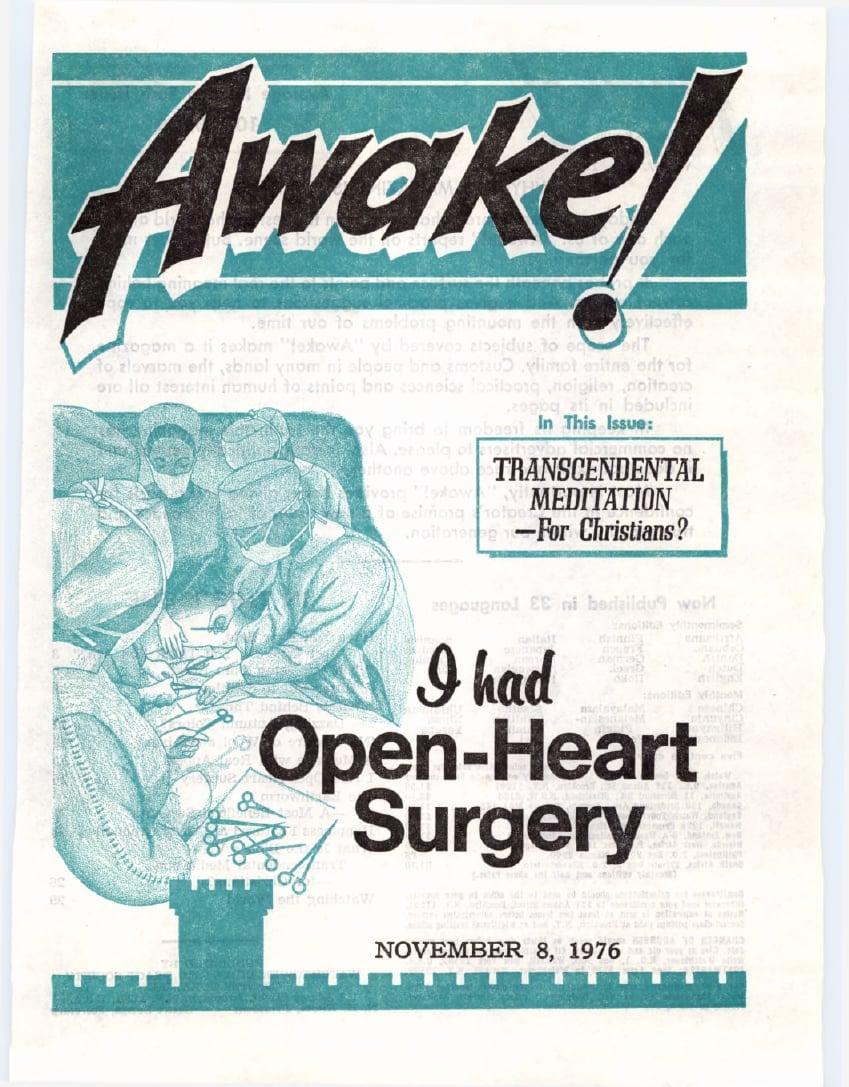
Awake! — November 8, 1976
Source: jw.org
Contents
Have You Ever Said, “Just Who Do You Think You Are?”
When the Teton Dam Burst
A Bitter Pill to Swallow
What Is Behind Those Dazzling Autumn Colors?
‘No Mixture of Wool and Linen’
A Message with Real Appeal
I Had Open-Heart Surgery
The Earthworm—A Most Beneficial Servant
Happiness Featured at Gilead Graduation
Transcendental Meditation—for Christians?
Watching the World
A Bible Mystery Solved
God Does Not Torment Souls
Have You Ever Said, “Just Who Do You Think You Are?”
Have You Ever Said, “Just Who Do You Think You Are?”
MANY Britons were shocked not so long ago when the diaries of the late Lord Reith, founder of the British Broadcasting Corporation (BBC), were published. “I have brilliance, intellect and all sorts of things like that,” he wrote, “. . . Loathing the common people, I will rarely admit greatness in others.”
Do you too find yourself ‘rarely admitting greatness in others’? It is an easy omission. In Lord Reith’s extreme case, his jaded view of others often led to bitterness and frustration for him. For example, he wrote of his chagrin at being brought to the level of the “common people” when Churchill removed him from the British Cabinet. He complained that his successor took his former government car, leaving him to queue up for the bus like anyone else. “I had a great struggle with myself,” he said. “Tears flooded my eyes several times.”
Fortunately, most people do not carry their view of others to such extremes. But, even so, is not pompousness and self-importance common among people you know or deal with? Many persons consider aggressiveness and assertiveness to be the only way to “get ahead.” A popular current book titled “Winning Through Intimidation” promotes the idea that the way to advance in business is to intimidate others—bully, bluff, maneuver and manipulate them to one’s own advantage—in short, to consider them inferior to you.
Often such superior airs translate into words or actions that imply: “Why should I have to put up with your ignorance?” or “Just who do you think you are?” You may be thinking now of the times that you have faced this spirit in dealing with a pompous bureaucrat, an arrogant clerk or an overbearing husband—or wife.
The fact is that this frame of mind has prevailed among humans for ages. When the ancient Greek language was called upon to express new Christian thinking—“with lowliness of mind considering that the others are superior to you”—it was so foreign to most Greek expressions that the Bible writer had to coin a new word for “lowliness of mind.” (Phil. 2:3) One commentary notes that “the idea he wished to express was one which had hitherto found no place in Greek thought or language. It had been taken for granted that everyone ought to assert himself, and that no one but a fool or a coward would yield of his own accord to any rival.”—The Interpreter’s Bible.
But is it foolish or cowardly to ‘consider others superior to you’? Not at all. “It is easy to look down on others,” wrote the English Lord Peterborough; “to look down on ourselves is the difficulty.” Yes, feelings of self-importance come easily to most of us, but humility requires much more of a person, especially if he is gifted.
How easy it is to think, “I’ve worked hard to get where I am,” and to consider as inferior others who are not so successful. But if you had been born with limitations or handicaps, would you be where you are now? Where did you get the talent and initiative, or the training and knowledge that you have? The Bible asks some piercing questions on this: “Who makes you, my friend, so important? What do you possess that was not given you? If then you really received it all as a gift, why take the credit to yourself?”—1 Cor. 4:7, New English Bible (NE).
A person who considers others superior to himself is not necessarily a mere retiring follower. He may have the capacity to show much ability to direct. Of all the qualities a person in a position of responsibility may have, it is humility that will most endear him to those whom he guides or directs.
When some of Christ’s apostles were disputing over which one was the greatest, he quickly punctured their grand illusions by telling them what makes for true greatness. He noted that it is customary for those in authority to “lord it over” others. But “this must not happen with you,” he countered. “The greatest among you must behave as if he were the youngest, the leader as if he were the one who serves.”—Luke 22:25, 26, Jerusalem Bible (JB).
The wisdom of this principle becomes clear when you think back to the last time someone dealt with you as though you were inferior. Did you feel like cooperating with that person? Or did it cause resentment and irritation to well up—perhaps the reaction: “Just who do you think you are?” Remember this the next time you are tempted to follow that first impulse to put on airs before another who may not be as qualified as you are in your field. True, you may be superior in those matters, but are you superior in other things? He may excel you in matters of life that are far more important. So the Bible urges that a person not “exaggerate his real importance. Each of you must judge himself soberly.”—Rom. 12:3, JB.
With these principles in mind, why not take another look at others around you—this time ‘considering others to be superior’? Would relations with your family, friends, work associates or the public improve if you were to do so? Remember the sage advice of the apostle Paul: “Care as much about each other as about yourselves. Do not be haughty, but go about with humble folk. Do not keep thinking how wise you are.”—Rom. 12:16, NE.
A husband, for example, may supply the money to provide for a home. But his wife may be better at doing the purchasing of foodstuffs or other home needs. She may also excel in arranging the home and providing a larger portion of the warmth and tenderness children need. Certainly a husband should not feel that his authority is threatened if he acknowledges that his wife may be superior in these and perhaps other ways. It will no doubt help to increase her respect for him and solidify the love between them.
Even children can make a superior contribution. Their spontaneous and uninhibited way of expressing joy and affection, their little honest, unhypocritical observations about things may even teach “sophisticated” adults something.
Especially should Christians recognize that fellow believers all have certain qualities superior to their own. Some have more knowledge and discernment, others more zeal and enthusiasm, still others more warmth and sympathy. Who is to say that if God were to select the most favored from his own standpoint, it would not be someone we tend to look right over because of that person’s humble manner? That is why the Bible says: “All of you should wrap yourselves in the garment of humility towards each other, because God sets his face against the arrogant but favours the humble.”—1 Pet. 5:5, NE.
When the Teton Dam Burst
When the Teton Dam Burst
CAN you imagine yourself fishing on a quiet stream one minute, and the next scrambling up a canyonside to escape a 300-foot-high (91-meter-high) wall of water? That actually happened on the Teton River, on June 5 last. Eyewitness accounts of what took place when the Teton Dam burst form a story of ‘truth stranger than fiction.’ Take, for example, what befell this fishing party:
Bright-blue skies made it the perfect Saturday to fish on the Teton River, considered by many to be “the finest trout stream in the state of Idaho.” And so at about 11 a.m. the party of five put their rubber raft on the river just below the Teton Dam. From there, they floated downstream a short way and anchored.
They had already noticed that “the water had changed to a milky color” when suddenly a man called down to them from atop the deep canyon. He warned about the possibility of some high waters as there was “a little leak in the dam.” The fishing party floated farther down and were shocked to see a relative at the canyon’s upper edge shooting his pistol in the air and waving frantically.
This, coupled with rapidly rising water, made them realize something drastic must have happened. As one woman in the group relates: ‘We started paddling madly to shore and frantically began climbing the canyon wall. Looking back, I told the others to let the boat go. I climbed to a high point and stopped to catch my breath when I saw a large metal container about 50 feet [15 meters] in diameter come crashing downstream. The waves were tossing it like a cork. I really climbed!’
Just as the party reached the top, a huge wall of water completely filled the canyon—a chasm 300 feet deep!
This body of water, which would be named the Teton Flood, continued to move swiftly. One young fisherman was drowned, and another was violently battered but somehow managed to ride with the water for about five miles (8 kilometers) and then to grab onto a tree. He was rescued from the tree several hours later.
Many clocks stopped simultaneously at 11:57 a.m. as the power failed. And to the majority of the one hundred thousand residents of this Idaho region, time seemed to stop. Before the flood was over, eleven would perish and thousands would be homeless. Estimates of property damage would be from $400 million up to $1 billion! Why so extensive? Because of the flood’s five-pronged “attack.”
When the water hit a sharp bend in the river, the watery wall did not turn but part of it “jumped” the riverbank and kept going west. The water also poured through the small valleys or “hollows” in this hilly area, dividing into five fronts or “arms.” Of course, a large “arm” would rush southward following the river basin of the Snake River (into which the Teton River flows).
But what was it like as the waters came rushing out of the canyon into the broader valleys? Darrell Singleton, a congregational elder of Jehovah’s Witnesses, owns a farm four miles (6 kilometers) below the dam. He was on his property and so relates:
“It Engulfed Everything”
“We were loading some gear in the pickup camper when our daughter in Rexberg telephoned. She said that the Teton Dam was washing out and everyone was being told to evacuate. I told her that probably someone was overly excited due to minor flooding caused by spill over the full reservoir. She said that it was more serious than that. So I said that we would hang up and evacuate and let her do the same.
“I wasn’t too concerned but we decided to drive to the dam and see for ourselves. When we arrived, frantic people were racing away from it. One look confirmed what was happening. Down from the canyon, a huge mass of chocolate-brown water was spreading out into the valley. A dust cloud was at the edge of the water. As the flood would reach objects in its path, they would appear to explode.
“We started back to our place, warning the people we passed. At one home they were reluctant to leave but were persuaded when the electric power lines began to fall. We were within two miles of home when we saw a wall of water over 30 feet [9 meters] high hit our place. It engulfed everything. A helpless feeling overtook us—devastation was everywhere.
“Later, about 5 p.m., we walked back to our farm. The flood had moved our house about 150 yards [137 meters], where it then collapsed. All our other buildings and farm equipment were demolished. My boat and pickup truck, still hitched together, were up in the trees.”
Most of the people in this initially flooded Wilford area had only about a ten-minute warning. Some looked up to see the water coming at them. The eerie sound of trees snapping off warned others. One woman saw “a brick home tossed in the air like a plastic dollhouse.”
Evacuate Now!
Directly in the flood’s path lay a string of small cities. Sugar City was the first. Happily, everyone was evacuated before the watery front, now six miles (10 kilometers) wide, destroyed the city. Uprooted trees, lumber, barrels, even cars and farm implements smashed into the buildings.
Sad to say, many dead animals were also floating. Thousands of cattle had been in the path of the flood. In many cases their owners had time only to open their pens and give them a “running chance.” Some succeeded, but most failed.
City and state policemen were able to spread the warning ahead of the floodwater: ‘Evacuate now!’ The next city, Rexberg, did so just in time, for soon many of its buildings were immersed up to the roof.
As the torrent swept south, each small community, in turn, did what it could to evacuate. Many people were confused. As it was impossible for officials to estimate the speed of the floodwaters, announcements of expected crests were often inaccurate. With electric power knocked out and several bridges washed away, travel and communication were hampered.
Several Cities Fight Back
Idaho Falls was the largest city in the path of the torrent. Hundreds of volunteers responded to calls for emergency work. It was a strange sight to see them busy sandbagging the banks of the Snake River in bright sunshine. On Sunday when the flood crest hit, it measured nineteen feet (6 meters). However, all bridges held—the flooding had been controlled. The volunteers who worked through the previous day and night had won!
But downriver things would not turn out the same way. Despite valiant volunteer efforts, the persistent tide poured into several communities. Almost 75 miles (120 kilometers) from the dam, it was still a raging torrent!
Finally by Monday night the waters were receding; the Teton Flood had run its course. Shocked communities literally were picking up the pieces. Many were grateful that it had occurred at midday and not at night when more persons would have been caught off guard. Nonetheless, people everywhere had the same question: How could such a thing have happened?
The Small Beginning
Have you ever heard the story about the little Dutch boy who, upon discovering a leak in a dike, pressed his finger in the hole for hours until help arrived? He was called a “hero” and credited with saving a nearby town! In the same way, it was a leak that gave rise to the Teton Dam tragedy. But help came too late.
Construction cost of the dam was said to be 55 million dollars as the project neared completion. At about 8 a.m., on June 5, 1976, workers were called to the site. For several days a persistent leak had occupied the attention of the work crews. Now this leak was running muddy water and another leak was noticed. Since the reservoir behind the dam was full for the first time, the presence of these leaks was disturbing.
It was decided to use two bulldozers and push boulders into the big leak on the face of the dam. However, by this time an ominous whirlpool (indicating the force of the flow) had formed on the reservoir side of the dam. In addition, the larger bulldozer sank into the earthen dam and so the two operators chained the vehicles together and tried to move both back up the slope. Soon the supervisor interrupted them and motioned both operators to leave their machines and get to safety. The leak was running much more water and eroding a gaping hole back into the dam.
Large bulldozers now moved on the top of the dam to push boulders down into the whirlpool on the reservoir side. Despite this, the leak increased and the two previously abandoned bulldozers, chained together, fell into the roaring torrent. Shortly all men and equipment were removed from the dam. The battle to stop the flow was lost.
An eyewitness describes what next happened: “I knew it was going to flood but I had no idea it would be like that; it looked like the ocean pouring in. Everything filled so fast. Every time a piece [large earthen portion of the dam] fell in, it was like a bomb exploding. An explosion of mud.”
But with all the technical advances in construction, how could the leaks have developed? Five weeks later, reports Engineering News-Record of July 15, 1976, a panel of experts “named five possible causes for the 305-ft-high [93-meter-high] earthfill’s failure.” The favored theories involve malfunction of what is called the “grout curtain.” What does that mean?
When the type of rock beneath or at the ends of a dam (as canyon walls) is suspected of being porous, rows of large holes are drilled into the rock and concrete is injected. This concrete wall or “curtain” should prevent water from seeping under or around the dam. Apparently at the Teton Dam, the curtain failed and on one end where the dam joined the canyon wall, water started seeping through. Once this water had eroded away the face of the dam on that end, it was only a short time before the weight of the “lake” behind the dam would cause the weakened portion of the dam to burst open.
Response and Reflection
During this disaster thousands of people responded to aid the flood victims. The response of Jehovah’s Witnesses throughout the western United States was termed “overwhelming.” One victim tells the heartwarming story of how “at daylight Sunday when I got up, there was a truckload of food, clothing and bedding, sitting out in front of the house with two brothers [fellow Witnesses] sitting in the cab asleep. They had driven most of the night.”
In fact, a forty-five-foot van of supplies was sent up from Utah and another large trailer load came in from California. One of the recipients notes: “So much help came that we didn’t know what to do with it all. We knew that the brothers were sending it for anyone who had need, and so we shared with neighbors and other people who were in the same circumstances as we were.” Soon those directing the relief work of the Witnesses had to say: “It’s enough!”
Reflecting back on the three-day ordeal, one sees startling contrasts. The majority of people had worked together and shown kindness to one another. Some even risked their lives to save others. On the other hand, law-enforcement officials soon had a serious problem with looting. Since state police were controlling access to the disaster area, apparently this calloused stealing was done by ‘neighbors’ of the victims.
Further contrast was shown in the attitudes taken toward the loss of possessions. Naturally, many expressed fear and anxiety about the future. Yet one woman mused: “It was a terrible experience, but I’m sure glad the people I love most are safe. From this, I think people have realized it’s people who are important and not material possessions.”
But whatever lessons the Teton Flood conveyed, it left its mark—on the land and on the survivors.—Contributed.
[Picture on page 7]
Courtesy of U.S. Department of the Interior, Bureau of Reclamation
The gigantic gap left in the dam after its rupture
A Bitter Pill to Swallow
A Bitter Pill to Swallow
By “Awake!” correspondent in Zaïre
“I THINK you have malaria,” remarked the doctor. My severe stomach pains and a headache told me not to argue with him. He promptly gave me an injection of quinine in liquid form, along with instructions on how much quinine to take during the next few days. Happily, the treatment worked and before long I was back to normal.
That experience, and the fact that I was living in a major quinine-producing area, heightened my interest in this substance. Millions of people living in tropical lands where malaria is prevalent swallow bitter quinine pills daily. But just what is quinine? Where is the substance obtained? And what are its uses? I was determined to find out.
Getting to the Source
Quinine is a substance derived from the bark of cinchona trees. These were growing on the eastern slopes of the Andes when the Spanish came to South America in the sixteenth century. The explorers found that the Indians were using the bark of the tree for medicinal purposes. Soon these Europeans were chewing cinchona bark. Was it a delicious treat? Certainly not! The bark had an unpleasant, bitter taste. But chewing it was effective as a remedy for fever.
Soon the search was on for other ways to get the medicinal substance out of the bark and make it easier to take. A few years after the initial discovery by Europeans, it was found that if cinchona bark was soaked for a time in wine the medicine was drawn out by the wine. This was drained from the bark and consumed. Obviously, that was a much easier way to take the medicine, since the bitter taste was either neutralized or disguised by the wine. But because of the difficulty of extraction and the fact that all the bark had to be brought from South America, quinine remained available only to the wealthy and privileged.
By the mid-nineteenth century the cinchona tree had started dying out in South America. But it was being planted in Java, and for many years Indonesia was the main supplier of quinine. Other tropical countries also have produced quinine in an effort to control malaria. During 1938 the cinchona tree was introduced in the Kivu region of the Republic of Zaïre. In recent years this area has become a large supplier of quinine.
Visiting a Cinchona Plantation
In Zaïre we certainly are in a good place to learn more about quinine. Why, many large cinchona plantations are laid out neatly in the rolling, green countryside on the shores of Lake Kivu, in the eastern part of Zaïre! Come along as we visit one of these establishments.
Our guide, the plantation manager, explains that it is best to start our visit by seeing the beginning of the cinchona plant. So, our first stop is the nursery. To get there, we wind our way through the woods and plantings of cinchona to the bottom of a valley. It is an ideal place for a nursery. The soil is very rich, having been washed down from the hills. There is a flowing stream for a steady supply of water. The area also is warm and well protected.
Right in the center is an enclosure with grass walls. Inside there is row upon row of long low sheds also made of grass. All the sheds are open on one side. But sacking hangs down the front so that just the right amount of light can enter. As we look into one of these sheds, we see neatly arranged beds covered with thousands of very fragile plants. After the soil of the bed is prepared, the seeds are simply scattered on the top, where they germinate. Each bed, which is about a meter (39 inches) wide and several meters long, is seeded with only 2 grams (.07 ounce) of seed, approximately 4,000 to 5,000 grains. Our mouths drop open in amazement as the guide explains that one kilo (2.2 pounds) can cost up to $700. But our astonishment is allayed somewhat when we are told that a kilo can contain as many as one million individual seeds.
The new seedlings are watered with a fine mist so as to avoid harming the tender plants. When they reach a height of 10 centimeters (4 inches) they are transplanted for the first time, but are still protected from the sun and hard rain. Not until the plants are a year and a half old are they finally put out into the open fields.
Leaving the nursery, we climb the hills into the plantation itself. We wonder why all the plantations we have seen are on the slopes of hills, and very steep ones at times. Our guide informs us that while the cinchona tree likes lots of water, it does not like waterlogged soil. The climate here in Kivu supplies the rain—about 80 inches (2 meters) a year—and the slope of the hill provides the drainage. The plantation we are visiting reaches an altitude of about 6,600 feet (2,011 meters) above sea level.
The young plants are placed in very well-defined rows at a distance of one meter (3.3 feet) from each other. Whether you look straight ahead, to the side, or diagonally across the field, you observe that the plants are in perfect rows.
It is the bark that is harvested, not fruitage of any sort. Harvesting the bark starts during the third or fourth year of the tree’s life. At this point, the purpose is as much to thin out the plants as it is to obtain the quinine. Harvesting goes on until about the twelfth year, with branches and trees being cut down every year. Incidentally, if a tree is cut down, that does not mean that its replacement has to start with a seedling. The stump that is left will quickly sprout again and three or four shoots are left to mature. So, in this way the plant just goes on producing.
As we move along one of the plantation roads, cheerful bird songs gradually give way to a clattering noise. Farther along we come to its source. By the edge of the road, on their knees, we see a long line of young women and girls from surrounding villages. All are busy taking the bark off the trees and branches. Each has a rock in front of her and a stick about a foot and a half (46 centimeters) long. The trees are brought to the women by men and are cut into convenient lengths. Putting the tree or branch on a rock, the woman pounds it with the stick until the bark is loosened. She then peels it all off, carefully piling the bark on a big sheet. At the end of the day this will be weighed and tallied. Later, on the basis of this, she will be paid.
Next the bark is spread on large concrete drying areas where young boys sort out sticks and leaves that have no value and would only get in the way. After the bark is dry, it is put into large bags and is shipped to the processing plant.
Extraction of Quinine
Next we arrange to visit the local processing plant to see the actual extraction of the quinine from the bark. Since this is mostly a chemical process, I will not try to mention all the details. First, we see an entire truckload of bags being unloaded and weighed. Shipments from different plantations are kept separate until an analysis can be made of a sample. The quinine content can vary from 5 to 10 percent.
Once the quinine content has been established, the bark is sent through a mill and is ground as fine as flour. After this, the bark is put through the chemical process. It is mixed with various chemicals, such as sodium carbonate, sulphuric acid and caustic soda as it passes through different stages. Finally the quinine begins to manifest itself as a paste, which is then spin dried in a drier similar to those you find in a modern laundry.
Quinine’s Varied Uses
In this basic form much of the quinine is exported to different parts of the world. There it undergoes further processing, according to the particular needs of the country or pharmaceutical firm. In a single year the chemical plant we toured will process as much as 2,500 tons of bark, yielding between 120 and 150 tons of quinine. All the quinine needed in Zaïre is processed at this plant, and large quantifies are exported.
Combating malaria and some other diseases is not the only use of quinine. Since it is sensitive to light, quinine also is used in making film for your camera. Beer, especially Pilsner, may be prepared with the help of quinine. For that matter, some persons use tonic water as a mixer in alcoholic beverages in order to obtain quinine without having to swallow bitter pills. Various plastics also contain quinine.
Quinine in its pure state is being used less and less these days. On the other hand, the use of its derivatives is increasing. A person who is under treatment with basic quinine might find that his eyes, ears and stomach are adversely affected. This is not the case with the quinine derivatives.
Nevertheless, regarding quinine and a similar substance, The World Book Encyclopedia states: “Doctors today still use the drug quinidine to treat and correct certain disorders of heart rhythm. Quinidine has the same chemical formula as quinine, and differs from it only in the way the atoms are arranged in the molecule. Doctors believe quinine and quinidine may cause abnormalities in unborn children. For this reason, pregnant women should not take these drugs without first consulting a doctor.”
It is estimated that one third of the earth’s population is affected by malaria, especially in the tropical regions of the Americas, Asia and Africa, and that perhaps as many as two million people die from its effects each year. In 1975 the World Health Organization announced that its program to eradicate malaria has failed. Undoubtedly, therefore, the reddish-brown bark of the cinchona tree still has a large role to play in alleviating the debilitating effects of malaria. At any rate, I hope our inspection tour makes it a little easier for malaria sufferers to swallow this bitter pill.
What Is Behind Those Dazzling Autumn Colors?
What Is Behind Those Dazzling Autumn Colors?
THE North American Indians tried to explain the mysterious beauty of autumn leaves. Their legend claimed that every autumn hunters in the sky killed the Great Bear. His spilling blood, they said, splashed many leaves with red, while fat spattering from the hunter’s kettle tinted others yellow.
This explanation probably does little to satisfy your curiosity about autumn’s color extravaganza. What really goes on in those colorful leaves? Why do some turn red, others yellow or orange or purple, and still others just brown? What makes the same tree turn several different colors? And why do just a few areas of the earth enjoy spectacular autumn displays?
You may be surprised to know that much of the color is right there in the leaves all summer long! You just cannot see it. The superabundant supply of green chlorophyll in the leaves during summer masks over the other colors. But during autumn, something happens to the chlorophyll in broad-leafed trees. Understanding this is vital to knowing why the leaves change color as they do.
These deciduous trees, in contrast with the evergreens, lose their leaves every year. The annual blazing forth of autumn colors is merely a reflection of physical and chemical changes that occur during this process. The colors signal to observers that a marvelous sealing off of the leaves is taking place. How so?
Well, in a still little-understood chemical reaction, the chlorophyll in leaves uses sunlight all summer to make food (sugars) from water and carbon dioxide in the air. To do this, the leaves have been drawing up water from the soil, and much of it evaporates into the atmosphere.
But during winter very little water is available. Often it is frozen in the soil. Hence, loss of vital water through the leaves must be stopped. Trunks and branches also need sealing off from winter’s chill. For the tree’s own good, its leaves must go. So, as the sunlight wanes in the period before winter, most broad-leafed trees begin to shut down their food-production shop.
A Sealing That Reveals
As the days grow shorter, a layer of specialized cells begins to form between the leaf stem and the twig from which it grows. This corky abscission layer gradually cuts off the supply of water from below, as well as stopping the flow of sugars from the leaves into the tree. When the sealing is finally completed, the weight of the leaf and its twisting in the breeze are enough to send it floating to the ground. But, in the meantime, remarkable. things are happening.
Losing its abundant supply of water and summer sunlight, the busy chemical laboratory is deprived of raw materials. So the unstable chlorophyll in the leaves begins to break down and fade away, revealing the colorful pigments already there. These are mainly the carotenoids, pigments responsible for colors from pale yellow (xanthophylls) to carrot color (carotenes). Carotenoids are far more stable than chlorophyll, and so remain in the leaves of poplars, birches, aspens and others to brighten the landscape with shades of gold.
But what about the vivid reds, purples and even blues that make the autumn display so spectacular in certain parts of the world? These are the anthocyanins. They also give apples their red color, cabbages their purple, violets their blue, and so on. Anthocyanins are so dominant in some trees, such as the Japanese maple (red) and the purple-leafed plum, that they are seen all summer. But in most plants this pigment is formed only during autumn.
Anthocyanins are much more sensitive to outside influences than are the other leaf pigments. If leaf fluids are acidic, they appear red; if the fluids are neutral, violet; and if alkaline, blue. So any fluctuation in the chemical composition of the anthocyanins or of leaf acidity can make for a great range of colors.
Since these pigments are made from sugars, and bright, sunny days make for good sugar production, variations in weather during autumn can also affect the brilliance of the leaf display. If bright days are followed by cool, crisp nights, the chill slows the movement of sugars from the leaves into the trees during the night. Sugar concentrations build up, making for greater color production. But if during autumn the weather is cloudy or the nights warm, the colors are much more subdued.
Anthocyanin production in some plants is so sensitive to light that if one leaf shades another, an image of the upper leaf will appear in green or yellow on the lower one, outlined in red where the sun strikes! This also explains why parts of a tree with more exposure to the sun may be brightly colored, while other parts of the same tree have little red coloration.
Finally, there are the browns that often combine with yellows to make the beautiful yellow-golds and gold-browns that further enhance the autumn display. The browns generally appear in aging cells, in a process similar to what happens when a cut apple turns brown when exposed to the air. In the case of the beech tree and some oaks, this is a vibrant brown because the leaf cells are still very much alive, though aging, when the brown is formed.
On the other hand, some leaves turn brown only when they are almost dead or are already on the ground. This brown and some yellows are the only autumn colors seen in most parts of the world where there are some few deciduous trees. Why is it that so few places have brilliant autumn displays, with their wide range of colors?
A Show for a Few
Only limited regions of the earth are blessed with the conditions that can produce these dazzling displays. First, there must be large numbers as well as a variety of deciduous trees. They must have the genetic ability to produce the pigments that make the leaves so colorful. Many varieties simply do not produce anthocyanins. Another important factor is the bright, crisp autumn weather. Few parts of the world meet these requirements, and they are mostly in the northern hemisphere.
The British Isles and west central Europe have large deciduous forests, as do eastern China, Korea and parts of Japan. And these put on some very beautiful autumn coloration. But many believe that it is in the eastern United States and southeastern Canada that the most spectacular displays of color occur. The greater diversity of tree varieties with red-coloration potential and ideal fall-weather conditions seem to work together for truly breathtaking results.
The autumn leaf displays in some states draw people from distant places as a yearly tourist attraction. Bulletins are even issued describing the stage of coloration in different areas. Traffic clogs the back roads of the normally sleepy countryside with those the local people often call “leaf freaks.”
But these beauty lovers are rightly in awe of what they see. It is a Chemist without equal, the Creator himself, who can make such magnificence a part of what is otherwise a routine exercise in survival for trees.
‘No Mixture of Wool and Linen’
‘No Mixture of Wool and Linen’
● God’s law to Israel stated: “You must not wear mixed stuff of wool and linen together.” (Deut. 22:11) This probably was a prohibition against garments made from two kinds of yarn spun together. This may have been to emphasize in an illustrative way the importance of purity. It would serve to keep the Israelites distinct from surrounding peoples and nations, where such combination of yarns was allowable. Practical aspects were also involved. Since clothes were allowed to be made from only one type of yarn, merchants would be deterred from representing a garment as being made of one material when, in fact, other yarn had also been used. Clothes made of just one kind of yarn, rather than two, could be more easily cared for, since varying kinds of fabrics—like wool and linen—react differently when washed.
A Message with Real Appeal
A Message with Real Appeal
HOW encouraging it would be to hear that crime and violence have at last been stopped world wide! Could anyone expect such a thing to happen soon? Yes, for it is promised by the One who is powerful enough to bring it about, man’s Maker, Jehovah God.
Convinced of the Bible’s promise, Jehovah’s Christian witnesses made a special effort in the month of May to reach millions of people with this upbuilding message. Their leaflet “How Crime and Violence Will Be Stopped” had a fine effect on many who accepted it.
An educator from Ontario, Canada, was moved to write: “Last Sunday as my family and I were just finishing our meal and were discussing the sorry state of the world, we were visited by two members of your persuasion. They expressed a desire to speak to us about how crime and violence could be stopped. Our minds were filled with doubt, but we thought that we could at least talk to these people. My wife and I discussed the problem with them for about an hour. They appeared to possess a clear and well-thought-out understanding of the difficulties with which we are faced in our troubled society.
“They left us somewhat unconvinced; however, that evening, the seeds which they had planted came to full blossom. My wife and I retrieved our copy of the Bible (a wedding gift), unopened for many years, and began examining the references recommended to us. In what was contained within these passages of prophecy, we began discovering the amazing relevance to today’s realities. Together, my wife and I realized that something fundamental had been missing from our lives—the knowledge of our Savior.”
Interestingly, in at least one case, the tract was instrumental in stopping a crime. A Witness from Virginia reports:
“While working some apartments with the tracts, I approached a man who was heading for his car. I asked if he lived in that apartment and he replied, ‘Yes.’ I proceeded to draw attention to the subject ‘How Crime and Violence Will Be Stopped.’ He countered with the words, ‘How it will be stopped! Man, I’m on my way right now to commit some crime!’
“I paused for a few moments because he wouldn’t accept the tract. Then he showed me a pistol and told me someone had run off with his wife. I was hoping he didn’t think I was the one, because he was really upset. I finally got up enough courage to try to reason with him.
I pointed out to him that, if his wife had run off with someone else, she wasn’t about to come back. Anything he would do now could only get him into trouble with the law. I encouraged him to think the matter through, for it wasn’t worth shooting anybody over. I recommended letting the law handle it.
“He thought it over for a few minutes and then said he would take my advice. He reached out and took the tract.”
It may well be that you, too, received the leaflet “How Crime and Violence Will Be Stopped.” Have you availed yourself of the opportunity to learn more about how you and your family can be among those to enjoy a crime-free world? Jehovah’s Witnesses in your locality would be delighted to discuss with you what the Bible has to say about this.
I Had Open-Heart Surgery
I Had Open-Heart Surgery
THE place: St. Vincents Hospital, Melbourne, Australia. The time: twenty-four hours before I was scheduled for open-heart surgery. As I read the loving message from one of my children, I recall thinking: “Without God’s help I will never make it out of this mess alive.”
On several occasions over the years I had felt that my general health was not as it should be, even though no one was able to pinpoint the trouble. In March 1973 the company with which I was employed arranged for all executives to have an extensive medical examination.
Although the examination failed to show up any defects, I was far from satisfied, mainly because I didn’t feel right. I would run short of breath without a great deal of physical exertion. But as the weeks passed I accepted this as normal for a person of my age. I was forty-eight.
Real Trouble Becomes Obvious
In December 1973 I left with my family for an assembly of Jehovah’s Witnesses that was held at Randwick Race Course in Sydney on the east coast of Australia. There was ample parking for everyone. However, it was quite a walk to the seating, and I noticed that each day after parking my car I was out of breath and lagging behind the others.
The assembly ended, and my wife and I drove down to a place called Jervis Bay to visit my wife’s parents who have holiday units right on the beach. One morning after walking along the beach for several miles, as was my habit, I plunged into the surf. But after a short swim I realized I was about to pass out. I just managed to get out of the water and stagger onto the beach before collapsing.
When I came around, I was being carried on a stretcher shoulder high by my son and several others. It flashed through my mind: The dead are conscious of nothing, and yet why can I actually see all these pallbearers of mine? I suppose every situation has a humorous side.
By ambulance I was taken to the nearest hospital, where I was examined. I was found to be in good shape, and allowed to leave. The next day I was not sick, so I decided to skip the beach walk and just have a quiet, relaxed swim. The result: A repeat of the previous day. The ambulance driver and I were now “old buddies.”
This time at the hospital they realized that obviously there was something wrong. But until extensive tests could be made, the trouble couldn’t be identified. It was suggested that I undergo these tests as soon as I arrived back home in Western Australia.
The Trouble Identified
We made the journey back uneventfully, my wife doing most of the driving. I decided to see a specialist; not being sure of my problem, I settled for a heart specialist.
On my very first visit this skilled surgeon, by listening with his stethoscope, noted a faulty heart valve. But to confirm his diagnosis and to make sure that there were no other abnormalities, I underwent minor surgery known as a cardiac catheterization procedure. This involves an overnight stay in the hospital.
A hollow tube was inserted into a vein at my elbow and forced up the arm and down into the heart area. Here a fluid or dye was released into the bloodstream. As a result, photos could be taken on a videotape of my coronary arteries and the heart area. These photos could be viewed by myself and the staff on TV screens mounted on the wall. This has become a standard procedure, I understand.
It was determined that I indeed had a faulty aortic valve. Also, the two coronary arteries that feed blood to the heart were blocked—one almost completely, the other partially. So it was decided that I undergo corrective open-heart surgery immediately.
This would involve, first, replacing the defective aortic valve with a plastic one. It is through this valve that blood is pumped from the left ventricle of the heart into the huge aorta and on to the entire body.
The second procedure would involve taking a section of vein from my leg and using it to make two coronary bypass grafts. These grafts in the coronary arteries would provide new channels for the flow of blood, bypassing the areas in the coronary arteries where blockage was occurring due to a buildup of fatty deposits. Thus the blood could then flow freely to feed the heart with vital, freshly oxygenated blood.
Incidentally, for the coronary arteries to be partially blocked with fatty deposits is not an unusual condition among people today. It is responsible for a very high percentage of the heart trouble, including the many heart attacks.a However, I was fortunate, for my warnings of trouble came in the form of blackouts, apparently without any actual heart damage being done.
Operation Without Blood?
I requested that the necessary arrangements be made for the operation. However, I explained that I would not accept any blood transfusions, since the taking of blood is against my Bible-based beliefs. My doctor thought that perhaps I didn’t realize the seriousness of the situation, so as an alternative he suggested that blood be taken from my body over the next week or so, stored, and then used during the operation.
I explained God’s viewpoint on the use of blood, reading to him Deuteronomy 12:23, 24: “Simply be firmly resolved not to eat the blood, because the blood is the soul and you must not eat the soul with the flesh. You must not eat it. You should pour it out upon the ground as water.” Thus, I said, storing blood for use in blood transfusions is Scripturally objectionable to me.
Following a conference that the doctor had with three medical colleagues on the matter, it was decided that, under the circumstances, they were not prepared to operate in Western Australia. They suggested that I see a highly qualified doctor in the city of Melbourne in eastern Australia. This man had performed open-heart operations on Jehovah’s Witnesses without the use of blood. However, so as not to raise my hopes, it was explained that details of my case were to be submitted to the doctor in Melbourne before any decision would be made. Apparently a plastic valve replacement, a double bypass, plus the removal of a vein from my leg—all without using blood transfusions—was considered a little out of the ordinary.
The news was all bad for the moment. Initially the shock was twofold. First, because for the first time in my life this was happening to me personally, and not to someone else. Secondly, the possibility of sudden death is a frightening experience and takes a little getting used to. However, having my God Jehovah to call upon for courage and strength was a great comfort.
The findings, including the video tapes of my heart X rays, were forwarded to the doctor in Melbourne. A few days later I was advised that he was prepared to perform the operation. I was to be in Melbourne within forty-eight hours. Within hours of my arrival I was admitted into the hospital.
Open-heart surgery equipment is so costly that only one hospital in every state capital here in Australia is set up to perform operations of this nature. In the case of Melbourne, it is St. Vincents Hospital. My doctor visited the ward on the first night and did everything in his power to persuade me to forget my beliefs regarding blood, telling me my chances of survival were very slim. In fact, he did his very best to scare me, and he succeeded too!
I could feel my knees knocking under the bed covers. After he left I was under the impression that he was having second thoughts about the operation, and so was I. I didn’t know whether to grab my clothes and leave, or stay and see the thing through. Being a Christian really meant something that night; I realized how much we really do need God.
The doctor later told my wife that he had carefully weighed the situation. Apparently, 30 percent of patients hemorrhage internally following such an operation, and if blood is not replaced, the results can be disastrous. However, I was encouraged when I read in the local paper that in this same hospital a patient died that very day, having received the wrong type of blood. The man in the bed next to me said: “I am concerned now about having blood; it seems a calculated risk.”
Preparation for the Operation
It was decided that I spend one week in the ward prior to the operation so as to settle in, undergo further tests and learn breathing exercises. Following open-heart surgery the patient experiences initial difficulty in breathing. So it is important to learn in advance what to expect and how to cope with it. This can later contribute toward one’s peace of mind and personal welfare.
During this week prior to the operation I was visited by numerous medical persons who would be involved in the procedure. The operation was to be a team effort by a number of highly qualified doctors. It was explained to me that access to the chest cavity is necessary, and this is achieved by cutting vertically right through the breastbone, or sternum. This is done with some kind of portable circular saw. As it turned out, I was asleep at the time, thankfully, and didn’t have opportunity to inspect the “tools of trade.”
The doctor in charge of the heart-lung machine advised me that this machine would have to take over the function of my heart and lungs for approximately two hours during the operation. Normally the machine is primed with blood. However, in my case a saline solution was to be substituted. As my blood would flow from my body through the machine, it would be oxygenated and chilled to approximately 84 degrees Fahrenheit (29 degrees Celsius). Then it would be pumped back into my circulatory system. This would afford the surgeon valuable time to work on my heart, which would have ceased to pump due to the low temperature.
Eventually, the crucial time would come when the work is completed and the heart temperature is brought back to normal. Then the pumping of the heart would be restarted with an electric charge, and I would be ‘back in business’ again. Finally, my chest cavity would be closed up.
Several days before surgery, the bypass technician visited to make himself known. He mentioned that his own brother is one of Jehovah’s Witnesses. Knowing that we are not superstitious, he commented that I was to be the thirteenth Jehovah’s Witness to use this machine. Doing his utmost to reassure me, he said it was a long while since they had lost a patient. I appreciated his visit.
By the end of the week the doctors and nurses had adjusted to the situation and were more than kind to me. In fact, I had a number of discussions about the Bible with various ones. It occurred to me how well received the Bible’s message is in a place like this where the full impact of human misery, sickness and imperfection is so evident.
Finally, on the last night, after my family had left the ward, I experienced great comfort in prayer. I must have gone to sleep with my Bible in hand, for the next morning it was still in bed with me when I was given an injection to put me to sleep. That was the last I remember of the twenty-second of February, 1974.
Recovery
I awoke several days later in the intensive-care ward, heavily sedated. My first recollection was of seeing my wife walking toward my bed, her garb complete with mask, cloak and cap. She was allowed to stay only a few minutes due to the high risk of infection. But I recall that she commented, “I hope you have been behaving yourself.” I assured her that I had little choice in the matter, having tubes and pipes sticking out all over.
The doctor had requested that my wife stay away from the hospital on the day of the operation, promising that he would telephone immediately after it was over, which he did. He assured her that I was all right. The whole operation had taken five hours and had been performed successfully without blood, which, as the doctor said, “was a forward step in their experience.”
The actual work was classified as, not “major” surgery, but “massive” surgery. The operating team having taken special care, I had lost only one pint of blood during the operation. Another pint later drained from the tubes coming out of my lower chest, which were obviously left in for this purpose.
On the second day after the operation I apparently was mentally confused. However, this was only temporary. After being taken back to the postoperative ward on the fourth day, I soon afterward began to sit up and take notice, even though I was very weak physically.
Two weeks after the operation I was discharged. Then a week later, before boarding the jet aircraft to return home, I paid my final visit to the surgeon who was in charge of the operating team. This was for the usual examination and checkup. The doctor expressed interest in following my progress, and said that he would keep in touch with my local doctor in Perth, Western Australia. I left with him a Bible and the book The Truth That Leads to Eternal Life, which he assured me he would read.
Although still on a sickness pension, I hope to work again in the near future. My health has improved considerably. I swim daily, play golf and estimate that I have walked somewhere in the vicinity of 2,000 miles (3,200 kilometers) since being discharged from the hospital.
Reflecting, I can sincerely say that the past two years have been the most rewarding of my life. True, the company with which I had worked for twenty years terminated my services, considering that I was a bad risk for the future. I felt too sick at the time to be upset. But I have since enjoyed an abundance of spiritually rewarding experiences and have come to have a better appreciation of many things.
For instance, I have gained greater understanding and compassion for the sick, ailing and aged. But most of all, life now has more real purpose and meaning than it ever had before. I am unable to express in words the love that I feel for my God Jehovah.
Six months after the operation, I was able to commence my house-to-house witnessing again, accompanied by my wife. Almost invariably a householder would invite us in, and we would have the opportunity to sit down and discuss the purpose of our visit from an armchair. Talking to others about our wonderful Bible-based hope has indeed been upbuilding and rewarding to me.
Although, under present circumstances, I may have a reduced life expectancy and businesswise I am a bad risk, what continues to strengthen me is the certain knowledge that God purposes for humans to enjoy everlasting life in perfect health under the reign of his Kingdom. The Bible promise to those who will eventually live under God’s rule is that “he will wipe out every tear from their eyes, and death will be no more, neither will mourning nor outcry nor pain be anymore. The former things have passed away.” (Rev. 21:4) —Contributed.
[Picture on page 20]
I swim daily, and my health has improved considerably
[Footnotes]
See the article “Heart Attack—Coping with Our Modern Plague” in the July 22, 1975, Awake!
The Earthworm—A Most Beneficial Servant
The Earthworm—A Most Beneficial Servant
THE earthworm would surely have a hard time in winning a popularity contest. For thousands of years the designation “worm” has been a term of contempt. An ancient songwriter once said: “I am a worm, and not a man, a reproach to men and despicable to the people.” (Ps. 22:6) However, despite the low esteem in which it may be held, the earthworm fills a highly beneficial role in the maintenance of life on this planet.
There are more than 1,800 different earthworm varieties. Some are at home in the Andes at a height of some 15,000 feet (4,572 meters) or more. Others go about their daily routine in the mud lying as much as 180 feet (55 meters) below the surface of a lake. These creatures may also be found in compost heaps.
Earthworms vary considerably in size. One kind, when contracted, measures about one inch (2.5 centimeters) in length. But then there is an Australian variety that in its fully contracted state may have a length of three to four feet (.9 to 1.2 meters). And, when extended, one of these huge earthworms may measure between ten and twelve feet (3 to 3.7 meters) in length.
What about color? You may well be familiar with the common reddish-brown earthworm. But there are also green, purple and grayish-white varieties.
A Closer Look at a Common Variety
The common earthworm measures about ten inches (25 centimeters) in length. It consists of about 120 (or up to 150) cylindrical segments. If a few of these segments are lost, perhaps because of being picked off by a bird, they will regenerate. However, such regeneration has limitations. Therefore, cutting an earthworm in half will not result in two separate worms. Each segment, with the exception of the first and the last, is equipped with eight bristles known as “setae.” By means of these bristles the earthworm can get a good hold on the soil through which it crawls. This creature’s longitudinal muscles enable it to contract or to stretch itself. With the circular muscles, it can make its tubelike body shrink or expand. Five pairs of hearts form part of the earthworm’s circulatory system.
Unlike many other creatures, earthworms have no eyes, no ears, and no lungs or gills. How do they manage without such valuable equipment? The skin is supplied with light-sensitive cells. So when exposed to bright light, the earthworm will quickly withdraw into the darkness of its underground realm. Endowed with a keen sense of feeling, it can detect the slightest vibrations, including the movement of a mouse or a bird. The creature does all its breathing through the skin.
Reproduction in earthworms differs from that of many other animals. Each earthworm is both male and female. Still, another earthworm is needed for fertilization to take place. The mating process takes between three and four hours, during which time sperm is exchanged. Describing what happens thereafter, the Encyclopædia Britannica says: “The worms separate and form cocoons; the cocoon moves forward, picking up eggs at the 14th segment; at the 9th and 10th segments it picks up the sperm deposited by the other earthworm. The cocoon slides over the head, and fertilization takes place. Within 24 hours after the worms mate, the cocoon is deposited in the soil.”
The main food of the earthworm is dead plant matter. Much of this comes from what is found near the opening of its burrow. Other food is obtained from soil ingested during the tunneling process. The mouth serves as a suction pump, taking in everything that comes into the creature’s path. Soil and sand pass through the gullet to a crop lined with tough skin. Grit in the crop, along with the digestive juices, transforms what is ingested into a paste. Organic substances are digested and the remainder passes through the earthworm and is either dropped underground or cast on the surface.
Of what benefit is the earthworm’s activity? Its burrows improve aeration of the soil and make it easier for water to pass through the earth. Its castings readily combine with organic debris to form humus and make the soil more fertile. Regarding the makeup of earthworm castings, Organic Gardening and Farming reports: “When earthworm castings are compared to the top six-inch layer of soil (such as your topsoil), we find that they are: Five times as rich in nitrate nitrogen, twice as rich in exchangeable calcium, two and one-half times as rich in exchangeable magnesium, seven times as rich in available phosphorus, and 11 times as rich in exchangeable potassium.”
Experiments with earthworms have shown that their presence definitely increases crop production. Daily an earthworm passes the equivalent of its own weight through its digestive tube. When we consider that many thousands of earthworms are doing this in just one acre of cultivated soil, a tremendous job of soil building is being accomplished. Says The Encyclopedia Americana: “It has been estimated that as much as 10 or 15, and often more, tons of soil per acre per year are brought to the surface in rich meadowlands through worm castings.”
Demonstration projects have revealed that earthworms can work marvels with areas or materials that would otherwise remain useless. Earthworms have converted city refuse into valuable fertilizer and have made depleted cornfields productive. The New York Times of July 30, 1976, quotes one worm entrepreneur as saying: “We can take a few tons of shredded garbage, plow it into wornout ground, turn worms loose on it, at five or 10 worms per square foot, and in three or four months have several inches of the richest, blackest topsoil you’ve ever seen.”
Truly the earthworm is a most beneficial servant. How grateful we should be to its Maker, God, for providing such an efficient soil-builder!
…